
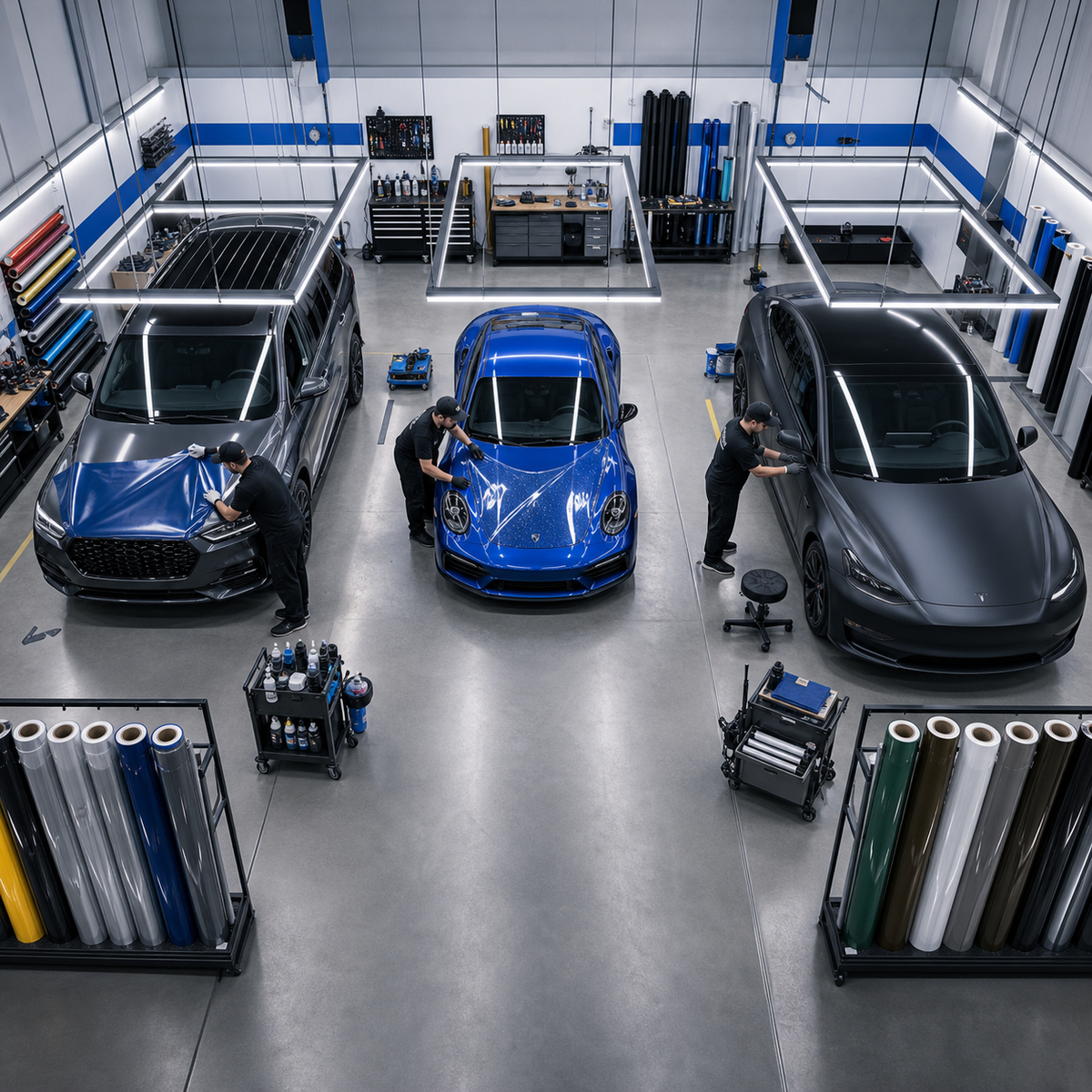
Formal PPF training runs three to five days and costs somewhere between $1,500 and $6,000 in the US market. That buys you the sequence. It does not buy you the skill. The course teaches slip solution ratios, squeegee angles, relief cuts and wrapped edges; the first fifty hoods teach you the trade.
A good course spends most of its hours on real panels. Bumpers with sensors, mirror caps, a fender with a hard body line, because that is where film fights back. Watch a first-week trainee work a corner and you see the same failure every time: the film gets overworked while it is warm, the stretch never recovers, and a week later there is a stretch mark sitting in the middle of a $2,000 job. Good instructors catch that habit on day two. Videos never do.
Before you pay, ask three things. How many students per instructor, because anything past four means you watch more than you install. How much film is included, because a course that hands each student a quarter roll to ruin teaches more than one that rations offcuts. And whether the instructor still installs for paying customers, because the trade moves and a 2019 technique on 2026 film shows.
For a shop owner the math is blunt. A trained installer turns a full front end in 4 to 8 hours. A green one takes twice as long and redoes more of it, and every redo is film cost plus labor with no invoice going out. Against that, a $3,000 course pays itself off inside the first month of billable work it saves.
The film under the squeegee is part of the learning curve too. An installer trained on film that behaves the same roll after roll builds reliable muscle memory; film that varies batch to batch keeps resetting it. We wrote about that problem in our batch consistency article, and it is worth reading before you pick a practice film.
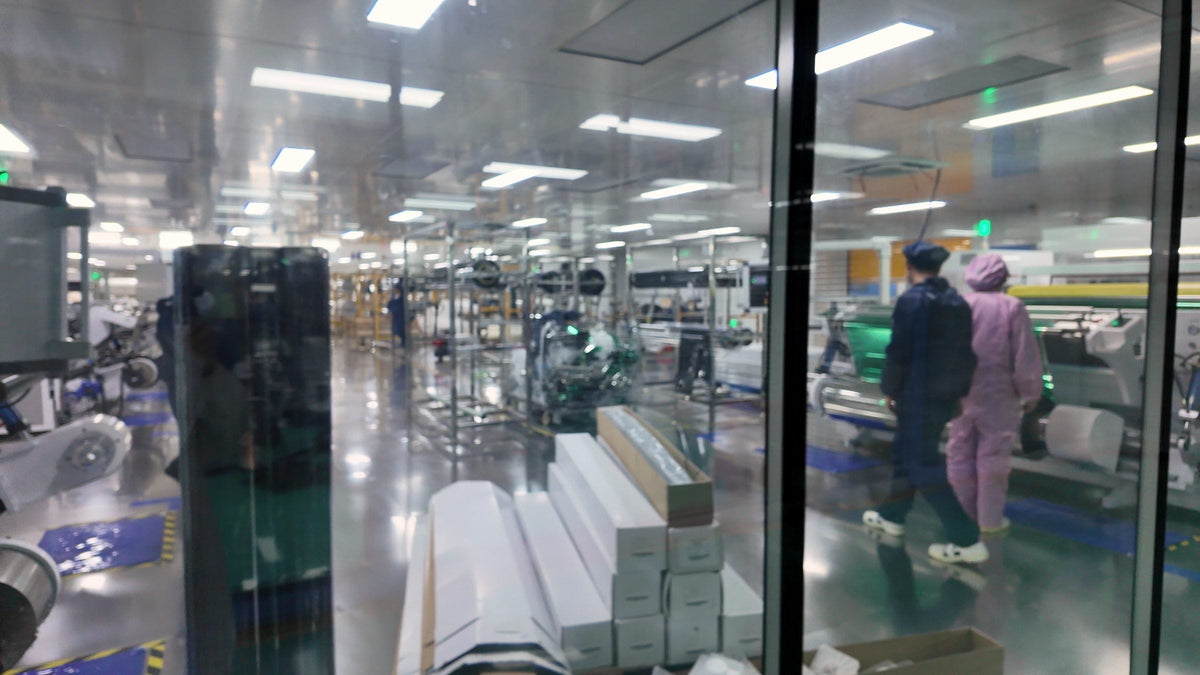
Our part in this is the material, not the classroom. We make TPU film on Lubrizol, BASF, and Covestro base resins in our own 20,000 m2 facility, and we answer technical questions factory-direct rather than through a reseller who has never touched a squeegee. Whatever course you choose, train on the film you plan to stock.
Start with a free sample kit, put it on a scrap panel before the course, and see how the film handles in your own hands. Order it from our wholesale and free sample page.
FAQ
How long does it take to learn PPF installation?
A structured course covers the fundamentals in three to five days, but most installers need 50 to 100 supervised hours before their work is sellable and a year or more of steady jobs before complex full-body work feels routine. Speed comes last; clean edges come first.
What does PPF installer training cost?
In the US, in-person courses typically run $1,500 to $6,000 depending on length, class size and how much practice film is included. Film-heavy courses with small classes cost more and are usually worth it, because installation is a hands-on skill.
Can you learn PPF installation from videos alone?
Videos are useful for sequence and theory, but they cannot correct your hands. Bad habits like overworking warm film or dry-pulling edges get built in fast and are expensive to unlearn, so at minimum find an experienced installer to review your early work in person.
New to tint instead of PPF? Here's what to practice on before your first paid job.
The film we would use here is our Paint Protection Film (PPF). Ask for a quote with your country and monthly volume.

Поделиться:
How to Read a QUV Test Report for PPF
PPF MOQ and Samples: How a First Wholesale Order Works