

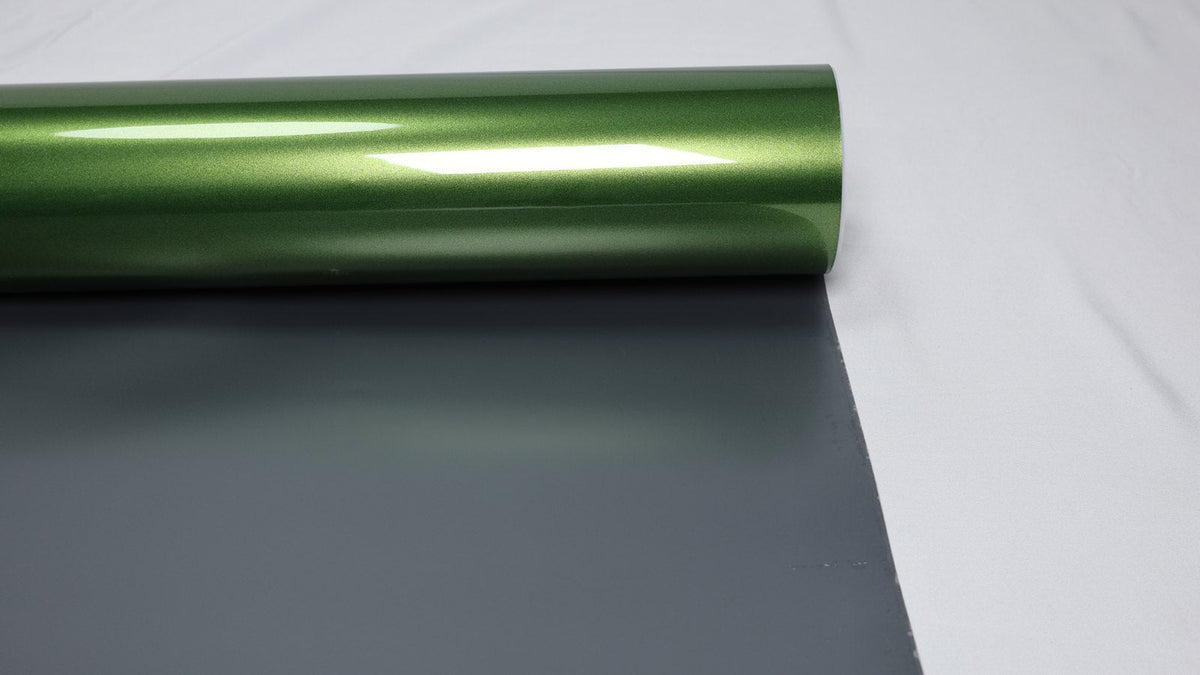
A vinyl wrap job lays down clean when three things line up: the panel's curve, the film's stretch, and how much heat the installer is willing to use. Get any one of those wrong and you are looking at a redo.
PVC wrap stretches, but it does not stretch like TPU. Push it past its limit on a tight compound curve, like a mirror cap or a bumper corner, and it thins out, loses opacity, and shows the panel color underneath instead of the wrap color. That thinning is permanent. There is no self-healing topcoat to hide it, because vinyl wrap does not carry one.
Heat is the tool that keeps an install from thinning too early. A heat gun softens the film so it relaxes into a curve instead of being forced into one, and it also sets the adhesive down into the panel texture so edges do not lift six months later. Installers who rush the heat step are the ones who call back for a warranty edge two months in.
Edge and seam work matters more on vinyl than on PPF, because vinyl is the finish layer, not a protective layer over factory paint. A visible seam or a lifted J-channel edge is the first thing a customer notices, and it is the thing that gets a wrap shop's work photographed and posted, for better or worse.
Panel prep is the same discipline either way: clean, degrease, and dry before the film touches the surface. Oil or wax under the film breaks the bond before it ever gets a chance to set, no matter how good the heat work is afterward.
Stocking rolls for your install bays and want the color chart to match against a customer's mood board? Ask us for the chart and a wholesale quote at highcool.com/pages/contact.
FAQ
Does vinyl wrap stretch as much as PPF?
No. PVC vinyl wrap stretches less than TPU-based Color PPF, and pushing it too far on a tight curve thins the film and shows the panel color underneath, with no self-healing layer to hide it.
Why does heat matter so much during vinyl wrap installation?
Heat softens the film so it relaxes into curves instead of being forced, and it seats the adhesive into the panel texture so edges do not lift later. Skipping it is the most common cause of warranty callbacks.
What is the biggest visual risk with a vinyl wrap install compared to PPF?
Seams and edges. Vinyl wrap is the finish layer a customer sees directly, so a lifted J-channel edge or a visible seam stands out immediately, unlike PPF, which sits clear over the factory paint.
Share:
Scratches and Swirls on PPF: When They Heal and When They Do Not
Scratches and Swirls on PPF: When They Heal and When They Do Not