
PPF is one of the best margins in the detailing trade right now. A full front-end job sells for real money, the material cost is a fraction of the ticket, and demand keeps climbing as cars get more expensive. If you can cut and squeegee clean, this is a business worth building. Start without torching your savings.
First, your hands. PPF is not tint. It's thicker, stiffer, and less forgiving, and a bad install shows every finger under the light. Get trained. Take a hands-on course or apprentice under someone who wraps daily, then practice on scrap hoods and bumpers until your edges are clean and your stretches don't finger. Skip this step and your first paying customer becomes your first refund.
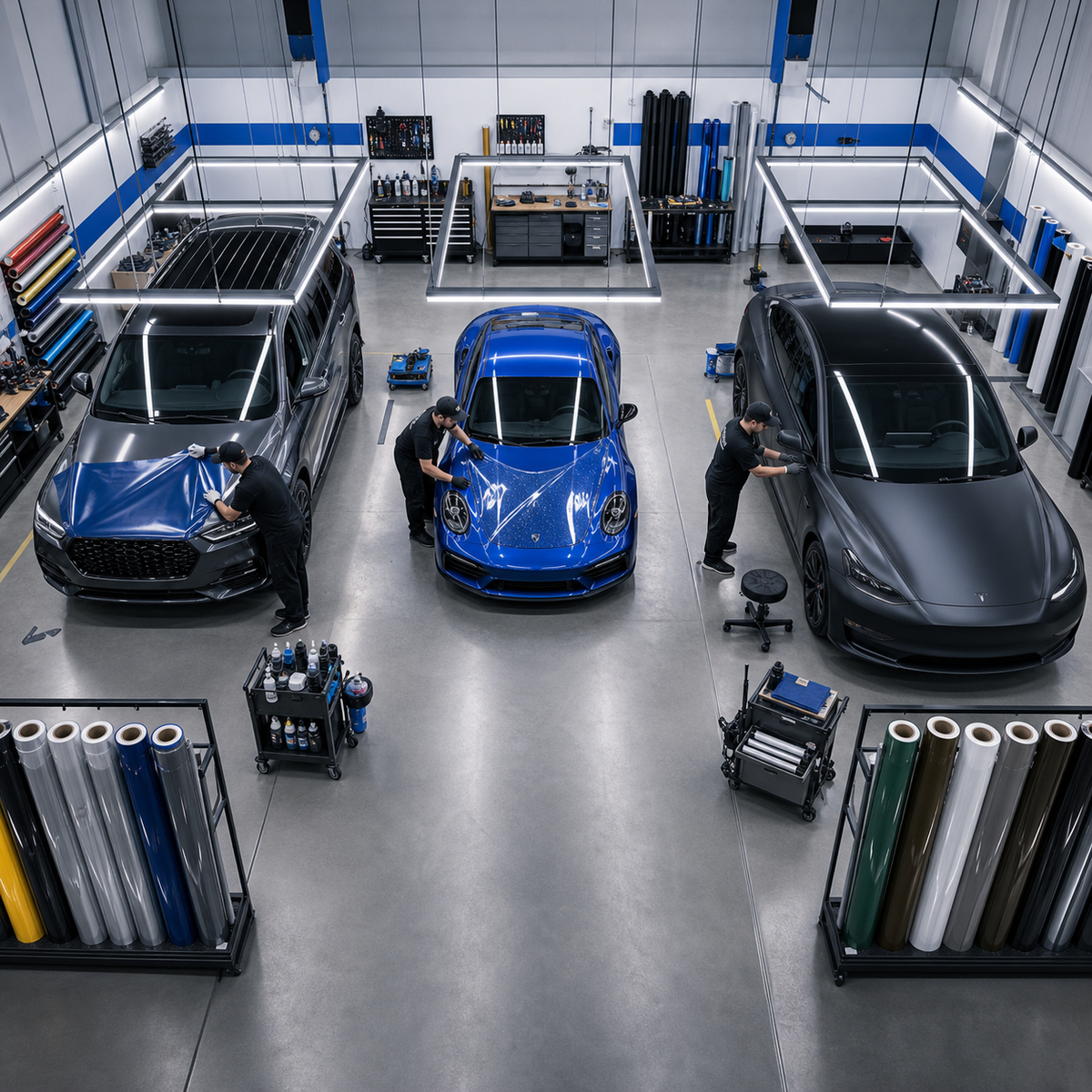
Next, your space. You need a clean, dust-controlled bay with good light and stable temperature. Dust is the enemy of PPF. A single garage with sealed floors, decent lighting, and a way to keep the air still will get you going. You don't need a showroom on day one.
Then your gear. A plotter with pre-cut software pays for itself fast, because it saves film and lets you cut patterns for cars you've never touched. Add quality squeegees, a good slip-solution setup, a steamer or heat gun, and lint-free towels. Budget for a plotter software subscription too.
Pricing is where new shops leave money on the table. Charge for skill, not just film. Full front on a common sedan, partial front, full body, track your hours and price so labor is covered even on a slow day. Don't race the cheapest shop in town to the bottom.
Last, your supplier, and this is the one that quietly makes or breaks you. You want film in stock so you're not turning down jobs while a container crawls across the ocean. Our PPF ships fast from US stock, so you can book work this week and have material in hand. Look for real TPU (Lubrizol, BASF, or Covestro base), a self-healing topcoat, and a 5 to 10 year no-yellowing warranty you can pass to your customer.
Start small, install clean, price with a spine, and reinvest.
PPF ships fast from our US stock and free samples are on the house, so you can test the film before you commit a dollar. Grab one and ask about dealer pricing on our wholesale and samples page.
FAQ
How much does it cost to start a PPF business?
Less than most trades. Your real spend is training, a plotter and software, hand tools, and starter film. A single clean bay works to begin, so you can launch lean and scale as jobs come in.
Do I need training to install PPF?
Yes. PPF is thicker and stiffer than tint and mistakes show clearly. Take a hands-on course or apprentice with a daily installer, then practice on scrap panels before charging customers.
What should I look for in startup PPF film?
Real TPU on a Lubrizol, BASF, or Covestro base, a self-healing topcoat, a 5 to 10 year no-yellowing warranty, and a supplier holding US stock so you can book jobs without waiting on shipping.
For shops comparing film grades, our Paint Protection Film (PPF) collection lists what is in stock right now.

Teilen:
How Much Vinyl to Wrap a Car: Film Usage by Vehicle Size
How Much Vinyl to Wrap a Car: Film Usage by Vehicle Size