
Replace the panel in most cases. A patch makes sense when the tear sits low on a bumper or a rocker, or right next to a body line, and the paint under it is still clean. On a hood, a fender top or a door face, a patch leaves an edge that catches light at every wash, and the customer will spot it before you do.
Torn film tends to come back to the shop looking the same way. The customer points at a split on the leading edge of the hood. The flap has curled back, road grit is packed under it, and the exposed adhesive has turned dull grey. They want to know if you can lay a piece over it this afternoon. Before you answer, take a few minutes and look properly, because the answer decides whether you are quoting a small fix or a full panel.

Four checks before you quote
Start with location. A tear in the middle of a flat panel is the hardest place to hide a patch, since there is no line for the new edge to follow. A tear near a badge, a seam or a crease is easier.
Then lift the flap and look underneath. Grit and water under the film mean the area needs cleaning and maybe paint work before anything goes back on. If the paint is chipped, the film is the second job, and your quote should say so.
Next, press around the tear. If the film keeps letting go as you work outward, the bond on that panel is already failing and a patch will only move the problem a few inches over.
Last, think about age. Film that has been on the car for a few summers can look slightly different from fresh film in direct sun, even when it is the same series. A patch puts the two side by side with nothing between them.
Patch or replace, by location
This table sorts the places where tears usually show up by which repair holds up and what to say at the counter.
| Where the tear is | Patch or replace | What to tell the customer |
|---|---|---|
| Hood, leading edge or center | Replace the hood piece | A patch edge would run across the front of the car, where everyone looks first |
| Fender top or door face | Replace the panel | Flat painted panels show any seam in reflections |
| Mirror cap | Replace the cap piece | Redoing a small piece is quicker than hiding a seam on a curve |
| Lower front bumper | Patch can work if the paint is clean | The patch is visible up close, and it is the cheaper fix |
| Rocker or lower door | Patch can work | The seam sits low and will pick up some dirt at the edge |
| Beside a body line or existing seam | Patch, with the new edge on the line | The new edge follows a line that is already there |
| Any spot with chipped paint underneath | Repair the paint, then replace the piece | Film goes on after the paint is fixed, never over the damage |
When you are unsure, quote the full panel. A patch the customer rejects costs you the film, the labor and a second appointment.
Taking the old piece off
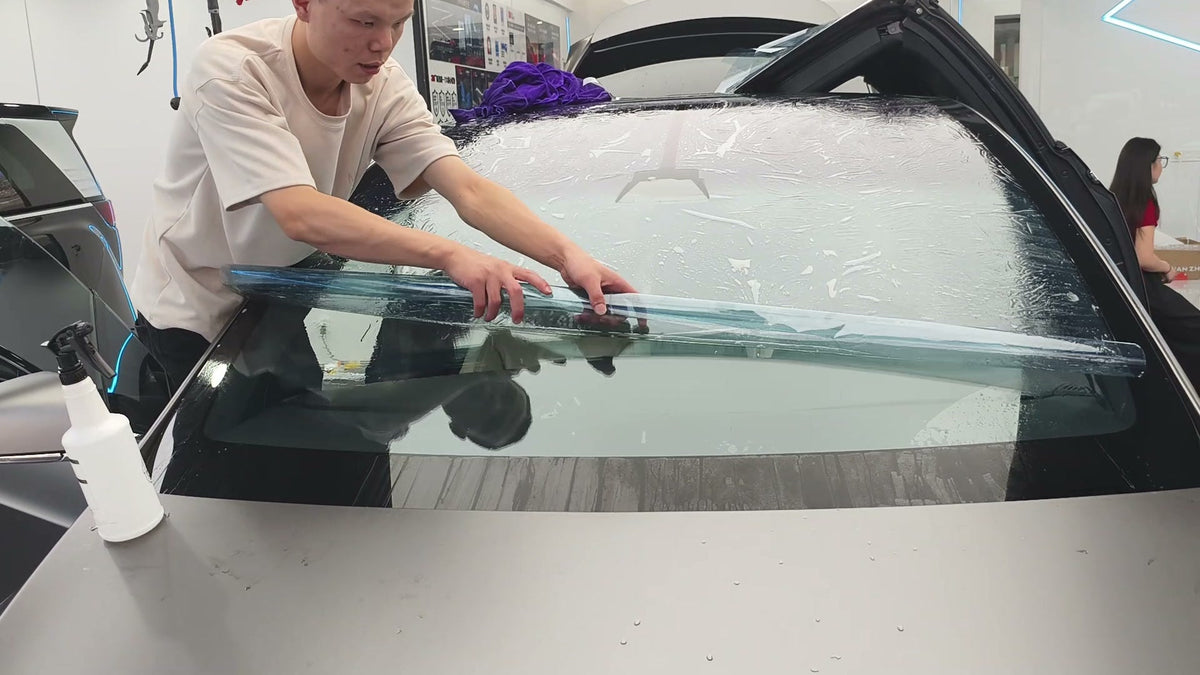
Pull the damaged piece slowly and low to the panel, with gentle heat, and clear the adhesive left behind before the new film goes down. Rushed removal is where paint gets lifted, and then a film job turns into a paint claim. We cover the risk points in Can PPF Removal Damage Factory Paint?
The warranty conversation
A tear usually means something hit the film: a rock, a curb, a car wash brush. Our PPF warranty runs 5 to 10 years depending on the series, and the written terms decide what counts. Read them with the customer before you promise a free replacement, and write down what caused the tear if they know. PPF Warranty Explained walks through how shops can present those terms.
Getting the same film back on
This is where the job sheet pays for itself. Look at the label printed inside the core of any HIGHCOOL roll: it gives the part number, the batch and the roll number. If you copied all three onto the job sheet at install, you can reorder the same series and know what is on the car. If you did not, you are matching by eye. A HIGHCOOL PPF roll is 60 in wide and 49 ft long (1.52 x 15 m), which works out to 245 sq ft, so one hood leaves offcuts; write the batch on the back of each one so the next repair starts from known film. Our PPF line is stocked in Rancho Cucamonga, California.
If a torn panel has you reordering, send us the code and batch printed on the core label, and we will quote that same series within 12 hours. Want to check a series against the film on the car first? Free A4 PPF samples are available, and you pay shipping only. Ask for a replacement roll quote, or browse our Paint Protection Film (PPF) rolls.
FAQ
Can torn PPF be repaired without replacing the panel?
Sometimes. A patch works on low areas such as the lower bumper or a rocker, or where the new edge can sit on a body line, as long as the paint under the tear is clean. On a hood, fender top or door face the seam will show, so replace the piece.
Is a torn PPF panel covered by the warranty?
That depends on the written warranty terms for the film series on the car. HIGHCOOL PPF carries a 5 to 10 year warranty set by series, and the cause of the tear matters. Read the terms and note what caused the damage before you promise a free replacement.
Will new PPF match the old film on the rest of the car?
The same series from a recorded batch gives you the closest match. Film that has been on the car for years can still look slightly different next to fresh film in direct sun, so replace whole pieces and end the new film at a body line. If the shop kept the code, batch and roll details from the core label, reordering takes one email.
مشاركة:
Where Should a Wrap Shop Buy Vinyl Wrap: Local Distributor, Factory or Online Store?