
As vehicle customization continues to evolve, more car owners are asking an important question:
Is Color PPF (often called “fashion film”) really different from vinyl wraps, or are they just two versions of the same thing?
At first glance, both solutions can dramatically change a vehicle’s appearance. Both come in a wide range of colors and finishes. Both are applied over factory paint. However, beneath the surface, Color PPF and vinyl wraps are fundamentally different products, designed for very different priorities.
This guide explains the real differences between Color Paint Protection Film and vinyl wraps, focusing on materials, thickness, protection, longevity, cost, and real-world value—so you can choose the right solution with confidence.
What Is Color PPF and How Is It Different from Vinyl Wraps?
Color PPF is essentially paint protection film with color built into it. Traditional PPF is transparent and designed purely for protection, while Color PPF adds pigmentation and styling without sacrificing its protective function.
Vinyl wraps, by contrast, are primarily cosmetic films. Their main purpose is to change a vehicle’s color or finish, not to protect it from physical damage.
This difference in intent shapes everything that follows—from chemistry and thickness to durability and price.
TPU vs. PVC: The Chemistry Difference That Really Matters
One of the most important distinctions between Color PPF and vinyl wraps lies in their base materials.
Color PPF is made from TPU (Thermoplastic Polyurethane). TPU is an elastic, impact-resistant polymer originally developed for demanding industrial and automotive applications. It can absorb energy from impacts and return to its original shape.
Vinyl wraps are made from PVC (Polyvinyl Chloride). PVC is lightweight, flexible, and easy to process, making it ideal for visual customization—but it lacks the elastic recovery and impact resistance of TPU.
This chemical difference explains why Color PPF can self-heal minor scratches and resist stone chips, while vinyl wraps cannot.
Thickness: The Quiet Hero of Protection
Thickness is one of the least visible yet most decisive factors when comparing these two options.
Color PPF typically measures 150–200 microns, sometimes more depending on the product. This thickness allows it to physically absorb impacts from road debris, door dings, and light scratches.
Vinyl wraps, on the other hand, are much thinner—usually 70–90 microns. This thin profile is ideal for stretching and conforming to complex shapes, but it provides minimal physical protection.
In everyday driving, this difference means that Color PPF can prevent paint damage, while vinyl wraps mainly protect against very light surface wear.
Real-World Protection: What You’re Actually Buying
When customers choose a wrap or film, they’re not buying lab specifications—they’re buying real-world results.
With Color PPF, you are buying:
-
Protection from stone chips and sand impacts
-
Resistance to scratches and swirl marks
-
Self-healing behavior under heat
-
UV and chemical resistance
With vinyl wraps, you are buying:
-
A color or finish change
-
Visual customization
-
Short-term surface coverage
Vinyl wraps can look stunning, but once scratched or chipped, the damage is permanent. Color PPF, by contrast, is designed to recover from everyday abuse.
Style & Finish Options: Protection Meets Design
Historically, PPF was invisible and purely functional. That has changed.
Modern Color PPF offers:
-
Gloss, satin, and matte finishes
-
Solid colors and subtle tones
-
OEM-style visual depth
Vinyl wraps still lead in extreme styling options:
-
Chrome and mirror finishes
-
Highly textured patterns
-
Fluorescent or specialty colors
If your priority is maximum visual expression, vinyl wraps offer more choices. If your priority is premium appearance plus protection, Color PPF bridges the gap between paint and wrap.
Longevity & Warranties: What to Expect With Proper Care
Longevity is one of the biggest decision factors.
Color PPF is typically rated for 7–10 years with proper care. Many products include long-term warranties covering yellowing, cracking, and delamination.
Vinyl wraps usually last 3–5 years, depending on climate, exposure, and maintenance. Matte and specialty vinyl finishes often have even shorter lifespans.
For long-term vehicle ownership, Color PPF provides a much lower replacement cycle and better preservation of the original paint.
Cost & Value: “How Long Do You Want to Keep It?”
On paper, vinyl wraps appear more affordable. A full vinyl wrap generally costs less upfront than Color PPF.
However, value depends on how long you plan to keep the vehicle and what you expect the film to do.
Vinyl wrap:
-
Lower initial cost
-
Higher chance of replacement
-
Minimal protection
Color PPF:
-
Higher upfront investment
-
Longer service life
-
Paint protection and resale value preservation
For leased vehicles or short-term projects, vinyl wraps can make sense. For long-term ownership, Color PPF often delivers better overall value.
Side-by-Side Comparison: Color PPF vs. Vinyl Wrap
| Feature | Color PPF | Vinyl Wrap |
|---|---|---|
| Base Material | TPU | PVC |
| Typical Thickness | 150–200 μm | 70–90 μm |
| Impact Protection | Excellent | Minimal |
| Self-Healing | Yes | No |
| UV Resistance | Very High | Moderate |
| Color Stability | Excellent | Varies |
| Average Lifespan | 7–10 years | 3–5 years |
| Primary Purpose | Protection + Style | Style Only |
| Best For | Long-term ownership | Short-term customization |
Which One Is Right for Your Vehicle? (Installer Perspective)
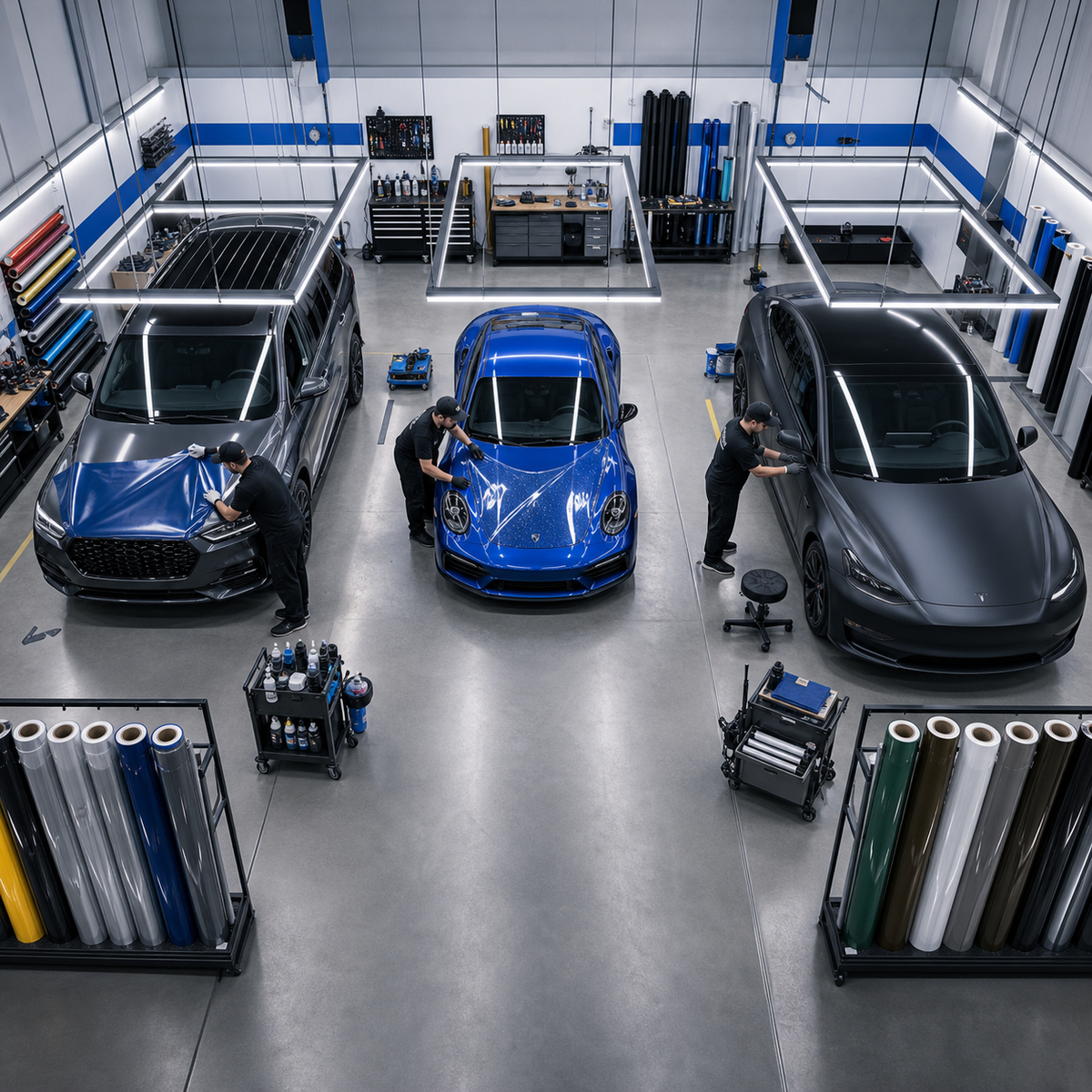
From an installer’s point of view, the choice often comes down to use case.
Color PPF is ideal for:
-
Daily drivers exposed to highways and debris
-
Luxury or performance vehicles
-
Long-term ownership
-
Customers who want protection without sacrificing appearance
Vinyl wraps are better suited for:
-
Short-term branding or promotions
-
Lease vehicles
-
Show cars with frequent design changes
-
Budget-driven visual projects
Understanding your priorities before choosing saves time, money, and frustration later.
Installation & Maintenance Considerations
Both materials require professional installation for best results, but Color PPF is more demanding due to its thickness and elastic behavior. Proper surface preparation and controlled installation environments are critical.
Maintenance also differs:
-
Color PPF tolerates washing and light abuse better
-
Vinyl wraps require gentler care to avoid scratches and fading
Manufacturing Quality: Why It Matters More Than Brand Names
Beyond material type, manufacturing consistency plays a huge role in performance. Variations in coating thickness, pigment dispersion, and adhesive stability can affect clarity, durability, and installation success.
From a B-end manufacturing perspective, companies like HIGHCOOL, which operate dedicated automotive film factories, focus heavily on raw material control, coating precision, and batch-to-batch consistency. This manufacturing-first approach helps installers achieve predictable results across different colors, vehicles, and climates—especially important for large-scale projects and long-term applications.
This isn’t about branding—it’s about how industrial-level quality control translates into real-world reliability.
The Final Word: Choosing Between Color PPF and Vinyl Wraps
Color PPF and vinyl wraps are not competitors—they are solutions for different goals.
If your priority is visual change only, vinyl wraps offer flexibility and creative freedom. If your priority is protecting paint while enhancing appearance, Color PPF is the superior option.
Knowing what you’re actually buying—chemically, physically, and functionally—allows you to make a decision based on value, not just price.
FAQ – Color PPF vs Vinyl Wraps
Is Color PPF the same as vinyl wrap?
No. Color PPF is made from TPU and designed for paint protection, while vinyl wraps are made from PVC and focus mainly on visual customization.
Does Color PPF protect against rock chips?
Yes. Color PPF is thick and impact-resistant, providing protection against stone chips and scratches.
Can vinyl wraps self-heal scratches?
No. Vinyl wraps do not have self-healing properties; scratches are permanent.
Which lasts longer, Color PPF or vinyl wrap?
Color PPF typically lasts 7–10 years, while vinyl wraps last around 3–5 years.
Is Color PPF worth the higher cost?
For long-term vehicle ownership and paint protection, many drivers find Color PPF offers better overall value despite higher upfront cost.
Installers new to Color PPF should also read our guide to avoiding installation callbacks. Browse current colours in our Color PPF collection.
For the full three-way comparison, see PPF, Color PPF, or Vinyl Wrap: which one actually fits the job.

Share:
2025 Window Tint Laws in the U.S.: What "Legal" Really Means for Your Car
California Window Tint Laws (2026): A Guide for Tint Shops