Car Wash Advice for PPF Customers: What Installers Should Tell Them
Tell PPF customers to hand wash when they can, use a touch-free automatic wash when they cannot, and stay away from brush tunnel washes and the shared brushes at self-service bays. That one sentence at handover prevents a lot of scratched topcoats, lifted edges and awkward warranty calls later.
Most customers do not think of the car wash as a risk. They paid for paint protection film so they would not have to worry about the paint. The film is tough, but the wash still matters, and the installer is the person they will blame if the film looks dull after a year.
How different car wash types affect paint protection film
Touch-free automatic car washes: gentle but not always thorough
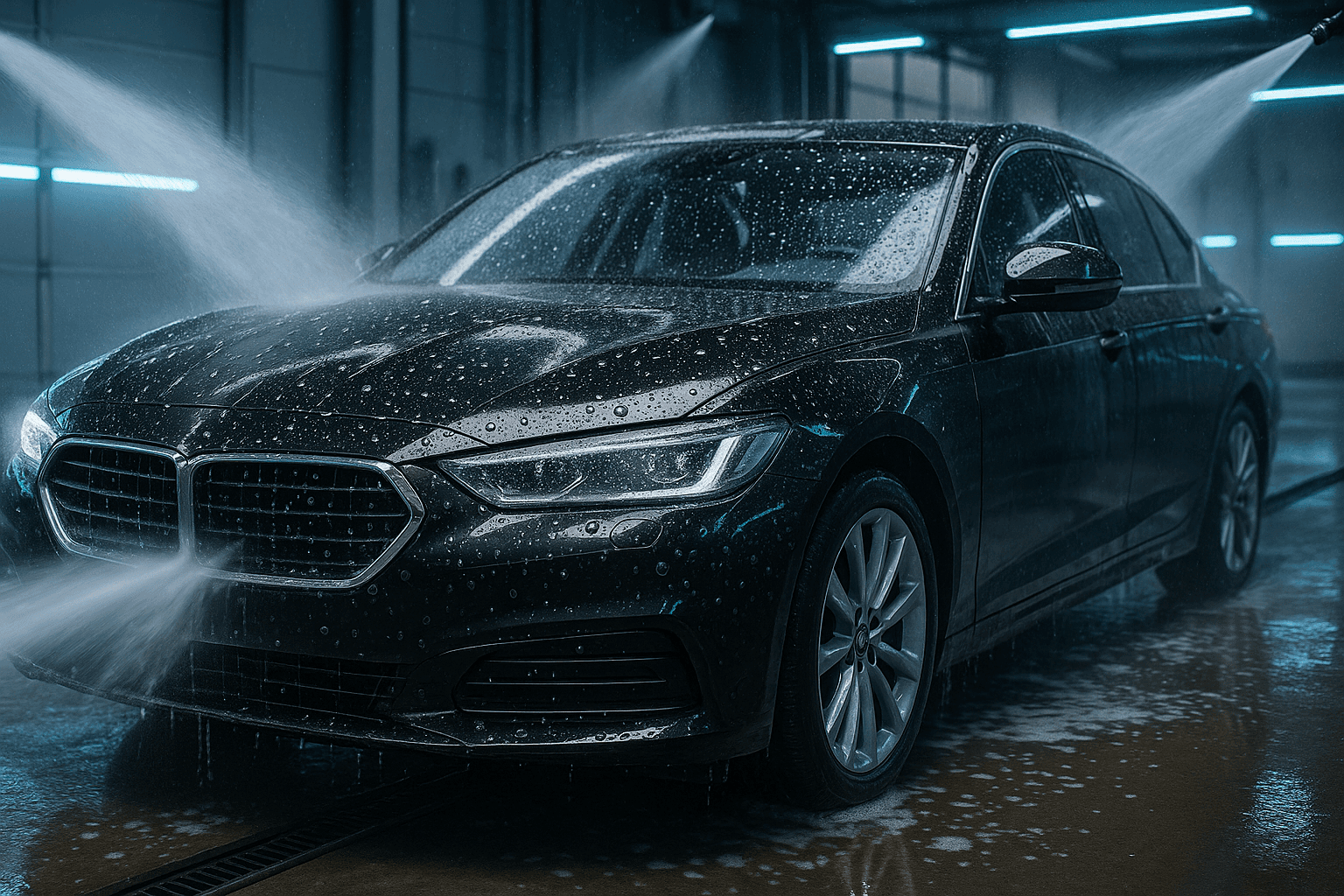
A touch-free wash uses high-pressure water and detergent, and nothing physical touches the car. That makes it the safest automatic option for film, because there is no grit being dragged across the surface. On a car with a ceramic coating over the film, bugs and road tar also rinse off more easily.
The weak point is cleaning power. Touch-free washes often struggle with tree sap and dried-on grime, so many use strong detergents to make up for it. Used every week for years, those chemicals can wear down a coating's water beading. Customers who rely on touch-free washes should use them when they need to, not every few days, and rinse the car with plain water afterward if they can.
Friction (brush) automatic car washes: clean car, higher risk
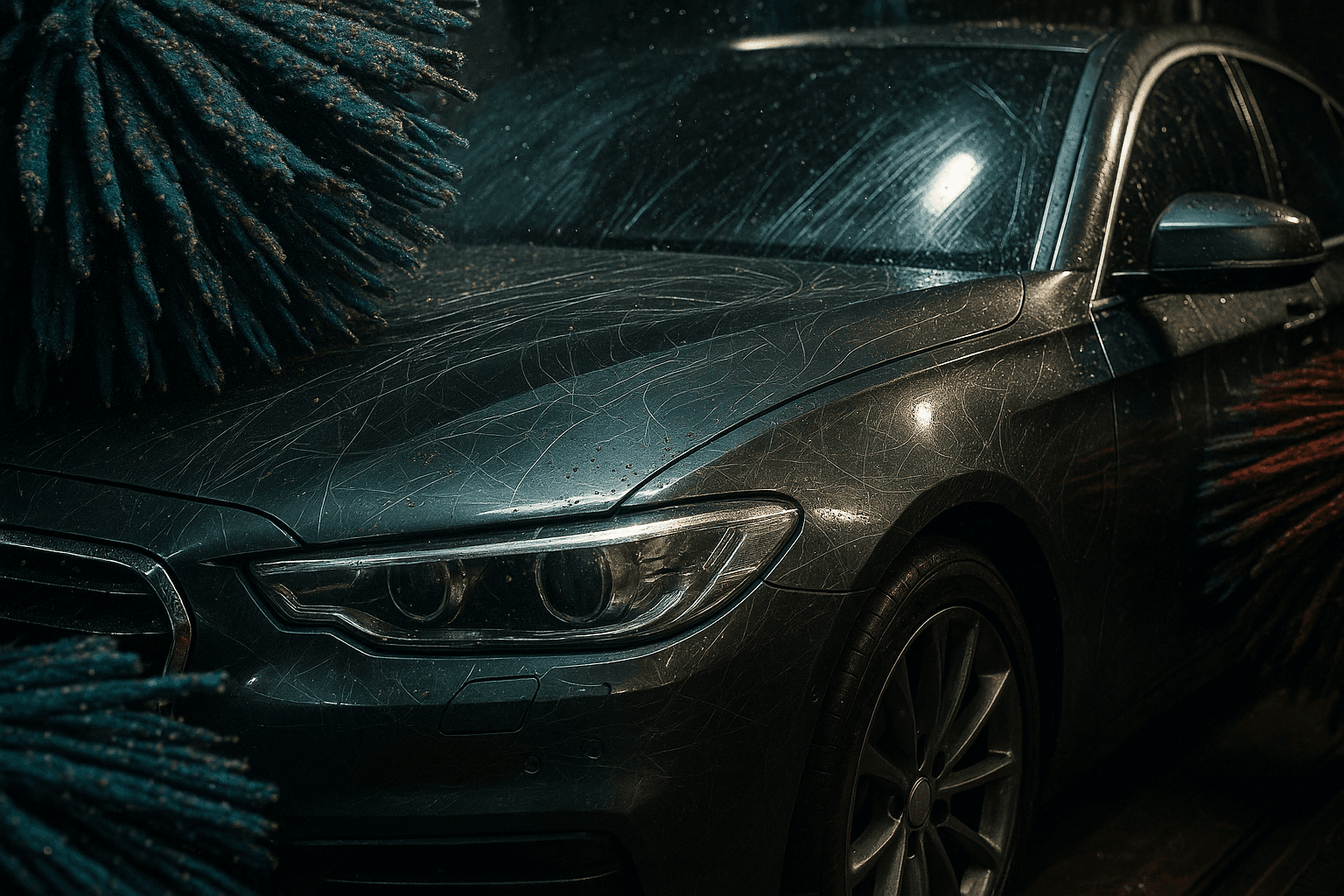
Tunnel washes with spinning brushes or cloth strips get a car visibly clean in a few minutes. The problem is what those brushes picked up from the cars before. Grit trapped in the bristles acts like fine sandpaper. On film, that shows up as swirl marks and a dull, hazy look on the hood and doors. A self-healing topcoat can recover from light marks with heat, but repeated trips through a brush wash will wear it down faster than normal driving does.
Self-service wash bays: cheap, with a brush problem
Self-service bays give customers control over the water and soap, which is useful. The foam brushes are the problem. They are shared by every car that came through, they are rarely cleaned, and they can scratch film the same way a tunnel wash brush does. Dark paint and gloss finishes show it first. Tell customers to use the pressure wand and bring their own clean, soft wash mitt, and to never touch the bay brush.
Why brush washes and strong jets are hard on PPF
Film and coatings are protective layers, not armor. Aggressive detergents can strip the hydrophobic finish of a coating over time. Brushes can push fine grit into the surface. And a pressure washer held close to an edge can lift film that was not fully sealed, especially in the first days after the install. Explain this plainly at handover so the customer understands why the advice matters.
What to tell customers about washing a PPF car
- Wait before the first wash. Most installers ask customers to give the film several days to a week, so the adhesive can set and any moisture can work out.
- Pre-rinse to knock off loose dirt before anything touches the car.
- Use a pH-balanced car shampoo, not dish soap, degreaser or strong all-purpose cleaners.
- Use two buckets, one for soapy water and one for rinsing the mitt, so the dirt that comes off the car does not go back on.
- Wash with a soft microfiber mitt and dry with a clean microfiber towel to avoid water spots.
- Keep a pressure washer nozzle at a sensible distance and do not aim it straight at film edges.
- Look over the edges now and then, and come back to the shop if anything is lifting.
Which wash fits which car
| Your vehicle | Recommended wash method | Avoid |
|---|---|---|
| Car with paint protection film, ceramic coating or recent detailing | Hand wash; occasional gentle touch-free wash; soft mitt | Friction brush tunnel wash; shared self-service brushes |
| Everyday driver with no film or coating | Touch-free or friction wash; low risk | Dirty self-service brushes used without rinsing |
| Dark paint or luxury finish | Hand wash or touch-free wash, with regular checks | Spinning brushes, harsh chemicals, high-pressure jets near edges |
A printed card with these points, handed over with the keys, takes a minute and saves the shop a lot of callbacks. If you install film and want a supplier that sells PPF by the roll from its own factory, browse the HIGHCOOL paint protection film range and ask us for a quote from there.
FAQ
Can you take a car with PPF through an automatic car wash?
Yes, but a touch-free automatic wash is the safer choice because nothing touches the film. Brush and cloth tunnel washes can leave swirl marks and wear down the topcoat over time.
How long should you wait to wash a car after PPF is installed?
Most installers ask customers to wait several days to a week before the first wash. That gives the adhesive time to set and lets remaining moisture under the film work out.
Can a pressure washer damage paint protection film?
It can if the nozzle is held too close or aimed straight at a film edge, which can lift the edge. Keep a sensible distance and spray across the edges, not into them.