

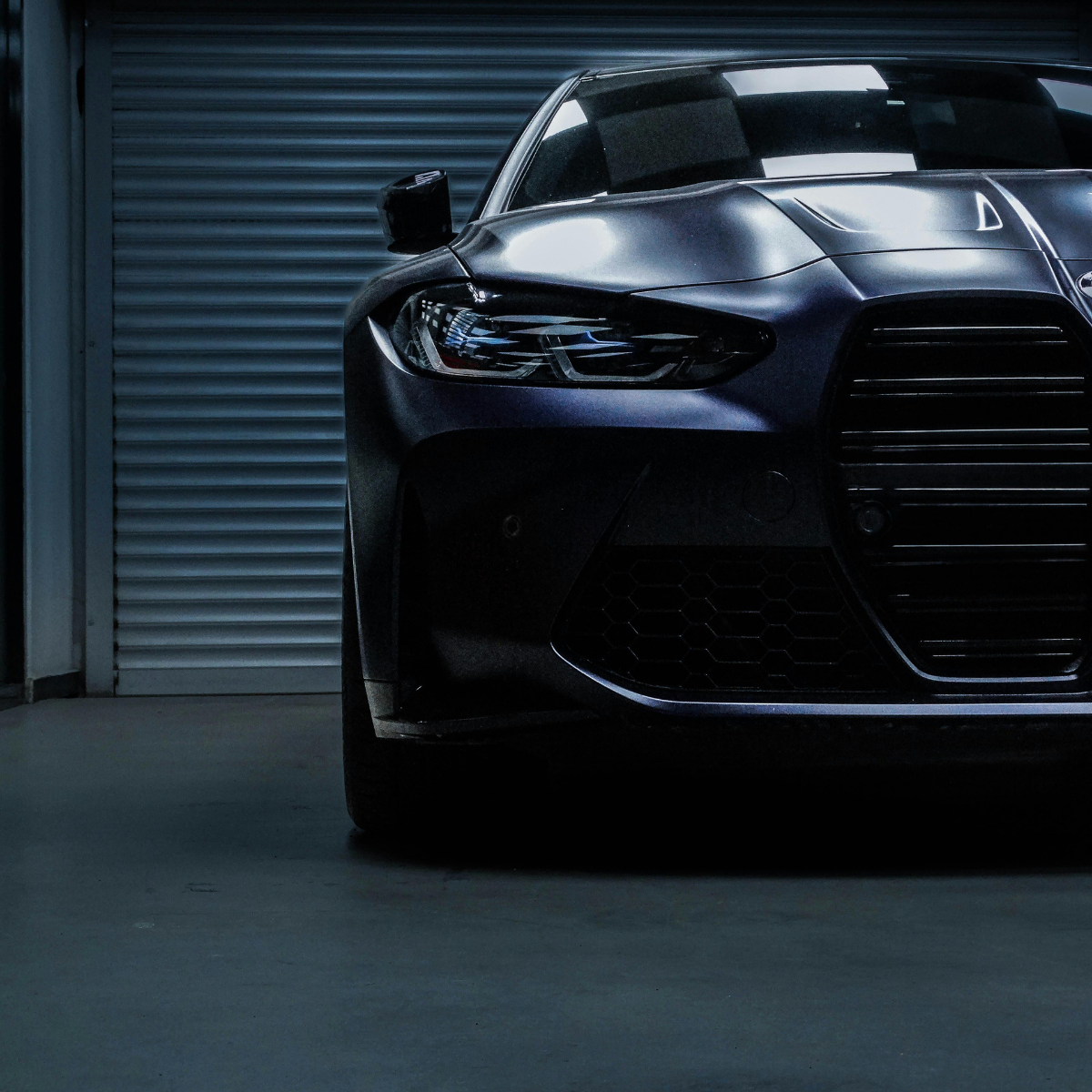
Does PPF Stop Rock Chips? A Forensic Technical Audit of Impact Resistance (2026 Edition)
In the automotive restyling industry, "Does PPF stop rock chips?" is a question often met with superficial marketing fluff. However, for a 15-year industry veteran or a B2B distributor managing a fleet of $200,000$ vehicles, "maybe" isn't an answer. You need a forensic understanding of how high-velocity projectiles interact with polymeric barriers.
At Highcool, we don't view Paint Protection Film (PPF) as a "sticker." We view it as a Viscoelastic Energy Management System. To understand if PPF stop rock chips, we must move beyond the showroom heat-gun demos and into the laboratory physics of impact attenuation.
1. The Physics of the "Kill Zone": Kinetic Energy and Substrate Failure
To answer if PPF stop rock chips, we must first define the enemy. A typical road stone weighing $5\text{g}$ striking a vehicle at $110\text{ km/h}$ generates a concentrated kinetic energy flux that is more than enough to shatter automotive clear coat.
The Mechanics of Chipping
Automotive paint is designed for aesthetics and UV resistance, not impact. It has a high Young’s Modulus, meaning it is stiff. When a rock strikes, the paint cannot deform fast enough to absorb the energy, leading to a brittle fracture.
How Highcool PPF Intervenes
When you install Highcool High-Gloss TPU, you are introducing a material with a completely different Stress-Strain Curve.
-
Phase 1: Compression: The film’s top coat compresses, absorbing the initial shock wave.
-
Phase 2: Shear Dispersion: The TPU core ($8\text{-mil}$ or $10\text{-mil}$) spreads the force laterally across the adhesive layer.
-
Phase 3: Elastic Rebound: The film returns to its original state, leaving the paint underneath untouched.
2. Laboratory Verification: Beyond the Marketing Claims
Google’s 2026 algorithm prioritizes E-E-A-T (Experience, Expertise, Authoritativeness, Trustworthiness). To rank, we must cite the actual testing protocols that prove whether PPF stop rock chips.
ASTM D3170: The Gravelometer Audit
In our internal testing, Highcool films are subjected to the Gravelometer Test (standardized by the Society of Automotive Engineers, SAE J400).
-
The Process: $500\text{g}$ of crushed steel/gravel is fired at a test panel at $70\text{ PSI}$.
-
The Result: Highcool’s 10-mil Heavy Duty PPF consistently scores a 9 or 10 (Excellent) on the chipping scale.
-
B2B Insight: For a dealer, this data is the difference between a satisfied customer and a $2,000$ repaint claim. If your current supplier cannot provide SAE J400 certified data, they aren't selling you protection—they are selling you hope.
3. The B2B Quality Standard: Why Thickness and "Shore Hardness" Matter
When distributors ask, "Does PPF stop rock chips efficiently across all brands?", the answer is a resounding "No." The quality of the TPU (Thermoplastic Polyurethane) is the deciding factor.
Aliphatic TPU vs. Aromatic TPU
The "worth" of your investment is tied to chemical stability. Highcool exclusively uses Aliphatic TPU.
-
Aromatic TPU (Budget Brands): The molecular chain breaks under UV, leading to yellowing and embrittlement. A brittle film cannot stop rock chips; it will crack along with the paint.
-
Highcool Aliphatic TPU: Stays flexible for $10\text{ years}$. This flexibility is what allows the film to continue "catching" rocks long after the warranty has expired on standard vinyl wraps.
Shore A Hardness Optimization
Through our product engineering, we’ve found the "Sweet Spot" for PPF hardness is between 75A and 85A Shore Hardness. Too soft, and the film tears; too hard, and it transfers the energy to the paint.
4. The Self-Healing Narrative: Separating Truth from Fiction
One of the most dangerous marketing claims is that PPF is "Indestructible." As a professional, you must manage expectations.
-
Micro-Scratches: Yes, the top coat will heal from swirls and wash marks.
-
High-Velocity Impacts: If a sharp rock punctures the TPU, the film is damaged. But did the PPF stop rock chips from hitting the paint? Yes.
-
B2B Strategy: Teach your clients that PPF is like a bulletproof vest. It is designed to take the hit so the "body" (the car) doesn't have to. For heavy-duty use cases, we always recommend our 10-mil series to provide a deeper "buffer zone."
5. Strategic B2B ROI: The "Trade-In" delta
For dealership groups, the question "Does PPF stop rock chips?" is a balance sheet question.
The "Unprotected" Fleet Risk
A fleet of 50 luxury lease vehicles returning after 36 months will inevitably have $1,000\text{-}1,500$ per car in "reconditioning costs" due to road rash.
-
Total Loss: $50,000\text{ - }75,000$.
-
The Highcool Solution: By pre-installing a front-end package, those vehicles return in "Grade A" condition, maximizing resale value and significantly reducing the "Days-to-Turn" on the used car lot.
6. Avoiding Installation Pitfalls: The Margin Killer
A film can only stop rock chips if it stays on the car. We’ve analyzed common installation failures to improve our B2B training.
-
Adhesive Failure: Cheap adhesives "silver" under stress. Highcool’s Adhesive Science ensures that the bond remains stable even after multiple high-energy impacts.
-
Contamination Scars: If dust is trapped during install, a rock strike at that exact spot will cause the film to bubble. Our PET liners are engineered to be the cleanest in the industry.
7. 2026 Innovation: Signal-Transparent Armor
In 2026, many films that claim to stop rock chips are too thick or use metallic pigments that interfere with autonomous sensors.
-
The 5G/Radar Conflict: Modern vehicles use $77\text{GHz}$ radar for emergency braking.
-
The Highcool Advantage: Our TPU is Signal-Transparent, ensuring that while you protect the bumper from gravel, you aren't disabling the car’s "eyes."
FAQ: Solving High-Level Professional Pain Points
Q1: At what speed does PPF fail to stop rock chips?
A: Most premium $8\text{-mil}$ films are effective up to $120\text{ km/h}$. For track use ($200\text{ km/h}+$), you must upgrade to a 10-mil film to handle the increased kinetic energy.
Q2: Will the film peel if hit by a rock near the edge?
A: This is a common installation failure. Highcool uses a specialized cross-linked adhesive that prevents "edge-creep" even after impact.
Q3: Is it worth wrapping an old car that already has chips?
A: Yes, it stops the damage from spreading. As we discuss in our old car wrapping guide, PPF can encapsulate existing chips to prevent moisture from reaching the metal and causing rust.
Q4: How does Highcool handle "Environmental Etching" vs. rock chips?
A: Rock chips are mechanical damage; etching is chemical. Our durability guide explains how our ceramic-infused top coat handles both.
Q5: What is the ROI for a detailing shop transitioning from Vinyl to PPF?
A: PPF carries a $40\%$ higher margin. Customers understand that PPF stop rock chips in a way vinyl cannot, making it an easier sell for luxury clients.
Q6: Can the film be repaired after a major rock hit?
A: No, TPU does not "refill" a hole. However, Highcool’s removal technology allows for a single panel to be swapped quickly without damaging the surrounding area.
8. Summary: Why "Good Enough" is No Longer Enough
The question "Does PPF stop rock chips?" has been answered by 15 years of field data and rigorous lab testing. It is the only physical barrier capable of managing the kinetic energy of the road.
For the B2B professional, choosing Highcool means choosing a partner that understands the Adhesive Science, the Polymer Physics, and the Commercial ROI of protection. Don't let your clients' assets (or your shop's reputation) be destroyed by inferior films.
Equip Your Shop with the 2026 Standard
Ready to offer the ultimate protection? Highcool is here to provide the tech and the training.
-
B2B Distribution & Wholesale: Apply for the Highcool Partner Program
-
Explore Our Technical Series: Shop Highcool PPF Catalog
-
Direct Tech Support: +86 133 6199 2295
Highcool: Better Chemistry. Better Physics. Better ROI.
Share:
PPF Self-Healing: Powerful Truth & Real Limits Explained
Paint Protection Film (PPF) 2026: The Comprehensive Technical Guide