
Vinyl Wrap Car Wash: The 2026 Definitive Technical Standard for Fleet & Luxury Owners
In the automotive restyling industry of 2026, the gap between a "clean car" and a "preserved investment" is defined by a single variable: the maintenance protocol. As a veteran with 15 years of experience in the global film market, I have witnessed a recurring tragedy in the B2B sector—perfectly executed installations ruined within six months by an improper vinyl wrap car wash.
When a client asks, "Can I wash my wrapped car?", the answer isn't a simple yes or no. It is a complex discussion about surface energy, chemical cross-linking, and the mechanical limits of Polyvinyl Chloride (PVC) and Thermoplastic Polyurethane (TPU). At Highcool, our mission is to ensure that every B2B distributor can provide their clients with a "Zero-Failure" maintenance roadmap. This 3,000-word deep dive will dissect the science of cleaning, the economics of car wash damage, and the 2026 standards for film longevity.
1. The Molecular Science of a Vinyl Wrap Car Wash
To understand why a vinyl wrap car wash requires a specific approach, we must look at the surface under a microscope. Unlike factory clear coats, which are cured at high temperatures into a rigid, non-porous lattice, automotive films are "active" polymers.
Surface Energy and Contaminant Bonding
Most premium films, especially the Highcool 2026 Series, are engineered with low surface energy. This is designed to repel water (hydrophobicity) and oils (oleophobicity). However, when dirt, bird droppings, or road tar sit on the surface in the sun (), they can begin a process called "thermal embedding." A standard vinyl wrap car wash using cold water and high friction will attempt to rip these embedded particles out, often taking a microscopic layer of the film’s top-coat with it.
The "Memory" of Scratches
Traditional vinyl (PVC) has limited "memory." When a brush-style car wash creates a scratch, that scratch is permanent because the PVC molecules have been physically displaced. In contrast, our Color PPF utilizes TPU, which allows the surface to "reflow" when heat is applied. This is why the method of washing determines whether your film looks "new" or "hazy" after one year.
2. Automatic Car Washes: The B2B Profit Killer
For a shop owner, the biggest threat to your warranty margins is the "Tunnel of Doom"—the automatic brush car wash.
Mechanical Friction vs. Edge Integrity
Automatic washes utilize heavy, high-speed rotating brushes often made of polyethylene or soft cloth. While these are fine for some paints, they are lethal for a vinyl wrap car wash.
-
Abrasive Loading: These brushes hold onto the grit and sand from the previous five cars (often muddy SUVs). When they hit your wrapped car, they act like high-speed sandpaper.
-
Centrifugal Peeling: The brushes spin at speeds exceeding . If an edge of the film is even slightly exposed near a wheel well or bumper, the centrifugal force of the brush can catch the film and trigger edge lifting.
The "Touchless" Compromise
If a client insists on an automatic wash, we only recommend "Touchless" systems. These systems use high-pressure water and high-pH detergents to chemically break down dirt. However, there is a catch: those high-pH soaps can strip the UV stabilizers out of the film over time, leading to durability issues in extreme weather.
3. High-Pressure Washing: The "Safe Zone" Protocol
Many installers fear pressure washers, but in a professional vinyl wrap car wash, they are an essential tool for "contactless" cleaning—if used correctly.
The Mathematical Safety Margin
At Highcool, we have conducted stress tests on our Adhesive Science to determine the "Failure Point" of water pressure.
-
Pressure Limit: Keep your machine under ().
-
Thermal Limit: Water temperature should never exceed . Excessive heat softens the adhesive, making it easier for the water pressure to "inject" itself under the film.
-
The 30-Degree Rule: Always maintain a -degree angle to the surface and stay at least inches () away from all seams and edges.
4. The Chemistry of Cleaning: pH-Neutral or Nothing
The most overlooked aspect of a vinyl wrap car wash is the chemical composition of the soap. In the B2B sector, we often see "bulk" soaps used in fleet washes that are highly alkaline.
The Danger of Petroleum Distillates
Many "Wash & Wax" soaps contain petroleum-based solvents to create a temporary shine. These solvents are the natural enemy of PVC. They can cause the film to "swell" and lose its resale value protection.
pH-Neutral Standards
For a safe vinyl wrap car wash, the detergent must have a pH of . This ensures that the soap removes the dirt without attacking the UV inhibitors or the Nano-Ceramic Heat Shield that many owners apply over their wraps.
5. Detailed 10-Step Professional Hand-Wash Guide
To maximize vinyl wrap car wash safety, we recommend this standard operating procedure (SOP) for all Highcool-affiliated shops:
-
Pre-Rinse: Use cool water to remove loose debris.
-
Foam Cannon Application: Apply a thick layer of pH-neutral snow foam. Let it dwell for - minutes to encapsulate dirt.
-
Two-Bucket Method: One bucket for soap, one for rinsing the mitt. This is non-negotiable.
-
Top-Down Cleaning: Wash the roof first, then the hood, then the sides. The bottom inches of the car contain of the abrasive grit.
-
Microfiber Only: Use a high-GSM microfiber wash mitt. Never use sponges or "scrub pads."
-
Gentle Agitation: Do not scrub. Let the soap do the work.
-
Final Rinse: Ensure no soap residue is left in the seams.
-
Air Drying: Use an electric blower to remove water from mirrors and handles.
-
The "Drying Towel" Slide: If using a towel, "lay and pull" rather than "wipe and scrub."
-
Sealant Application: Apply a TPU-safe sealant to replenish the hydrophobic layer.
6. Managing Specific Finishes: Matte, Satin, and Chrome
A vinyl wrap car wash is not "one size fits all." Different finishes react differently to water and friction.
-
Matte Wraps: These are the most sensitive. Matte films have a textured surface that traps oil and fingerprints. Never use wax or any "gloss" soap, or you will end up with permanent shiny blotches.
-
Chrome/Metallic Wraps: These are highly prone to scratching. They require an extra "pre-soak" phase and a 100% contactless drying method to maintain their mirror-like finish.
-
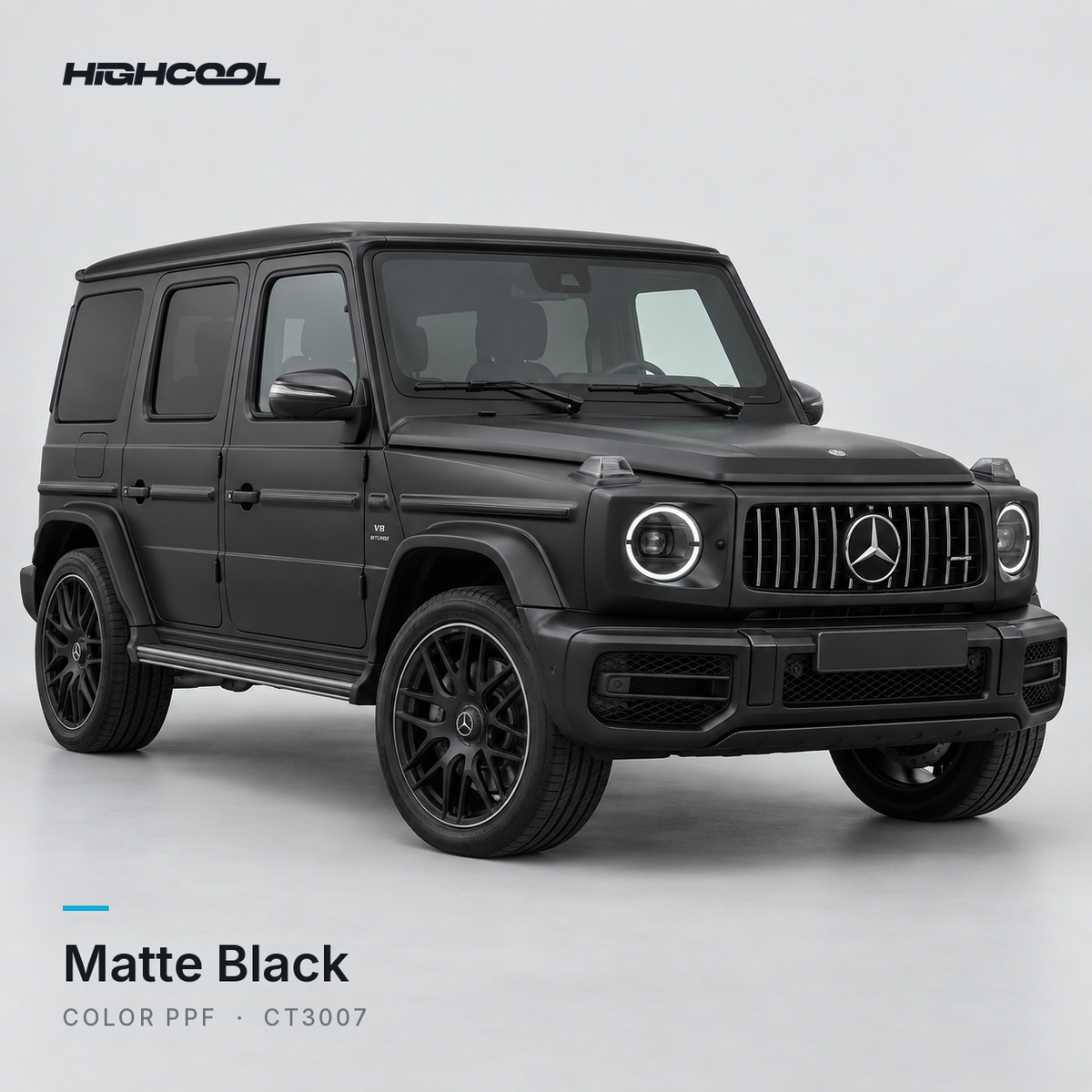
High-Gloss TPU: Our Color PPF Series is the most resilient, often surviving washes that would destroy standard vinyl due to its higher thickness and self-healing properties.
7. Environmental Impact: 2026 Water Standards
In many regions, vinyl wrap car wash regulations are tightening. B2B shops must consider:
-
Water Reclamation: Using biodegradable, pH-neutral soaps allows shops to meet EPA and European Green standards.
-
UV Aging: A car that is washed frequently but parked in the sun will still age. We recommend a 10-year durability film for clients in high-UV zones like Australia or Dubai.
8. Troubleshooting: Fixing a Wash-Damaged Wrap
What happens if a vinyl wrap car wash goes wrong?
-
Water Spots: Use a water and vinegar solution for hard water minerals. Do not use abrasive polishes.
-
Micro-Swirls: Park the car in the sun if it’s a Highcool TPU product. If it’s PVC, a very light application of heat from a heat gun can sometimes hide minor "hazing."
-
Edge Lift: If a pressure washer catches an edge, do not cut it. Use a tiny amount of Edge Sealer and a squeegee to lay it back down immediately.
FAQ: Professional Vinyl Wrap Car Wash Insights
Q1: Is it safe to use a "Brushless" automatic car wash? A: "Brushless" usually means "Touchless" (water only), which is safe but often uses very harsh chemicals. "Brushless" using soft cloth strips is not safe, as those strips still hold dirt that scratches the film.
Q2: How do I remove bird droppings during a vinyl wrap car wash? A: Never scrape. Soak the area with a wet, warm microfiber cloth for minutes. The droppings will soften and can be wiped away. Bird poop is acidic and will damage the film after 48 hours if not removed.
Q3: Can I wax my wrapped car? A: Only if the wax is a pure carnauba without petroleum distillates or abrasives. However, modern ceramic-based sealants are far superior for vinyl.
Q4: Will a car wash affect my "Signal Integrity"? A: A clean car wash ensures that the RF-transparent properties of our films are not blocked by heavy mud or metallic-rich road grime, keeping your 5G sensors active.
Q5: What is the "Rule of 12" for pressure washing? A: inches away, - is ideal, and never wash within hours of installation.
Q6: Can I polish a wrap if it gets dull from washing? A: You can only polish TPU-based Highcool PPF. Traditional vinyl is too thin and will "burn" if you use a machine polisher.
Lead the Industry with Highcool Standards
Protect your work by providing the world’s most durable films. Highcool’s 2026 TPU Series is designed to withstand the toughest cleaning environments while maintaining a mirror-like finish.
-
B2B Partnerships: Partner with Highcool Global
-
WhatsApp Tech Support: +86 133 6199 2295
-
Product Catalog: Explore Highcool Shop
Highcool: Better Chemistry. Safer Washes. Trusted ROI.

Share:
Vinyl Wrap Durability: 5 Weather Factors That Affect Lifespan
Vinyl Wrap Car Wash: 7 Aftercare Rules to Give Customers