
Searching for window tint near you returns dozens of shops with prices ranging from $150 to $900 for the same vehicle. That gap isn't random. It reflects real differences in film quality, installer skill, warranty coverage, and shop environment. The wrong $199 deal often costs $400 or more to fix six months later.
This guide breaks down what window tint actually costs in your area, how to spot a reputable shop, the red flags to walk away from, and the documentation a real shop will give you before you hand over the keys.
What Window Tint Should Cost in Your Area
A full-vehicle tint install typically runs $150 to $900 in 2026, depending on film type, vehicle size, and shop tier.
- Dyed film (entry-level): $150 to $300 for a sedan, $200 to $400 for an SUV. Lifespan 3 to 5 years.
- Carbon film (mid-tier): $250 to $500 for a sedan, $400 to $650 for an SUV. Lifespan 7 to 10 years.
- Ceramic film (premium): $400 to $800 for a sedan, $600 to $1,200 for an SUV. Lifespan 10 to 15 years. Whether the upgrade pays off is worked through in is ceramic tint worth it.
Per-window pricing in most US metros runs $40 to $100 for dyed and $100 to $250 for ceramic. Windshield strips add $50 to $150. Most shops bundle full-vehicle pricing because it's cheaper per panel than individual quotes. The film-type differences are covered in ceramic vs dyed vs carbon.
Chain Shops vs Independent Shops
Both can do quality work. They fail in different ways.
- Chain shops: Consistent pricing, predictable warranties, multiple locations. Quality varies by technician at each store. Pricing usually runs 10 to 20 percent above local independents for the same film.
- Independent shops: Wider price range. The best independents do better work than any chain. The worst run out of strip-mall garages with no climate control. Quality depends entirely on the specific shop.
Mobile install services typically charge $50 to $100 extra and run a higher contamination risk because they can't control the environment. Use mobile only for windshield-only or single-window jobs.
How to Find a Certified Installer
Factory-authorized certification from the film manufacturer is the strongest signal of a real shop. Most major film brands publish a certified installer locator, and authorized status generally requires technician training plus an install-bay inspection. The IWFA also runs an industry-wide certification that isn't brand-specific.
Ask for the certification ID number. A real certified shop hands it over without hesitation. If they can't produce one, the certification is decorative.
Questions to Ask Before Booking
A five-minute phone call separates real shops from amateurs. Ask these five questions.
- What film brand and product line are you quoting? A pro answers with both the brand and the specific line. If they just say ceramic film, walk away.
- What VLT is legal on my front side windows in this state? Every state caps front-window darkness differently. A shop that doesn't know your state's legal VLT will install illegal tint and leave you with the ticket.
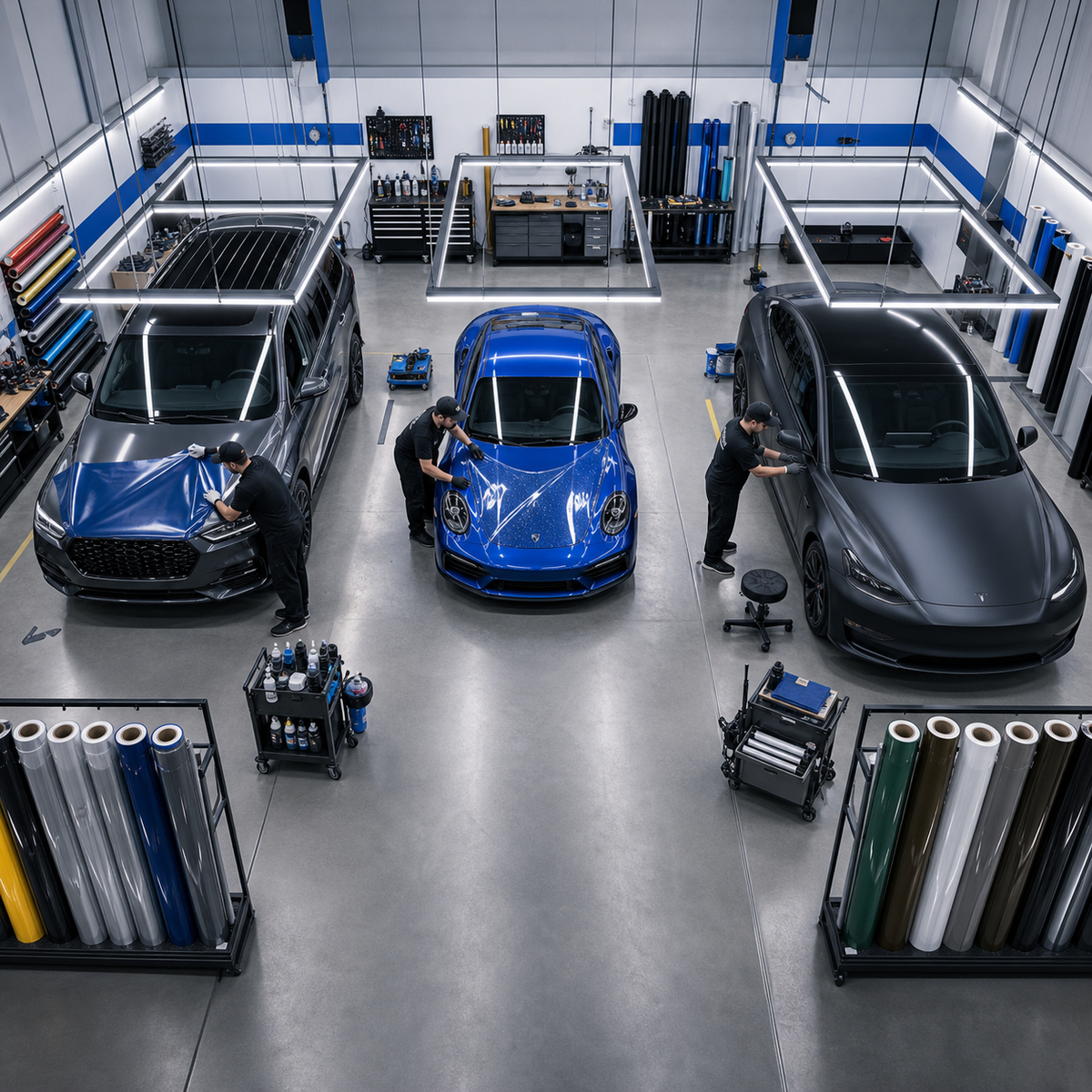
- Is the install bay climate-controlled? Dust and humidity above 60 percent cause contamination that shows up as specks under the film within days.
- What does your warranty cover, and is it transferable? Real warranties cover bubbling, peeling, cracking, color change, and adhesive failure for 7 years or more.
- Can I see the film's technical data sheet? Legitimate films publish UV rejection, IR rejection, and TSER per VLT level. Refusing to share it means the film tier is not what's claimed.
Red Flags That Mean Walk Away
- $99 full vehicle ceramic tint: Real ceramic film at $99 doesn't exist. The shop is using rebranded polyester film with no real warranty.
- No physical samples on display: A real shop has labeled film samples you can hold up to light. Brochures only means the film isn't what they claim.
- Outdoor or open-bay install area: Dust and bugs land on adhesive within minutes.
- Refuses to write the film brand on the receipt: If they say a brand verbally but the receipt says premium ceramic, they're not using that brand.
- High-pressure same-day tactics: This deal expires today is a sales script, not legitimate pricing. A real shop is busy enough to let you decide overnight.
- No business license or insurance certificate: Uninsured shops shift liability to you if they damage your defroster lines, door panels, or glass.
What Warranty You Should Expect
A legitimate professional tint job comes with two layers of warranty. The manufacturer warranty runs 5 to 15 years on premium films and covers defects in the film itself: bubbling, peeling, cracking, color change, adhesive failure. The shop workmanship warranty is separate, usually 1 to 5 years, and covers issues caused by application errors.
Get both in writing on the invoice. Verbal warranties have no value when problems show up 18 months later. Read the exclusions carefully, especially ammonia-based cleaners, scratch damage, and rear defroster issues from a sloppy install.
What a Quality Install Looks Like
A correctly installed tint reaches full clarity in 7 to 10 days. For the first three days, mild haze and small water pockets are normal as the adhesive cures, so don't roll the windows down and don't try to wipe out bubbles. Between day 4 and day 10 the haze should fade and the water pockets evaporate through the film.
After day 10, bubbles that haven't cleared, lifted edges, visible dust specks, hairs under the film, or streaks mean either bad installation or low-quality film. Both need to be addressed under the workmanship warranty. Inspect under natural light, not in the shop's lighting.
Average Tint Costs by US Region
- Hot states (AZ, TX, FL, NV, Southern CA): Ceramic demand is high. Ceramic sedan installs run $500 to $850.
- Northeast (NY, NJ, MA, CT): Higher labor rates push prices up 10 to 25 percent. Ceramic sedan installs run $600 to $1,000.
- Midwest (IL, OH, MI, MN): Mid-range pricing with less spread between shops. Ceramic sedan: $450 to $750.
- Pacific Northwest (WA, OR): Lower ceramic demand keeps prices closer to the carbon range. Ceramic sedan: $400 to $700.
- Southeast (GA, NC, SC, TN): Strong demand and more competition. Ceramic sedan: $450 to $800.
Compare quotes within your specific metro, not against national averages. Three quotes from shops within 30 miles of you is the right baseline.
Bottom line: Window tint near you should run $250 to $900 depending on film type. Vet the shop using certification, warranty, and install bay quality, not by lowest price.
Conclusion
The right tint shop matters more than the right film. A budget film installed correctly outlasts a premium film installed in a dusty bay. Use the five-question phone screen to filter shops before driving in. Insist on the film's data sheet and a written warranty on the receipt.
Sourcing film for a tint business? See our wholesale window tint range, or ask for a free sample and a factory-direct quote.

Share:
Tesla Model Y PPF Cost: Coverage, Quotes and Shop Buying Guide
Window Tint vs Ceramic Coating: Pricing and Selling Both in One Shop