
Yes, a real ceramic tint blocks both. The longer answer is what protects you from a bad roll.
UV and IR are two different parts of sunlight, and film handles them in two different ways. UV is the short wavelength that fades dashboards and burns skin. IR is the long wavelength you feel as heat. A film can be great at one and weak at the other, so never let a seller collapse them into a single bragging number.
Start with UV. Almost any decent automotive film blocks most UV. That figure comes largely from the adhesive and base layer, so even a cheap tint often hits it. UV rejection is table stakes, not a selling point. If a supplier makes a big deal of 99% UV, they are dressing up the bare minimum.
IR is where the money is. This is the heat you feel through the glass, and this is where ceramic earns its name. A nano-ceramic film uses a ceramic particle layer that reflects and absorbs near-infrared across the band that actually hits your skin. Dyed film has none of that structure. It just darkens the glass, and a dark dyed film can end up hotter to sit behind than a light ceramic one.
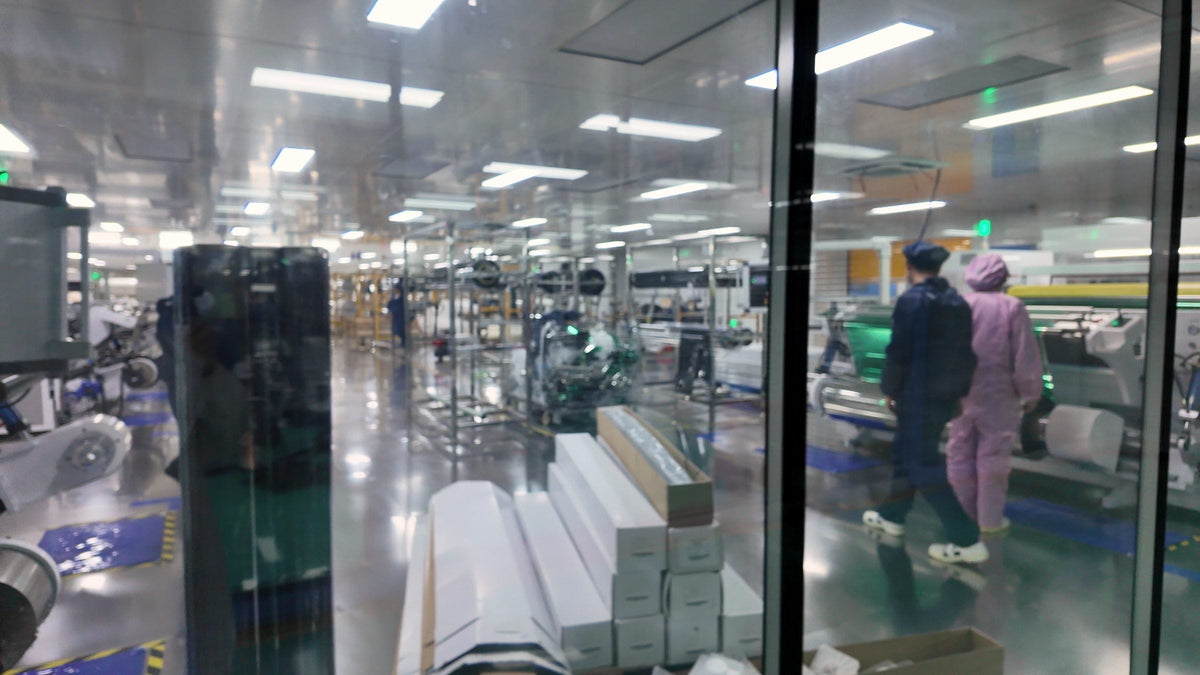
Watch the "IR rejection 99%" claim. It is usually measured at 950nm or 1400nm, one friendly wavelength where every film scores high. Full-spectrum IR across 780 to 2500nm is the honest test, and honest numbers land lower. Ask which one you are being quoted. We give both figures on the spec sheet, by shade, because we build the film and have nothing to hide in the data.
The spec that separates a real UV rejection tint from a dyed impostor is not UV at all. It is full-spectrum IR and TSER. UV 99% is universal. Broadband IR is not.
Test it yourself. Free samples ship on our window tint, and a UV meter plus a heat lamp will settle any argument in a minute.
Pull a free sample, the spec sheet, and a wholesale quote on our wholesale and samples page.
FAQ
Do ceramic tints block UV rays?
Yes. A quality ceramic tint blocks about 99% of UV, mostly from its base and adhesive layers. Most automotive film hits this, so UV blocking alone is not what makes ceramic worth the price.
How do I judge a ceramic tint's real heat performance?
Ask for full-spectrum IR across 780 to 2500nm and the TSER at the shade you sell, not a single-wavelength "99% IR" headline. Then compare two films at the same VLT.
Is a UV rejection tint different from a heat rejection tint?
They overlap but are not the same. UV blocking protects your interior from fading. Heat rejection depends on IR performance and TSER. A good ceramic film does both, so check both numbers.
Shops stocking film for these jobs can see current shades and VLT options in our window tint film collection.

Condividi:
Window Tint for Heat Rejection: What Tint Shops Should Offer
Cybertruck PPF: Protecting Stainless Steel and Why Shops Recommend Matte