
Cast vs. Calendered Paint Protection Film: What Shops Should Really Choose
Most buyers searching for "cast or calendered film" need a practical answer: Which film installs cleanly, holds its shape, and makes financial sense in day-to-day shop operations?
The question often mixes two product categories. The distinction between cast and calendered film comes mainly from PVC automotive films used for color-change wraps, commercial graphics, and full-vehicle wraps. With modern TPU paint protection film (PPF), the layer construction, topcoat, adhesive, optical clarity, self-healing performance, and hydrophobic properties also matter.
The manufacturing label alone does not tell you whether a PPF is suitable for professional installation.
Cast and calendered film: the technical difference
Manufacturers produce cast film by applying the source material in liquid form to a carrier and then curing it. This process creates relatively little internal stress. The finished film conforms well to compound curves, body lines, channels, and three-dimensional parts, with less tendency to return to its original shape.
For full wraps, bumpers, mirror caps, and highly contoured body panels, a high-quality cast automotive film is usually the better technical choice.
Calendered film is formed to the required thickness by passing the material through rollers. The process is cost-efficient but may leave more mechanical stress in the film. Calendered products are generally better suited to flat or slightly curved surfaces, shorter-term applications, commercial lettering, and projects with tighter material budgets.
That does not make every calendered film inferior. The material must match the application. Problems arise when a film designed for flat surfaces is installed on highly contoured vehicle parts and later pulls back from edges, channels, or deep recesses.
Why the micron rating tells only part of the story
Film thickness in microns is important for PPF, but it is not proof of quality by itself. A thicker film may provide a greater physical barrier while being harder to position or wrap around edges. A thinner film may install easily but still needs to provide the right level of protection for the intended application.
Shops should evaluate at least the following specifications together:
- Total thickness in microns and the measurement method
- Base material, such as TPU or PVC
- Topcoat construction and function
- Heat response and material recovery
- Optical clarity and surface appearance
- Adhesive system and repositionability
- Edge stability after installation
- Self-healing and hydrophobic performance
- Written warranty terms
- Cost per linear meter and per usable square meter
A supplier that lists only "200 microns" or "cast quality" has not explained how the film will perform during routine installation.
Comparison for B2B buyers
The table below intentionally separates automotive wrap films from TPU paint protection film. Technical specifications that have not been published are left unassumed.
| System | Thickness | Raw material or material base | Self-healing / hydrophobic | Warranty | Price tier per linear meter |
|---|---|---|---|---|---|
| Calendered automotive film | Varies by manufacturer and product line | Usually PVC; verify the technical data sheet | Not automatically included | Product-specific | Generally entry to mid-range |
| Cast automotive film | Varies by manufacturer and product line | Usually PVC; verify the technical data sheet | Not automatically included | Product-specific | Usually priced above calendered film |
| XPEL PPF | 200 μm in the market comparison used here | Verify the specific material specification for each product | Verify against the applicable product data sheet | Verify by product and market | Premium segment with a high cost per linear meter |
| HIGHCOOL TPU paint protection film | Varies by series; confirm before ordering | TPU raw materials from Wanhua, Covestro, BASF, or Lubrizol | Self-healing and hydrophobic options; confirm the specific series in writing | PPF: W 5 years, C 7 years, E 8 years, L 10 years; colored TPU PPF: Standard 5 years, Premium 7 years | Factory-direct B2B volume pricing; unit price available on request |
HIGHCOOL supplies rolls measuring 1.52 × 15 meters, approximately 60 inches × 49 feet. Each roll contains 15 linear meters and 22.8 square meters, or about 245 square feet, of gross material.
For a realistic cost calculation, do not simply divide the roll price by 15. Include waste, rework, claim risk, and installation time.
What shops should actually choose
For a conventional color-change wrap, a high-quality cast automotive film is generally the right product. It is designed for complex vehicle geometry and reduces the risk of the film lifting or pulling back from edges and recesses.
For flat commercial graphics, temporary advertising, or less demanding surfaces, calendered film may be the more economical choice. A lower purchase price has little value if the application places the film under more stress than it can handle.
For stone-chip protection, the decision should not be based on "cast" versus "calendered" alone. First confirm that the product is a TPU paint protection film with an appropriate topcoat. Protection, surface recovery, hydrophobic performance, resistance to yellowing, edge behavior, and the documented material warranty matter more than a single manufacturing term.
Shops should buy the system that produces repeatable results within their installation process, not the product with the most impressive technical description.
Evaluate purchase price and process cost separately
XPEL has a clear process advantage with DAP. Its software and extensive vehicle library provide pre-cut patterns that can substantially reduce manual cutting. Buyers should account for that benefit. For high-volume shops, access to a mature pattern database can materially affect the total job cost.
HIGHCOOL does not currently offer a system presented as an equivalent replacement for XPEL DAP. Shops therefore need their own plotter and template workflow or a controlled hand-cutting process. Installers already using proprietary templates, knifeless methods, or standardized hand-cutting procedures may place more weight on material cost, volume pricing, and supply terms.
The correct comparison is:
Material cost + waste + preparation time + cutting + installation time + potential rework.
A free sample provides more useful information than a price list alone. Test the film on a realistic contour. Check repositionability, squeegee feel, edge finishing, and surface appearance, then document the labor time required.
What documentation belongs in the purchase order
Ask the supplier to confirm the exact product series, raw-material designation, thickness, warranty, and surface properties in writing. Reference certificates, TÜV documentation, or test reports only when they apply to the specific product and intended market.
For HIGHCOOL, buyers must also distinguish among the W, C, E, and L clear-film series and the Standard and Premium colored TPU PPF series. Warranty terms should not be transferred from one series to another.
PPF is also not the same product as automotive window tint. Windshield and front side-window requirements vary by country, state, and province. Advice about PPF or vehicle wraps does not replace any approval, certification, or permit required in the relevant market. A permanent full-vehicle color change may also trigger vehicle-registration or insurance notification requirements in some jurisdictions.
Make the decision around the application and the complete process
Cast automotive film is usually the stronger choice for complex vehicle-wrapping work. Calendered film can be sufficient for flat, price-sensitive applications. For genuine stone-chip protection, evaluate TPU PPF as a complete system rather than selecting it solely by a "cast or calendered" label.
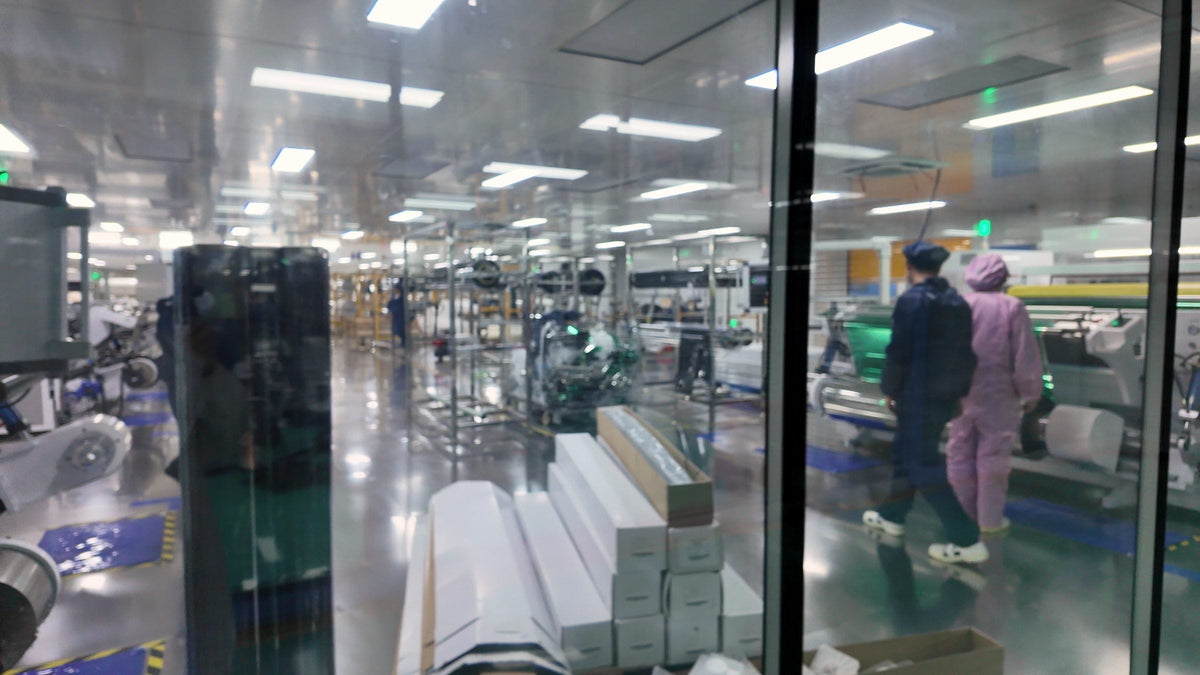
HIGHCOOL supplies factory-direct TPU paint protection film to installers, wrap shops, and distributors from its own 20,000-square-meter manufacturing facility. PPF is stocked in the United States. For international orders, confirm the shipping route, import requirements, and delivery schedule in the specific quotation.
Request a free sample and a tiered B2B quote. HIGHCOOL provides a direct factory quotation within 12 hours for 1.52 × 15-meter rolls.
Email: contact@highcool.com
WhatsApp: +86 133 6199 2295
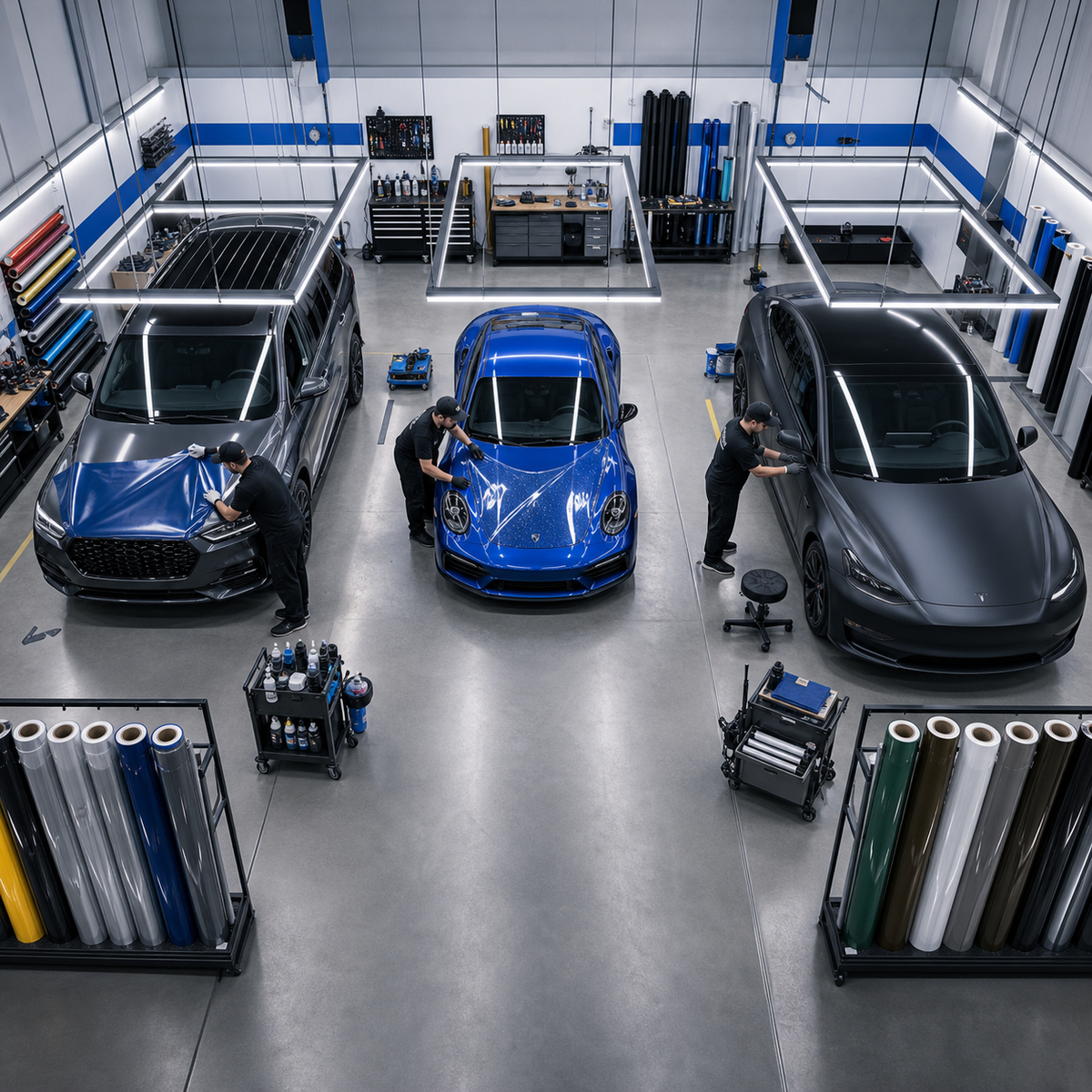
Need rolls for this kind of job? Ask for a quote, or look through the Paint Protection Film (PPF) range first.

Share:
PPF Brands Compared: XPEL, 3M, SunTek and HIGHCOOL's TPU Alternative
What Is the Best Paint Protection Film for Installation Shops?