
Keeping a car looking new is far more challenging than most owners expect. Even with regular washing and careful driving, daily exposure to sunlight, road debris, environmental fallout, and improper cleaning slowly erodes a vehicle’s finish. Over time, gloss fades, scratches accumulate, and the once-perfect paint begins to show its age.
While washing and waxing can improve appearance temporarily, they do little to prevent long-term damage. For drivers who want lasting protection rather than short-term shine, Paint Protection Film (PPF) has become one of the most effective solutions available today.
This guide explains how PPF works, what actually damages automotive paint, why professional installation matters, and how modern PPF technology can keep your car looking new for years—not just months.
Why Car Paint Ages Faster Than You Think
Automotive paint is engineered to be durable, but it is constantly under attack. The clear coat—the outermost protective layer—is surprisingly thin and vulnerable to cumulative damage.
Sunlight and UV Radiation
Ultraviolet radiation slowly breaks down the chemical structure of clear coat. This leads to oxidation, loss of gloss, and uneven fading. In sunny or high-altitude regions, this process accelerates significantly.
Road Debris and Abrasion
Highways throw up gravel, sand, salt, and small debris at speed. Even minor impacts create micro-chips that weaken paint over time. These small defects often spread as moisture and contaminants penetrate the surface.
Environmental Contaminants
Bird droppings, tree sap, insect residue, and acid rain are more than cosmetic nuisances. Many are acidic or adhesive and can chemically etch the clear coat if left on the surface too long—sometimes within hours under heat.
Improper Washing and Daily Wear
Automatic car washes, dirty sponges, and aggressive drying techniques introduce swirl marks and micro-scratches. Door dings, shopping carts, and careless parking add physical damage that accumulates year after year.
Together, these factors explain why even well-maintained cars often lose their “new” appearance far sooner than owners expect.
What Is Paint Protection Film (PPF)?
Paint Protection Film is a transparent, high-performance polyurethane film applied to a vehicle’s painted surfaces. Once installed, it acts as an invisible barrier between the paint and the outside world.
Unlike waxes or sealants, PPF is a physical layer of protection. It absorbs impacts, resists abrasion, and shields paint from chemical and environmental damage while remaining virtually invisible.
Originally developed for aerospace and military applications, modern PPF has evolved into a refined automotive solution suitable for everything from daily drivers to exotic supercars.
How PPF Protects Your Car in Real-World Driving
PPF works because it addresses the actual causes of paint damage—not just the symptoms.
Impact Absorption
The elastic polyurethane core absorbs energy from rock chips and debris, preventing paint from chipping underneath. This is especially valuable on high-impact areas such as bumpers, hoods, mirrors, and rocker panels.
Scratch Resistance
Light scratches and swirl marks that would permanently damage paint often remain confined to the film instead.
Chemical and UV Resistance
High-quality PPF resists staining from bird droppings, bugs, and road contaminants, while also blocking UV radiation that causes fading and oxidation.
Surface Hydrophobicity
Most modern films include a hydrophobic top layer that repels water and dirt, making cleaning easier and reducing the chance of abrasive buildup.
The Science Behind Modern PPF: A Multi-Layer Defense
Advanced PPF is not a single sheet of plastic—it is a multi-layer engineered system, typically consisting of:
-
Topcoat Layer – A self-healing, stain-resistant surface that protects against light scratches and environmental contamination
-
Polyurethane Core – The impact-absorbing layer that provides physical protection
-
Adhesive Layer – A specially formulated adhesive that bonds securely to paint without damaging it upon removal
Each layer plays a specific role, working together to create long-term protection without altering the vehicle’s appearance.
Self-Healing Technology: Why PPF Stays Looking New
One of the defining features of premium PPF is self-healing capability. Minor scratches and swirl marks can disappear when the film is exposed to heat—either from sunlight, warm water, or controlled heat sources.
This self-healing behavior is not a coating that wears off; it is a property of the material itself. Over time, this allows the film to maintain a smooth, glossy surface even under regular use.
Why Professional Installation Makes All the Difference
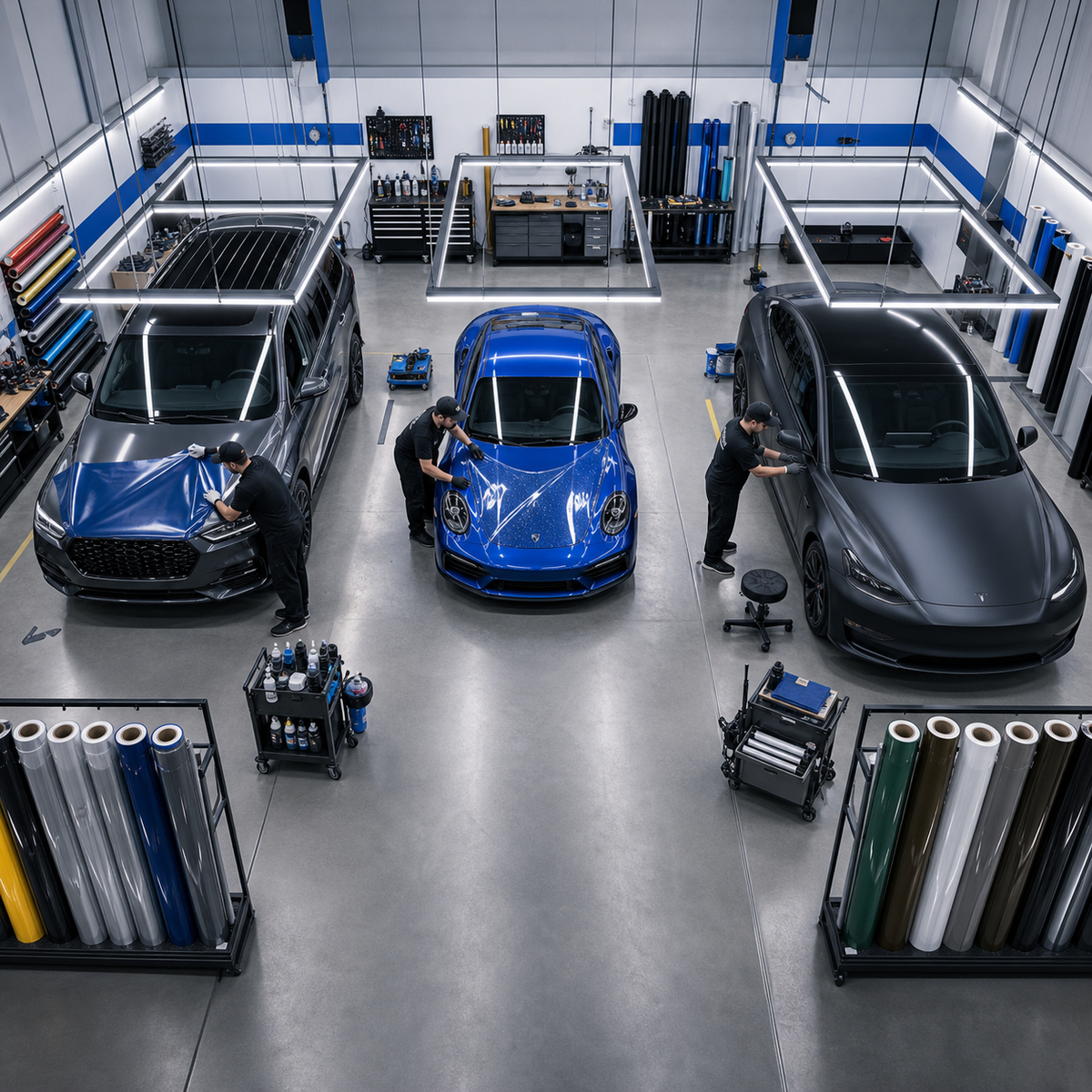
PPF is highly technical to install. While DIY kits exist, professional installation remains the gold standard for both appearance and durability.
Precision Fit
Professional installers use vehicle-specific cutting patterns to ensure precise coverage that aligns perfectly with body lines, edges, and curves.
Surface Preparation
Before installation, the paint is thoroughly cleaned and often corrected to remove defects. Any imperfection left beneath the film will remain visible.
Controlled Environment
Dust, moisture, and temperature all affect adhesion. Professional shops install PPF in controlled environments to prevent contamination and ensure proper bonding.
Long-Term Reliability
Correct installation reduces edge lifting, bubbling, and premature failure—issues that can compromise both protection and appearance.
For most vehicles, professional installation is also required to qualify for long-term manufacturer warranties.
How Long Does PPF Really Last?
With proper installation and care, modern PPF can last 7–10 years or more. Premium films often come with warranties covering yellowing, cracking, staining, and delamination.
Longevity depends on:
-
Film quality
-
Installation precision
-
Climate and usage
-
Maintenance habits
In contrast, unprotected paint may require polishing or repainting within a few years to restore appearance.
PPF vs. Ceramic Coating: Understanding the Difference
Ceramic coatings and PPF are often compared, but they serve different purposes.
-
PPF provides physical protection against impacts and abrasion
-
Ceramic coatings provide chemical resistance, gloss enhancement, and easier cleaning
Many owners choose to combine both: PPF on high-impact areas, followed by ceramic coating over the entire vehicle (including the film) for maximum protection and ease of maintenance.
When Is the Best Time to Install PPF?
The ideal time to install PPF is as early as possible—preferably when the car is new. Every mile driven without protection increases the chance of permanent paint damage.
That said, vehicles with existing wear can still benefit. Professional paint correction can restore the surface before film installation, effectively “resetting” the paint’s appearance.
The Long-Term Value of Protecting Your Paint
PPF is not just about looks—it is about value preservation.
Appearance Retention
A car that looks newer for longer is more enjoyable to own and easier to sell.
Reduced Maintenance Costs
Less frequent polishing and repainting saves time and money over the life of the vehicle.
Stronger Resale Value
Vehicles with well-preserved factory paint often command higher resale prices and attract buyers faster.
For owners who plan to keep their car several years—or who care deeply about condition—PPF often pays for itself.
Manufacturing Quality: Why Film Engineering Matters
Not all PPF performs the same. From a technical perspective, long-term results depend heavily on material consistency, coating uniformity, and adhesive stability.
Manufacturers that operate at a factory level with controlled production processes are better positioned to deliver predictable performance across different climates and vehicle types. Companies such as HIGHCOOL, which focus on automotive film manufacturing rather than retail branding, emphasize raw material control, precision coating, and batch-to-batch consistency. This approach supports installers by reducing variability, minimizing callbacks, and ensuring that the film performs as intended years after installation.
In real-world terms, better manufacturing means the film stays clear, stable, and protective over time—exactly what owners expect when investing in long-term paint protection.
Is PPF Right for Every Vehicle?
PPF is especially valuable for:
-
Daily drivers exposed to highways and debris
-
Luxury and performance vehicles
-
Electric vehicles with large painted surfaces
-
Owners planning long-term ownership
Even for practical vehicles, targeted PPF on high-impact areas can dramatically reduce visible wear.
Final Thoughts: Keeping Your Car Looking New Is About Prevention
Paint deterioration is gradual but inevitable without protection. Washing and waxing improve appearance temporarily, but they cannot stop the physical and chemical forces that damage paint over time.
Paint Protection Film changes that equation by adding a durable, self-healing barrier that absorbs damage before it reaches your paint. When professionally installed and backed by quality manufacturing, PPF allows owners to enjoy their vehicle without constantly worrying about chips, scratches, or fading.
Protecting your paint early is not an indulgence—it’s a practical decision that preserves beauty, value, and peace of mind for years to come.

Share:
Ceramic Coating vs Wax: What Detail Shops Should Offer
Legal Window Tint and Resale Value: A Guide for Tint Shops