Private Label Vinyl Wrap:
Complete Guide for Distributors & Brand Builders (2026)

Private label vinyl wrap is the strategy that separates commodity distributors from brand owners. A commodity distributor buys a factory brand at wholesale price and resells it under the factory's name — competing with every other distributor in the same territory on price alone. A brand owner buys from the same factory at the same price (or lower, at volume), but sells under their own brand with their own positioning, their own colour story, and their own client loyalty. The margin difference between these two approaches is not small: a well-managed private label programme typically delivers 30–45% gross margin on resale versus 12–22% for branded-product distribution.

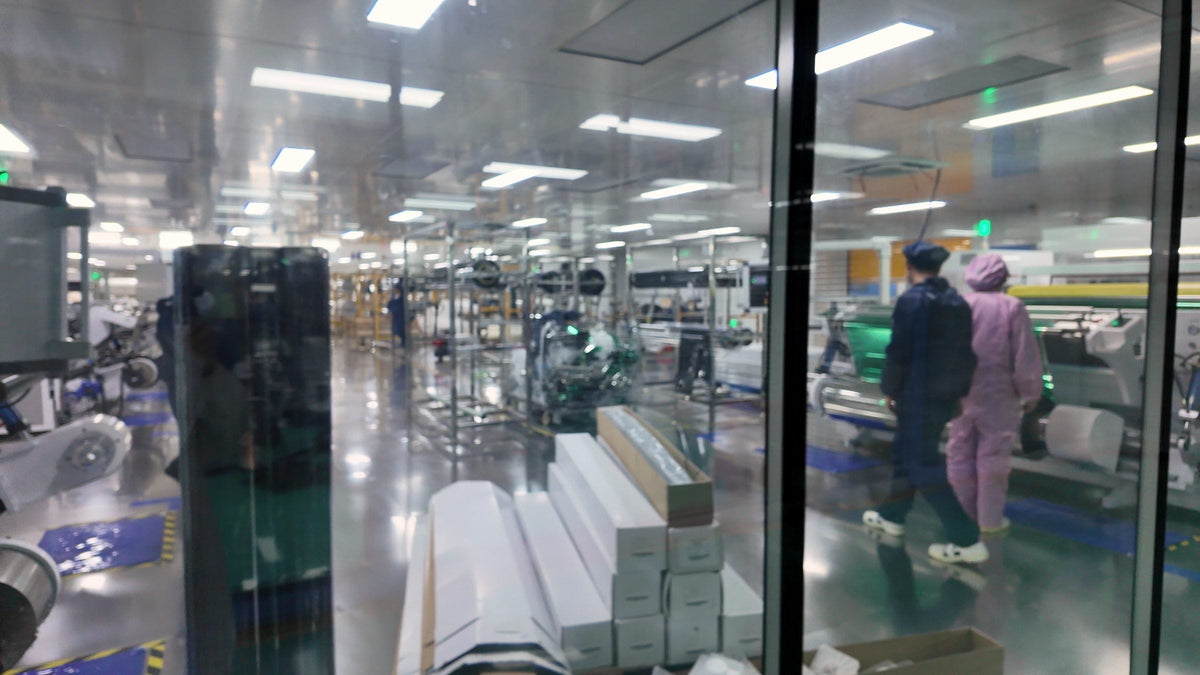
Highcool (Shanghai Chihuan Advanced Material Technology Co., Ltd.) manufactures cast vinyl wrap, TPU PPF, and window film in our 20,000 m² Shanghai facility, supplying private label vinyl wrap programmes to distributors and brand operators in 60+ countries. Our ISO 9001:2015 certified facility handles the complete programme: film production, colour formulation, packaging design guidance, private label print on all branding touchpoints, and batch documentation that supports the quality warranties a branded product must deliver. This guide covers everything a distributor needs to evaluate, plan, and launch a private label vinyl wrap programme.

30–45%
Gross margin — private label vs 12–22% for third-party brand distribution
500 lm
Minimum linear metres for Highcool private label programme entry
$2,400–$4,700
Typical full programme launch cost including product + brand setup
4–8 wks
Lead time — private label programme from art approval to first delivery

01 — OEM vs Private Label Vinyl Wrap: What the Difference Actually Means

The terms OEM and private label are used interchangeably in the vinyl wrap industry — sometimes correctly, sometimes not. Understanding the precise distinction prevents misaligned expectations when approaching factories about private label vinyl wrap programmes.

🏭 OEM — Original Equipment Manufacturer
🔬Film specification is defined by the buyer — unique formulation, custom adhesive, bespoke UV calibration
🎨Colour formulation developed specifically for the buyer's brand — not a factory standard colour
📦Full packaging, documentation, and all branding carries buyer's identity exclusively
🔒Exclusive specification — factory cannot sell the identical product to another buyer
📊Higher MOQ required — typically 2,000+ lm per colour for custom specification runs
Best for: established brands with specific product requirements and proven volume
🏷️ Private Label — Branded Factory Product
🔬Film uses factory's proven standard specification — the same chemistry, just rebranded
🎨Colours selected from factory's existing validated range — 300+ colours typically available
📦All external branding — packaging, core tube, back-liner, labels — carries buyer's brand
🔓Factory may supply the same film to other buyers under different private label brands
📊Lower MOQ entry point — typically 500 lm for established factories like Highcool
Best for: distributors launching a brand, regional resellers, wrap shop chains

For most distributors entering the private label vinyl wrap market for the first time, private label is the correct starting model: lower capital commitment, proven film specification, faster time to market, and no product development risk. OEM becomes relevant when volume is established (typically 5,000+ lm per year), when a specific technical requirement cannot be met by any factory standard product, or when exclusive product specification is strategically important to the brand's competitive positioning.

大实话 — most "OEM vinyl wrap" offerings are actually private label: When a factory says they offer OEM service, they almost always mean they will print your logo on their standard product packaging. That is private label, not OEM. True OEM — where the buyer defines the film specification and the factory manufactures to that specification — requires dedicated production runs, material sourcing adjustments, and formulation validation that most factories only offer at significant volume. Ask the factory directly: "Will my product use your standard film specification, or will you manufacture to a specification I define?" The answer tells you whether you are buying OEM or private label.

02 — Why Distributors Launch Private Label Vinyl Wrap: 5 Strategic Advantages

The business case for private label vinyl wrap is not primarily about product differentiation — the film may be identical to the factory standard at a specification level. The case is about brand equity, margin control, and competitive positioning. Five specific advantages make private label compelling for established distributors:

1
Margin expansion — 30–45% vs 12–22% for branded distribution

A distributor buying TeckWrap, Avery Dennison, or 3M at trade pricing and reselling to installers operates within the brand's defined margin structure — typically 12–22% gross margin after the brand's extraction. A private label distributor buying from the same factory at factory-direct pricing and reselling under their own brand sets their own resale price — typically 30–45% gross margin at competitive market rates. The brand premium goes to the distributor, not the manufacturer.

Example: Factory-direct film at $5/m² private label → resale at $10/m² to installers = 50% gross margin.
Same film as branded TeckWrap via distributor at $7/m² → resale at $9/m² = 22% gross margin.
Private label advantage: +28 percentage points gross margin on the same underlying product.
2
Price control — no RRP constraints from the brand manufacturer

Distributing a premium brand typically comes with pricing obligations — minimum advertised prices, RRP structures, and territory agreements that limit how the distributor can compete. Private label pricing is entirely controlled by the distributor. They can run promotions, create volume tiers, and price for their specific market without reference to a brand manufacturer's pricing policy.

3
Customer loyalty to the distributor's brand, not the manufacturer

When an installer buys TeckWrap from a distributor and has a positive experience, their loyalty is to TeckWrap — not to the distributor. They will buy TeckWrap from whoever is cheapest or most convenient next time. When an installer buys under the distributor's private label brand and has a positive experience, their loyalty is to the distributor's brand. The relationship stays with the distributor.

4
Supply chain independence — no dependency on any one brand's availability

Distributors who build their business on a named brand are exposed to manufacturer supply disruptions, pricing changes, territory policy changes, and product discontinuation. A private label programme can source from multiple factories and maintain supply continuity. If Highcool has a temporary stock issue on a specific colour, the private label distributor can source that colour from a second factory under the same brand identity — no disruption visible to end clients.

5
Business valuation — a brand asset vs a reselling arrangement

A distributor business built on reselling branded product has no brand asset — the value walks out the door if the distribution agreement ends. A distributor business built on a private label brand has a genuine business asset: the brand, the client base, the product documentation, and the supplier relationships are all owned by the business. Private label programmes consistently produce higher business valuations at exit.

03 — Full Branding Scope: What Gets Your Logo in a Private Label Vinyl Wrap Programme

One of the most common misunderstandings about private label vinyl wrap is the scope of branding. Some distributors expect complete exclusivity on product design; others assume only the box gets a new label. The actual scope of a well-structured private label programme is more comprehensive than most buyers realise — and it is all of it that determines whether the product feels genuinely proprietary or obviously rebranded.

✅ Standard Included
📦Outer packaging box — full brand print, colour scheme, logo, product specifications
🧻Core tube printing — brand name and logo on the roll core visible when unpacked
📄Back-liner print — brand name printed on the release liner of the film itself
🏷️Roll end label — product code, colour name, lot number under buyer's brand
📋Technical Data Sheet — buyer's brand on all product documentation
🃏Sample swatch cards — branded colour sample cards for distributor sales use
⚙️ Optional / Premium
🎨Custom colour names — buyer-defined naming system instead of factory standard codes
📱QR code on packaging — links to buyer's website or installer portal
🌐Custom warranty card — buyer's brand and contact on all warranty documentation
🔬Custom film specification — thickness, adhesive type, UV calibration modifications (OEM level, higher MOQ)
📦Premium packaging — magnetic closure boxes, foam inserts, carry cases for sample kits
🏭Factory audit report — buyer's NDA and audit documentation for enterprise clients
❌ Not Customisable (Standard PL)
🔬Film chemistry — same Wanhua PVC + BASF UV + Ashland adhesive formulation as standard product
🎨Colour formulation — uses factory validated pigment system (OEM only for custom colours)
🔒Factory exclusivity — factory may supply the same film to other private label clients
📐Film specification parameters — elongation, dimensional stability, UV rating are factory standard
The back-liner print is the most important branding element buyers underestimate: When an installer unrolls a film during application, the back-liner is visible throughout the installation process. Factory branding on the back-liner — a competitor's name visible to a professional installer during every job — undermines the private label perception. Ensuring your brand is on the back-liner from Day 1 of the programme is a non-negotiable requirement. Confirm this explicitly before signing any private label agreement.

04 — Margin Structure: Private Label Vinyl Wrap vs Third-Party Brand Distribution

The margin advantage of private label vinyl wrap over branded distribution is real, measurable, and sustainable. The table below models three distribution scenarios for the same underlying film product at identical quality specification:

Distribution Model Buy Price / m² Resale Price / m² Gross Margin Brand Control
Premium brand distributor
3M, Avery — brand extracted margin
$7.50–$9.50 $9.00–$12.00 12–22% Zero — brand's RRP constrains pricing
Mid-tier brand distributor
TeckWrap, Oracal 970 — margin moderate
$5.50–$7.50 $8.00–$11.00 25–35% Limited — brand RRP still applies
Private label (factory-direct)
Highcool OEM/ODM — buyer sets resale price
$3.50–$6.00 $8.00–$14.00 (buyer-set) 30–60% Full — buyer controls all pricing
Private label advantage over premium brand $3–$5.50/m² lower buy price +18–38pp gross margin Full pricing sovereignty
📐 Annual Margin Impact — Private Label vs Premium Brand Distribution at 5,000m²/Year

Premium brand distribution (3M/Avery) at 20% gross margin: $1,000 gross profit per 100m² sold → $10,000 annual gross profit at 5,000m². Private label (Highcool factory-direct) at 45% gross margin: $4,050 gross profit per 100m² sold$20,250 annual gross profit at 5,000m². Annual private label advantage at this volume: $10,250 additional gross profit — from the same underlying film, same installer relationships, same market territory. The margin difference is permanently compounding: it grows proportionally with every metre sold.

The factory vs brand supply chain analysis — including a point-by-point comparison of what each tier delivers in margin, exclusivity, and documentation — is in Vinyl Wrap Factory vs Brand: 6 Differences That Change Your Margin. For distributors evaluating the private label decision, the margin structure section in that guide provides the detailed supply chain context.

05 — MOQ Benchmarks and Investment for Private Label Vinyl Wrap in 2026

Minimum order quantity is the most common barrier that prevents distributors from launching private label vinyl wrap programmes — often because they overestimate what is required. The 2026 MOQ landscape for factory-direct private label vinyl wrap is more accessible than most distributors believe:

Programme Tier MOQ (Linear Metres) Approx. Rolls Film Investment (factory-direct) Branding Scope
Entry private label
Box + roll label only
200–500 lm 8–20 rolls $700–$3,000 Outer packaging + roll label
Standard private label
Full packaging suite
500–1,000 lm 20–40 rolls $1,750–$6,000 Full: box + core tube + back-liner + TDS + swatch cards
Premium private label
Multiple SKUs, custom names
1,000–3,000 lm 40–120 rolls $3,500–$18,000 Full suite + custom colour naming + warranty documentation
OEM specification
Custom film formulation
2,000+ lm per colour 80+ rolls per colour $7,000–$20,000+ Full suite + exclusive specification + factory exclusivity option
Highcool private label entry point — 500 lm (approx. 20 rolls): At Highcool's standard private label programme, the minimum is 500 linear metres across the selected colour range — approximately 20 rolls. At factory-direct pricing of $3.50–$6.00/m², the product investment is $1,750–$3,000. Add brand setup (packaging design $300–$800 + print setup $200–$500 + sample swatch production $150–$400) and the total programme launch cost is $2,400–$4,700. At resale pricing of $8–$14/m² to professional installers, the initial 500m² inventory generates $4,000–$7,000 in revenue — recovering the full launch investment on the first order cycle.

06 — 6-Step Launch Process: From Decision to First Branded Delivery

1
Define your brand positioning and colour range strategy

Before approaching any factory, answer three questions: What is your brand's market positioning (premium, professional mid-tier, or value)? Which 8–15 colours will form your launch range? What is your primary installer customer profile and what finishes do they need most? A well-defined positioning brief makes factory conversations 60% shorter and prevents the most expensive mistake in private label: launching with the wrong colours for your market.

Launch range recommendation: 3–4 gloss (including white, black, key brand colour) + 2 matte + 1 satin + 1–2 specialty (metallic/colour-shift). This 7–10 colour launch set covers 80%+ of professional installer demand and minimises initial inventory commitment.
2
Qualify and select your manufacturing partner

Private label programme quality is only as good as the factory behind it. The 7-point supplier qualification checklist in Section 07 should be completed before committing any budget. Request samples of the film itself (not just packaging samples), request a lot-specific TDS, verify cast vinyl construction, and confirm batch colour consistency capability (delta-E ≤1.5). Factories that cannot or will not provide these are not capable of running a credible private label programme.

3
Create brand identity and packaging artwork

Your brand identity package should include: logo (print-ready vector files), colour palette (CMYK + Pantone references), brand name, and tagline. From these, packaging artwork is produced for: outer box (all 6 faces), core tube print (2-colour wrap print), back-liner repeat print pattern, roll end label, TDS header, and sample swatch card template. Professional design for a vinyl wrap brand package costs $300–$800 and is a non-negotiable investment — DIY packaging undermines the premium brand perception that justifies the resale price premium.

4
Place initial order and approve physical samples

Submit the initial private label order with confirmed colour list, MOQ quantity per colour, packaging artwork files (300 DPI print-ready), and core tube print file. Request physical samples before full production approval: one roll of each colour in prototype packaging to verify colour accuracy, packaging print quality, and back-liner print registration. Approve only after physical inspection — digital proofs do not reveal colour shift, print registration errors, or packaging construction quality.

Prototype sample approval typically adds 7–10 business days to the production timeline but eliminates the most expensive error mode in private label: approving a production run without physical quality verification.
5
Production, QC, and documentation

During production, the factory performs lot-specific quality control: batch colour measurement against approved reference standard (delta-E ≤1.5), adhesion test, elongation verification, and dimensional stability check. Request the full QC report with each shipment — this documentation becomes the technical foundation of your brand's warranty commitments. REACH compliance certificate should be provided for European market sales. ISO certification should be confirmed before this stage, not after.

6
Market launch and installer programme activation

A private label launch is not just a product delivery — it is a brand launch. Prepare: branded sample boards (A4 swatch of each colour in your brand packaging), a product specification sheet for installer technical reference, a warranty document with your brand name, and a trade pricing sheet. Distribute sample boards to your top 15–20 installer accounts before the stock arrives. Their familiarity with the product before the commercial launch accelerates first-order conversion significantly.

Target: sample boards distributed 2–3 weeks before first commercial stock arrives → installers can show clients "their" brand film → first orders placed before first delivery, eliminating stock holding without sales.

07 — Supplier Qualification: 7 Checks Before Committing Your Brand to a Factory

The most consequential decision in a private label vinyl wrap programme is factory selection. Your brand's reputation will be attached to every roll this factory produces. A film quality failure under your private label name damages your brand — not the factory's. Seven checks verify whether a factory can actually deliver programme-quality private label product:

# Qualification Check What Good Looks Like Red Flag
1 Cast vinyl verified by TDS Lot-specific TDS with elongation >150% and dimensional stability <0.3% at 70°C "Commercial grade vinyl" with no specification data — cannot be verified
2 Batch colour consistency (delta-E ≤1.5) Written commitment to provide batch colour measurement data with every shipment Verbal assurance of colour consistency — no documentation, no measurement
3 ISO 9001:2015 certification Current certificate from accredited body — verify expiry date and scope Self-declared quality management, or certificate with no visible certifying authority
4 REACH compliance documentation SGS, Bureau Veritas, or Intertek REACH declaration — lot-traceable No REACH documentation, or self-certification with no testing authority
5 Back-liner print capability Physical sample showing your brand name printed on release liner at uniform registration Factory only prints on packaging but not on back-liner — the most visible branding element during installation
6 Packaging production lead time First run 4–8 weeks (includes packaging tooling + print setup). Repeat orders 2–4 weeks after artwork approval No clear lead time commitment — factories without production planning cannot guarantee delivery dates
7 NDA / confidentiality agreement Factory signs mutual NDA covering buyer's brand identity, colour selections, and programme terms before any artwork is shared Factory insists on seeing branding or colour selections before signing NDA — exposes your brand strategy to disclosure risk
诚实的限制 — private label does not guarantee product exclusivity: Unless you negotiate explicit exclusivity at OEM specification level (higher MOQ, typically 2,000+ lm per colour), the factory can and likely will supply the same film under a different private label to other buyers in your market. This is not a defect of the model — it is the standard private label structure. The solution is not exclusivity at the product level (expensive), but exclusivity through branding, client relationships, and technical support that competitors cannot replicate. Your brand's installer relationships, training, and post-sale support are your exclusivity — not the film chemistry.

08 — Highcool Private Label Vinyl Wrap Programme

Highcool's private label vinyl wrap programme is designed for distributors and brand operators who have completed territory analysis, verified their installer client base, and are ready to launch a branded product under their own identity. Our ISO 9001:2015 certified Shanghai facility handles the complete programme from film production to branded packaging.

Programme Element Highcool Private Label Capability
Film specification Premium cast vinyl with Wanhua Chemical PVC, BASF UV stabilisers, Ashland adhesive. Same chemistry as factory's B2B standard supply — proven in 60+ country markets.
Colour range available for PL 300+ standard colours: gloss, matte, satin, metallic, colour-shift, chrome, brushed, carbon fibre. All available under private label branding without colour development cost.
Full branding scope Outer packaging box + core tube print + back-liner print + roll end label + TDS header + sample swatch cards — all under buyer's brand. QR code and custom colour naming available.
Batch colour certification Delta-E ≤1.5 measurement provided with every shipment. The documentation standard that supports your brand's warranty commitments to professional installers.
Minimum order quantity 500 linear metres (approximately 20–25 rolls) across selected colour range for standard private label programme. OEM specification available from 2,000 lm per colour.
REACH compliance SGS / Intertek REACH certification — lot-traceable. Essential for European market private label sales.
PPF private label TPU PPF private label available from same facility. Single-supplier private label programme covering both vinyl wrap and PPF under one brand identity.
NDA policy Mutual NDA signed before any branding artwork or colour selection discussion. Your brand strategy is protected before any disclosure.
First delivery lead time 4–8 weeks from artwork approval to first branded shipment. Repeat orders 2–4 weeks (after packaging tooling is established from first run).
Programme pricing Factory-direct film pricing $3.50–$6.00/m² depending on specification and volume. Private label programme pricing confirmed in writing before commitment.

📋 Launch Your Private Label Vinyl Wrap Brand with Highcool

From your first brand concept to the first roll with your logo arriving in your warehouse — Highcool's OEM/ODM programme gives you the factory capability, batch documentation, and programme support that a credible private label brand requires. Request a programme consultation and sample pack before committing.

Explore OEM/ODM Programme → highcool.com/pages/oem-odm
📧 contact@highcool.com 💬 WhatsApp: +86 133 6199 2295 🌍 60+ countries ⏱ 12-hour response 🏭 20,000m² factory · ISO 9001:2015

FAQ: Private Label Vinyl Wrap Questions

What is private label vinyl wrap?
Private label vinyl wrap is automotive vinyl film manufactured by a factory and sold under a distributor's or reseller's own brand name, logo, and packaging — rather than the factory's brand. The film specification uses the factory's proven standard chemistry, but all external branding — packaging boxes, core tube printing, film back-liner print, sample swatch labels, and documentation — carries the buyer's brand identity. Private label vinyl wrap enables distributors to build brand equity in their territory, charge premium retail prices above commodity trading margins, and create customer loyalty to their brand rather than the underlying factory. Minimum order quantities for private label vinyl wrap start at 500 linear metres at established OEM factories like Highcool.
How much does private label vinyl wrap cost to launch?
Private label vinyl wrap launch cost has two components. Product investment: 500 linear metres (approximately 20–25 rolls) at Highcool factory-direct pricing of $3.50–$6.00/m² = $1,750–$3,000 in initial film inventory. Brand setup cost: custom packaging design ($300–$800) + packaging print setup ($200–$500) + sample swatch production ($150–$400). Total launch investment: $2,400–$4,700 for a complete private label programme at minimum viable scale. At resale pricing of $8–$14/m² to professional installers, the 500-metre initial inventory generates $4,000–$7,000 in revenue — recovering the full launch investment on the first order. This makes private label vinyl wrap one of the lowest-barrier brand-building investments available to an established distributor.
What is the minimum order quantity for private label vinyl wrap?
Private label vinyl wrap MOQ varies by factory and programme tier. Entry-level private label (packaging and roll label only) typically starts at 200–500 linear metres (8–20 rolls). Standard private label with full branding scope (box, core tube, back-liner, TDS, swatch cards) typically requires 500–1,000 linear metres (20–40 rolls). Premium private label with multiple SKUs and custom colour naming typically requires 1,000–3,000 linear metres. OEM specification programmes (custom film formulation) typically require 2,000+ linear metres per colour. Highcool's standard private label programme entry point is 500 linear metres across the selected colour range — sufficient to launch 5–10 colours at 2 rolls per colour for initial market testing. Quantities can be combined across colours to reach the programme MOQ.
How long does it take to launch a private label vinyl wrap programme?
The private label vinyl wrap launch timeline from first factory contact to first branded delivery is typically 8–14 weeks, broken into: factory qualification and negotiation (1–2 weeks); brand identity and packaging artwork creation (2–3 weeks); artwork submission and prototype sample approval (1–2 weeks); production and quality control (3–5 weeks); shipment and customs clearance (1–2 weeks). At Highcool, the production and delivery phase after artwork approval is 4–8 weeks for first-run orders — reducing to 2–4 weeks on repeat orders once packaging tooling is established. The critical path item is almost always artwork preparation — distributors who arrive at the factory relationship with brand-ready artwork (vector logo, colour palette, packaging brief) compress the timeline significantly. Distributors without ready artwork should budget 3–4 weeks for professional brand development before factory engagement.
What is the difference between OEM and private label for vinyl wrap?
For vinyl wrap, OEM means the buyer defines the film specification — unique formulation, custom adhesive chemistry, or bespoke UV calibration manufactured exclusively for that buyer. Private label means the buyer brands the factory's existing proven product under their own identity. For most distributors, private label is the correct choice: lower MOQ (500 lm vs 2,000+ lm for OEM), no product development risk, faster time to market, and the film specification is already validated across multiple markets. OEM specification becomes relevant when a distributor has proven annual volume above approximately 5,000–10,000 lm, requires a product specification that no factory standard product can meet, or needs contractual exclusivity on the film specification to protect a technical competitive advantage. Factories that claim to offer "OEM" when they mean private label are using the term loosely — always ask whether the film chemistry will be standard or custom before assuming you are getting OEM-level product development.

Conclusion: Private Label Vinyl Wrap Is the Highest-Margin Path for Established Distributors

The case for private label vinyl wrap is straightforward when the numbers are modelled: 30–60% gross margin versus 12–22% for branded distribution on the same underlying film product, full pricing sovereignty, and client loyalty that stays with your business rather than the brand manufacturer. The investment to launch — $2,400–$4,700 at minimum viable scale — is recovered on the first order cycle.

What the private label model requires is a distributor who has an established installer client base (because private label sales require relationships, not just product availability), who is willing to invest in genuine brand identity (not just a logo on a box), and who selects a factory that can deliver programme-quality documentation alongside programme-quality film. The factory qualification checklist in Section 07 is the deciding filter.

Highcool's OEM/ODM programme delivers all seven qualification criteria as standard: ISO 9001:2015 factory, cast vinyl verified by lot-specific TDS, batch delta-E ≤1.5 certification, full branding scope including back-liner print, REACH compliance, NDA before artwork discussion, and confirmed lead time in writing. If your distributor business is ready for the private label step, the conversation starts at highcool.com.

Highcool Private Label Vinyl Wrap Programme: 500 lm MOQ entry · 300+ colours · full branding scope (box, core tube, back-liner, TDS, swatches) · batch delta-E ≤1.5 certification · REACH compliance · ISO 9001:2015 · TPU PPF private label from same facility · NDA before artwork disclosure · 4–8 week first delivery. Start at highcool.com/pages/oem-odm or email contact@highcool.com.

External Resources

Contact Us

This site is protected by hCaptcha and the hCaptcha Privacy Policy and Terms of Service apply.

Latest Stories

View all

Best PPF for Black Cars: Optical Clarity & Swirl Guide

What's the Best PPF for Black Cars? The best PPF for black cars needs 3 properties: 95%+ optical clarity to avoid haze, premium self-healing TPU for swirl marks (which show easily on black), and aliphatic polymer formulation to prevent yellowing...

Read more

Does Matte PPF Hurt Resale Value More Than Gloss?

This guide breaks down the resale value math, why matte affects buyers differently than gloss, the Cybertruck-specific data that flips the usual pattern, maintenance difficulty differences, who actually buys matte-finished vehicles, install cost differences, and whether you can convert from matte to gloss PPF if your situation changes.

Read more

Self-Healing PPF Test: Heat Recovery Results & Data

This guide breaks down how self-healing works at the material level, repeatable test methods you can run at home, recovery time benchmarks by temperature, the depth limits of self-healing, brand performance differences, and when self-healing stops working entirely on aging film.

Read more