
In the hyper-competitive California automotive market—from the luxury studios of Newport Beach to the massive logistics fleet hubs in San Bernardino—efficiency is the only metric that matters. For a professional shop or fleet manager, asking "how much vinyl do I need to wrap a car" isn't just about length; it’s about yield optimization, waste suppression, and asset uptime.
At Highcool, as a factory-direct manufacturer, we see vinyl wrap not as a consumable, but as a strategic inventory component. This guide explores the industrial logic required to maximize every square inch of film in the unique California environment.
1. The "Zero-Waste" Formula: Beyond the Basics
While the hobbyist formula is $(Length \times 3)$, the Highcool B2B Standard accounts for the "3D Depth of Draw." In California’s high-heat environment, material behavior changes during installation.
-
The Recess Variable: For a Tesla Model X or a Ford Transit High-Roof, you must account for the Deep-Channel Draw. We recommend adding a 15% "Recess Buffer" to the total linear measurement. This ensures that the film is "fed" into deep recesses without over-stretching—preventing the common California failure of "whitening" or lifting under 100°F+ sun exposure.
-
The Highcool Yield Equation:
$$\text{Total Linear Feet} = (\text{Vehicle Length} \times 3) + \text{Bumper Over-wrap (4ft)} + \text{The "One-Panel" Insurance (6ft)}$$
2. Highcool’s Industrial Size Chart: California Fleet Standards
This chart is optimized for Highcool's 60-inch (1.52m) Master Rolls, designed to minimize seams on US-spec wide-body vehicles.
| Vehicle Category | California Use-Case | Recommended Roll (Feet/Meters) |
| Luxury EV (Lucid Air, Tesla S) | Executive Branding | 55ft - 65ft (17m - 20m) |
| Heavy-Duty Pickup (F-250, Rivian) | Construction/Utility | 75ft - 85ft (23m - 26m) |
| Cargo Vans (Sprinter/Transit) | Last-Mile Delivery | 100ft - 115ft (30m - 35m) |
| Marine Hulls (20-30ft Boats) | Coastal Leisure | 35ft - 50ft (Horizontal Feed) |
3. The "California Factor": How Environment Dictates Your Order
California’s diverse climate—from the salt air of Santa Monica to the dry heat of the Coachella Valley—affects how much material you actually use.
-
Thermal Contraction Margins: In the Inland Empire, temperature swings can exceed 40 degrees in a single day. Pro installers use Highcool Cast Vinyl and allow an extra 2 inches of "post-heat wrap-around" on every edge (hood, doors, trunk). This "extra" material is your insurance against the film shrinking back and exposing the paint.
-
UV-Sacrificial Buffer: For high-exposure fleet vehicles, we recommend "Double-Capping" the roof. Ordering an extra 10 feet of film to create a sacrificial top-layer can double the life of the entire wrap in Southern California.
4. Directional Alignment: The Hidden "Profit Killer"
If your client requests Highcool Brushed Metal, Satin Metallic, or Carbon Fiber, your "How Much" calculation must shift from area-based to orientation-based.
-
The Grain Consistency Rule: You cannot rotate panels to "fit" into scraps. If the door grain is horizontal and the fender grain is vertical, the California sun will reveal a jarring color mismatch.
-
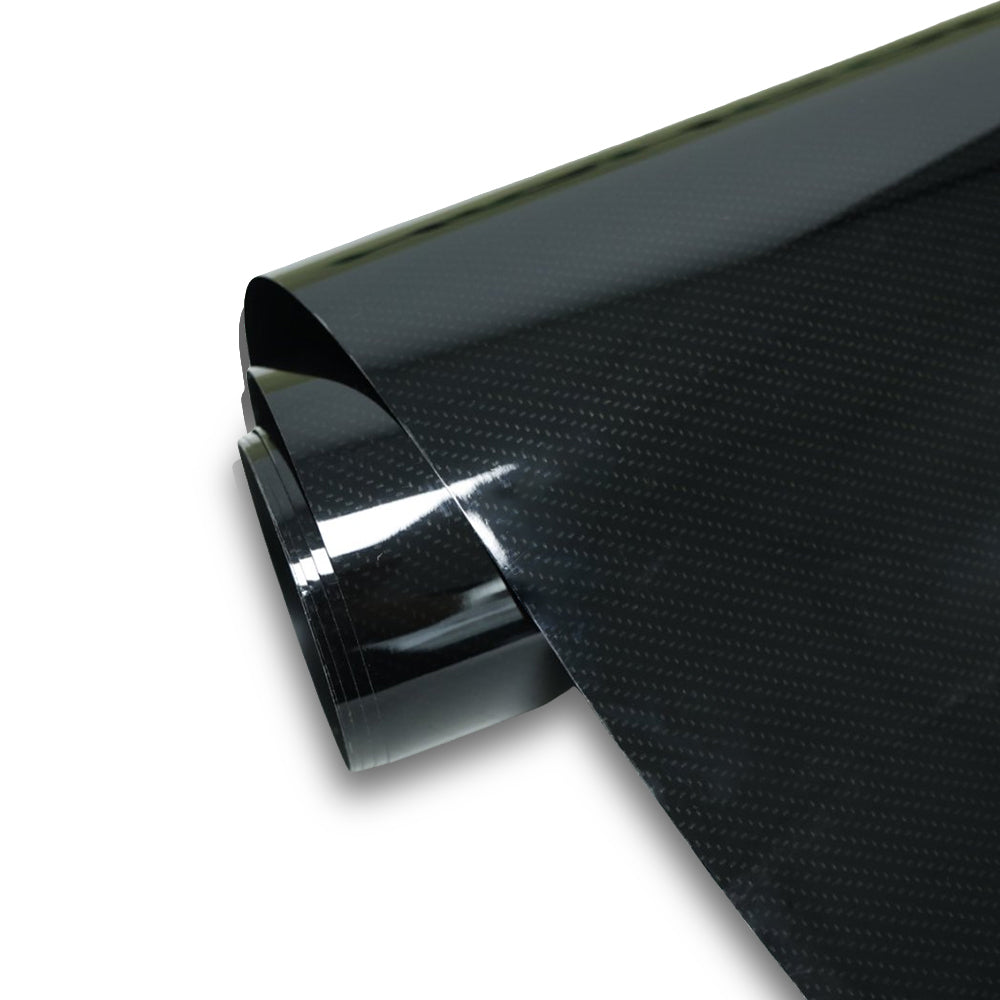
The Highcool Advice: For directional films, increase your order by 25%. We provide master rolls with precision-aligned grain patterns, ensuring that even if you have to redo a panel, the color and texture match the rest of the 50-meter roll perfectly.
5. B2B Efficiency: Highcool’s Factory-Direct Inventory Logic
Why do California’s largest wrap shops bypass local distributors for Highcool?
-
Eliminating "End-of-Roll" Scrap: Standard 15m (50ft) rolls often leave a 2-meter remnant—too small for a hood, too big to toss. Highcool offers 30m, 50m, and 100m Master Rolls. This allows for "Continuous Nesting," where you can wrap three Tesla Model 3s from one roll with almost zero waste.
-
Dye-Lot Integrity for Fleet Scaling: For a California LLC adding 5 new vans to a 20-van fleet, color consistency is a legal branding requirement. Highcool’s factory-controlled calibration ensures that the roll you buy today matches the one you bought six months ago.
-
Inventory Liquidity: By buying factory-direct, you lower your "Car-in-Bay" cost. Every foot of Highcool vinyl saved through our precision templates is pure profit on your bottom line.
6. Avoiding the "California 3" – Common Estimation Pitfalls
-
The Bedliner Trap: On pickup trucks, installers often forget the material needed to wrap over the bed rails and under the liner. Add 3 feet for this.
-
The "Mirror & Handle" Fallacy: Don't assume you can use "scraps" for mirrors. Deep-molded mirrors often require a dedicated 2x2ft square to allow for proper tensioning.
-
Caltrans Compliance: For commercial vehicles, ensure you have extra black or white vinyl for the mandatory CA/USDOT numbers—Highcool provides high-tack plotter vinyl specifically for this purpose.
Summary: High-Performance Estimation for High-Growth Brands
The cost to vinyl wrap a car isn't just the price per foot—it’s the cost of the material you don't use and the time you don't waste. By leveraging Highcool’s industrial-scale master rolls and our "Zero-Waste" layout logic, California shops are increasing their margins by 15-20% per project.
Optimize Your Fleet Yield Today
Don't guess your material needs. Send us your vehicle manifest, and Highcool’s technical team will provide a Free Zero-Waste Layout Plan.
-
B2B Wholesale Inquiries: contact@highcool.com
-
Instant Expert Support (WhatsApp): +86 13361992295
-
Highcool™: Factory-Direct. California-Proven. Engineered to Outlast.


Share:
The Strategic Investment: Cost to Vinyl Wrap a Car in California (2026 B2B Analysis)
Protecting Fleet Paint from California Sun