
Ceramic window tint is the film most tint shops put on Teslas and other EVs, because it cuts infrared heat through a lot of glass without using metal that can get in the way of phone, GPS and other signals. It makes the cabin noticeably more comfortable. What it does for range is smaller and harder to promise, and the law still decides how dark the front glass can go.
Why EVs feel cabin heat more
A gas car throws off a lot of waste heat, so a hot cabin is one more load among many. In an EV, all the cooling comes from the battery. Teslas add a panoramic glass roof, a steeply raked windshield and a large rear glass, so a lot of sun gets in.
Factory glass blocks some UV, but much of the infrared, the part of sunlight you feel as heat, still comes through. Seats, dash and steering wheel soak it up and warm the air around them. The air conditioning then runs harder and longer, and that energy comes out of the pack.
What ceramic window tint does
Ceramic films use non-metal ceramic particles that absorb or block a large share of infrared and almost all UV, while letting visible light through. So the cabin stays bright, the view stays clear and the film does not interfere with electronics the way older metallic tints could. That last point matters on a car that relies on connectivity, navigation and sensors.
| Film type | How it works | What shops see |
|---|---|---|
| Dyed | Darkens the glass by absorbing light | Limited heat rejection; can fade or turn purple over time |
| Metallic | Reflects some heat with a metal layer | More reflective look; can interfere with signals |
| Ceramic | Non-metal particles target infrared | Good heat rejection at lighter shades; signal friendly; stable color |
For a fuller comparison, see ceramic vs regular window tint.
What customers notice first: comfort
The first thing a Tesla owner notices after a ceramic install is that the roof and side glass stop radiating heat onto their head and arms. Seats and the steering wheel are cooler to touch after the car sits in a parking lot, glare drops, and the cabin cools down faster. For most daily drivers, that comfort is reason enough.
Does ceramic tint increase EV range?
Not directly. Tint does not add battery capacity or change the official range rating. What it can do is reduce how much heat gets into the cabin, so the air conditioning works less on hot days, and that can make summer range a little steadier. How much depends on climate, how much glass the car has, how often the owner runs the A/C and how they drive. We do not publish a range figure, and shops should not promise one either. Sell it as comfort with a possible efficiency bonus in hot weather. Our post on ceramic tint and EV range goes into more detail.
The roof glass is the biggest heat source
On most Teslas, the panoramic roof lets in more solar heat than any other glass, and it radiates straight down onto the occupants. That is why many owners ask for roof tint first. A ceramic roof film can cut that radiant heat a lot without making the cabin feel dark. Our guide to glass roof heat control for EVs covers roof film choice in more detail.
Choosing the VLT: darker is not cooler
VLT is the share of visible light that passes through glass and film together. With ceramic film, heat rejection depends more on the film than on the shade, so a lighter ceramic can keep a cabin cooler than a darker dyed film. The practical setup is a legal shade on the front windows, ceramic doing the heat work, and darker film only where the law allows, often the rear glass and roof.
Tint laws: check the final reading
Tint laws vary by state and country. Windshields and front side windows are the most restricted, and in most US states only a strip at the top of the windshield may be tinted. Enforcement measures the glass and film together, and factory glass is never perfectly clear, so a film rated at one VLT reads lower on the car. Meter the glass before you quote, write the shade for each window on the work order, and remember that illegal tint can fail an inspection and come back to your shop. For details, see tinting EVs legally and US window tint laws for tint shops.
Installation on Tesla glass
EV glass panels are large, curved and in plain view from the driver's seat, so any haze, distortion, bubble or lifted edge shows. Use vehicle-specific patterns, work in a clean, controlled bay and keep film clear of camera and sensor areas. Model 3 owners tend to care most about the windshield angle and roof heat, while Model Y owners often care more about the rear seats and cargo area. We cover each in our Model 3 and Model Y ceramic tint guides.
Aftercare to give the customer
Tell owners to keep the windows up until the film has cured, clean with an ammonia-free cleaner and a soft microfiber towel, and never scrape the film. Looked after this way, a good ceramic film stays clear for years.
Batch consistency on big EV glass
Ceramic films differ in how evenly the particles are spread, how stable the adhesive is and how even the coating is. On a Tesla roof or rear glass, unevenness shows as haze or a color shift, and a reorder that does not match the last roll shows the moment two cars are parked side by side. Ask a supplier for the data sheet at the exact shade you plan to sell, and test a sample on your own glass.
Many EV owners pair ceramic tint with paint protection film on the same visit, because tint handles heat and UV inside and PPF takes stone chips outside.
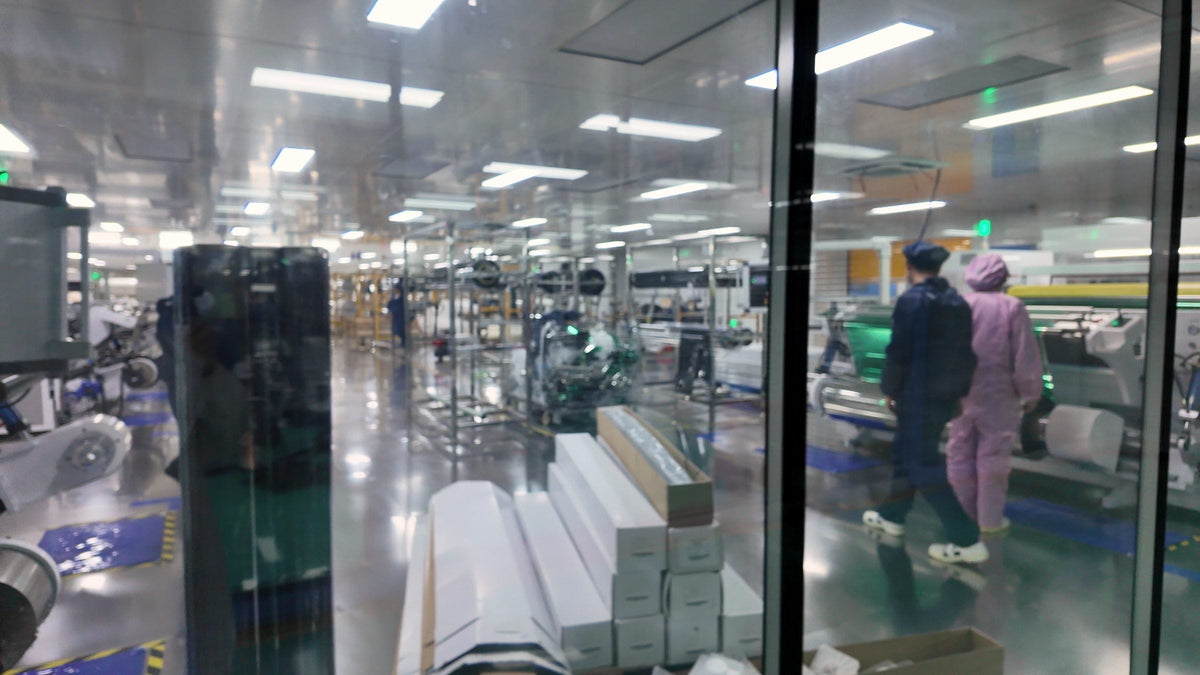
HIGHCOOL makes Window Film by the roll in our own Shanghai factory and ships it from China. Free A4 samples come from our US sample stock, with the buyer paying shipping. Our ceramic shades come in two nano ceramic lines with a 7-year warranty: WV at 1.88 mil in 8%, 20%, 30% and 70% VLT, and WU with UV400 blocking in 4%, 16%, 30% and 70%. For windshields in places that allow film, KU70 is a 4 mil windshield-grade ceramic at 70%. Rolls are 60 in x 98 ft (1.52 m x 30 m). If you tint a lot of Teslas, ask for samples of our ceramic shades through the contact page or browse the Window Film range first.
FAQ
Does ceramic window tint really make a difference on a Tesla?
Yes, mainly in comfort. Ceramic film cuts the infrared heat coming through the large glass areas, so seats and surfaces stay cooler and the cabin cools down faster. The panoramic roof is usually the biggest single gain.
Can ceramic tint increase EV driving range?
It does not add range directly. By keeping the cabin cooler, it can reduce air conditioning use on hot days, which may make summer range a little steadier. The effect depends on climate and driving, so no shop should promise a figure.
Can ceramic tint affect Tesla cameras or sensors?
Ceramic film has no metal layer, so it does not block signals the way metallic tint can. Installers should still keep film off camera and sensor areas. Check local law before tinting near the windshield cameras.

Share:
Car Wrap Material Explained: What Wrap Shops Should Know
Tinting EVs Legally: A Guide for Tint Shops