
Window tint can help an EV's summer range a little, because a cooler cabin means the air conditioning draws less power from the battery. It does nothing for aerodynamics, and nobody has published a solid number for how many miles it saves, so shops should sell it as comfort with an efficiency bonus, not as a range upgrade.
The air conditioning load is real. In AAA's 2019 EV range tests, driving range dropped 17 percent at 95°F with the air conditioning on. Some of that is the battery working in heat, and some is the compressor. Film can only cut into the part caused by sun coming through the glass.
Where the heat comes from in a modern EV
Many EVs carry a lot of glass: big windshields, glass roofs, wide rear windows. Sunlight passes through, warms the seats and dash, and the cabin heats up like a parked greenhouse. In a gas car the engine drives the compressor. In an EV every minute of cooling comes out of the same battery that moves the car.
Parked cars use energy too. Tesla's Cabin Overheat Protection, for example, can run the air conditioning to keep the cabin below 105°F (40°C), and Tesla notes that this gradually draws energy from the battery when the car is unplugged. A cabin that heats up more slowly needs that system less often.
What window film actually changes
Film reduces how much solar energy gets through the glass. The part customers feel most is infrared heat, which does not depend on how dark the film looks. A light ceramic film can block a large share of infrared while staying close to clear, and a cheap dark dyed film can feel hotter on the skin than a good light one.
That is the useful message for EV owners. The front windows in many states have to stay light, but heat rejection does not have to suffer for it. For the background, see the HIGHCOOL guides to ceramic vs regular tint and window tint percentages.
How much range that saves depends on the climate, the car, how much glass it has, where it parks and how the owner sets the climate. We have not seen independent testing that pins it down, so we do not quote a mileage figure. If a customer asks, tell them it helps on hot days and the cabin will feel cooler right away. Both are true.
Signal and sensor clarity
Metallized films use thin metal layers to reflect heat. Those layers can interfere with GPS, cell and radio signals, which matters more in cars that rely on connectivity for navigation, phone keys and software updates. Non-metal ceramic and carbon films avoid that problem.
Clarity matters too. Driver-assist cameras often look through the windshield, and many cars project a head-up display onto it. Windshield film rules vary widely by state, and many limit film to a strip at the top of the glass. Check the law and the carmaker's guidance on camera areas before quoting a windshield job.
Selling tint to EV owners
EV owners tend to read spec sheets. Show them measured numbers for heat rejection and UV, explain that the shade is a legal and looks choice, and let the comfort speak for itself. A glass roof is often the biggest single source of heat in the cabin, so ask about it.
Do not promise a percentage of range back. If a customer later compares notes online and finds a lower number, you lose the trust you built. The safe pitch is cooler cabin, less glare, UV protection on long drives, and less work for the air conditioning.
HIGHCOOL Window Film is either dyed (WA series) or nano ceramic (WV and WU series). None of it is metallized, so signal is not a question with our film. For EV front windows, most shops start with the 70% grades, WV70 and WU70. WV70 has a nominal lab TSER of 43%. For states that allow windshield film, KU70 is a 4 mil windshield-grade nano ceramic UV400 film at 70% VLT; keep it clear of the camera area. The WV, WU and KU70 films carry a 7-year warranty.
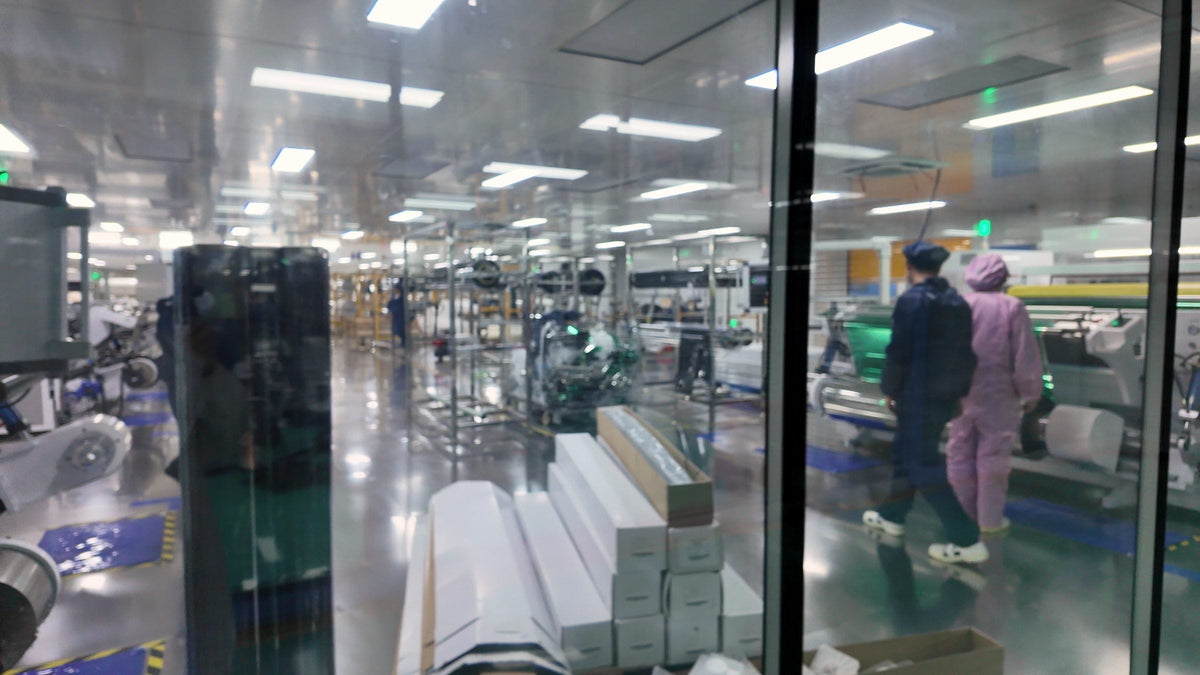
We make Window Film in 1.52 m x 30 m rolls in our own Shanghai factory and ship it from China, and free A4 samples come from US sample stock with the buyer paying shipping. To compare light shades for EV work, look through the Window Film collection and ask for samples.
FAQ
Does window tint increase EV range?
It can help slightly in hot, sunny weather, because a cooler cabin needs less air conditioning power from the battery. The size of the gain depends on the climate, the car and how it is used. There is no reliable public figure, so be wary of claims of a fixed percentage.
Will ceramic tint interfere with GPS or cell signal?
No, non-metal ceramic film does not contain the metal layers that can block signals. Metallized films are the ones known to cause interference. Check the construction on the spec sheet before you buy.
Do I need dark tint to keep an EV cool?
No, heat rejection depends on the film's construction more than its darkness. A light ceramic film can block a large share of infrared heat while staying legal on front windows. Dark dyed film mainly reduces visible light.

Share:
Interior PPF for Screen-Heavy Cabins: Protecting the Modern EV Dashboard
The Rivian & Ford F-150 Lightning: Tackling Large Panels with 72-inch Master Rolls