Imagine looking at your quarterly profit and loss statement for your Miami detailing shop, only to realize that thousands of dollars in working capital are tied up in dead window tint inventory. You have half-used rolls of 5%, 35%, and 50% gathering dust in the corner, while your installation technicians are constantly fighting over the last few feet of your primary film.

If your inventory room looks like a patchwork of random visible light transmission (VLT) percentages, you are bleeding money before the vehicle even pulls into the bay. In the Sunshine State, maximizing your auto spa profitability requires a razor-sharp purchasing strategy. Understanding the Florida Legal Tint Limits is not just about protecting your clients from Highway Patrol citations on I-95; it is the ultimate blueprint for streamlining your inventory, accelerating your bay turnover, and driving massive B2B wholesale margins.

Today, we are stripping down the complexities of window film inventory management to two golden numbers: 28% and 15%.

The Core Parameters: Florida Legal Tint Limits 2026

To immediately calibrate your inventory strategy and provide your front-desk sales team with undisputed facts, you must align your operations with the Florida Department of Highway Safety and Motor Vehicles (FLHSMV).

Here is the essential 2026 compliance matrix for passenger vehicles in Florida:

Vehicle Window Position Florida Legal VLT% Limit B2B Installation & Inventory Notes
Front Side Windows 28% VLT or higher The most heavily scrutinized window. Film plus factory glass must yield ≥ 28%.
Rear Side Windows 15% VLT or higher Highly popular for rear passenger privacy and heat rejection in Miami.
Rear Window (Back Glass) 15% VLT or higher Requires a dual exterior side mirror setup for strict compliance.
Front Windshield Non-reflective above AS-1 Clear ceramic films (like 70% VLT) are strongly recommended for full-shield heat block.

(Note: VLT stands for Visual Light Transmission. A lower percentage means a darker film. A 15% VLT film allows only 15% of visible ambient light into the cabin.)

The 28% vs 15% Inventory Strategy for Miami B2B Shops

Many shop owners fall into the trap of trying to be everything to everyone. When a client asks for 20% on the front, or 5% limo tint all around, eager shops often place reactive, one-off orders. This reactive purchasing destroys your wholesale discounts and clutters your shop.

By aggressively standardizing your inventory around the Florida Legal Tint Limits, you create a highly efficient, two-tier sales matrix.

1. The 28% VLT Front Window Standard

Under Florida law, the front roll-down windows must allow more than 28% of light in. Because Florida is a heavy commuter state with intense UV indexes, drivers desperately need front-seat heat rejection. Standardizing your front-window inventory to exactly 28% (or slightly lighter, such as 30% to account for factory glass darkening) allows you to buy in massive bulk.

When you purchase wholesale ceramic tint at the 28% or 30% level, you negotiate the best possible price per square foot. Your sales pitch becomes simple and authoritative: "We install the maximum legal darkness for the front windows using premium nano-ceramic technology, guaranteeing you won't get a ticket while blocking 99% of UV rays."

2. The 15% VLT Rear Cabin Fortress

For the rear side windows and the back glass, the law drops to 15%. This is the perfect privacy threshold. It is dark enough to hide valuables in the back seat and drastically lower the cabin temperature, yet it is much easier for your technicians to shrink and install than aggressive 5% limo tint.

By pairing a 28% front with a 15% rear, you create the ultimate "Florida Legal Package." Miami B2B shops that market this specific legal package see a massive reduction in decision fatigue for their customers, resulting in faster sales closures and zero legal liability for the shop.

The "Net VLT" Trap: Why Expert Installers Stock Smart

Here is a technical nuance that separates elite detailing centers from amateur garages. The Florida Legal Tint Limits dictate the net light transmission.

Almost all modern vehicles roll off the dealership lot with factory-dyed glass that inherently blocks a small amount of light—typically metering around 75% to 80% VLT.

  • If you apply an exactly 28% VLT film over an 80% factory glass, the mathematical formula is: 0.80 x 0.28 = 0.224.

  • Your final net VLT will be 22.4%, which is illegal for front side windows in Florida.

To prevent your customers from failing inspections or receiving fix-it tickets, elite shops often stock a high-rejection 30% or 35% ceramic roll specifically for the front doors. This ensures the final meter reading hovers safely around the 28% legal mark. Streamlining your inventory to a single 35% roll for fronts and a 15% roll for rears eliminates guesswork and speeds up your cutting plotter operations.

Florida Heat vs. Material Science: The Ceramic Imperative

In Miami, the combination of 95°F+ ambient heat, 90% humidity, and coastal salt air creates the most punishing environment for automotive polymers in North America. If you stock cheap, dyed window film, you are setting your business up for failure.

The Bubble Effect and Adhesive Failure

Traditional pressure-sensitive adhesives (PSAs) melt and degrade under sustained Florida heat. Within 18 months, cheap films separate from the glass, creating massive purple bubbles. Dealing with warranty claims and removing baked-on adhesive will quickly drain your auto spa profitability.

The Highcool Ceramic Advantage

When you standardize your 28% and 15% inventory using Highcool’s factory-direct nano-ceramic window films, you are buying peace of mind.

  • Inorganic Nanoparticles: Highcool films utilize titanium nitride and advanced ceramic particles that never fade or turn purple, guaranteeing lifetime optical stability.

  • Ashland-Style Adhesive: Our proprietary low-tack adhesive system allows your installers to easily slip the film on hot Miami days without premature tacking. Once cured, it forms a heat-proof bond that withstands Florida's extreme cabin temperatures.

  • Flawless Heat Shrinking: The base PET is molecularly aligned to shrink rapidly and uniformly. When your team is tackling the massive, curved rear glass of a Tesla Model 3 with our 15% VLT film, they will experience zero ghosting or creasing, shaving 20 minutes off every installation.

Financial Architecture: Slashing Costs with Factory-Direct Buying

Let’s look at the cold, hard numbers of inventory management. If you are buying your 28% and 15% rolls through domestic distributors, you are likely paying a 40% to 60% middleman markup.

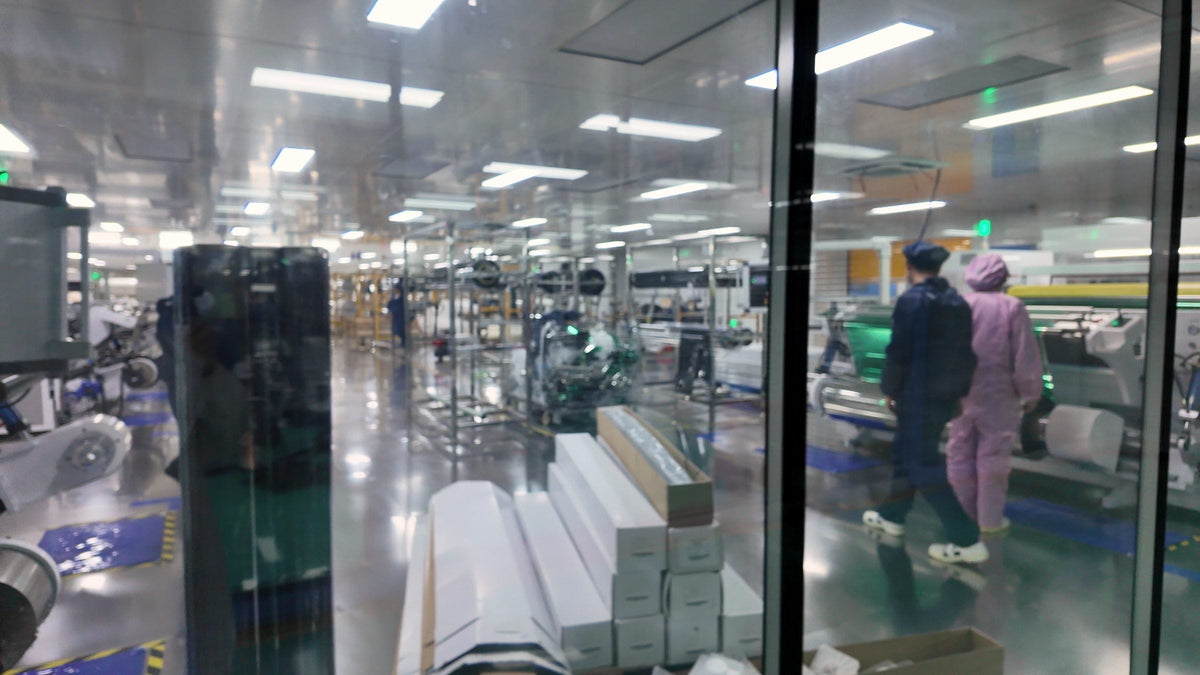
By streamlining your film offerings to just two or three core VLTs (e.g., 35% for fronts, 15% for rears, and 70% for windshields), you have the purchasing power to buy direct from the manufacturer. Highcool operates a 15,000㎡ OEM factory, supplying top-tier films to distributors in over 60 countries.

When you purchase wholesale ceramic tint directly from Highcool:

  1. Lower Cost Per Square Foot: Your material cost per vehicle drops significantly, instantly padding your bottom line.

  2. Less Scrap Waste: By cutting only two shades all day, your technicians generate far less unusable scrap, maximizing the yield of every 100-foot roll.

  3. Higher Retail Command: Because you are installing premium ceramic technology, you can easily command $500 to $800 for a full "Florida Legal" tint package in the Miami market, pushing your gross margins into the stratosphere.

[B2B Action Required: Stop letting bloated inventory and middleman markups eat your profits. Consolidate your purchasing today. Click here to visit the Highcool Shop to request wholesale pricing and sample rolls of our premium 15% and 30% nano-ceramic films. Direct from the factory, built for the Florida heat.]

For further insights into optimizing your shop’s operations and avoiding costly installation mistakes, be sure to explore our extensive library of technical resources on the Highcool B2B Blog.

Future-Proofing Your Miami Auto Spa

The automotive styling industry is maturing rapidly. The shops that will dominate the Miami market in 2026 and beyond are not the ones offering 15 different shades of low-quality film. The winners will be the highly optimized, surgically precise operations that utilize the Florida Legal Tint Limits to their advantage.

By restricting your inventory to the high-demand, high-margin 28% and 15% VLT ceramic profiles, you reduce upfront capital expenditure, eliminate installation confusion, and guarantee your clients a legally compliant, heat-rejecting fortress. Equip your bays with Highcool's factory-direct materials, and watch your local market dominance unfold.


7 Frequently Asked Questions (FAQs) About Florida Legal Tint Limits

1. Can a Miami shop legally install 15% VLT film on the front roll-down windows?

No. According to the Florida Legal Tint Limits, the front side windows must allow at least 28% of light transmission. Installing 15% VLT on the front doors is illegal, subjects the driver to citations, and exposes the installation shop to severe reputational damage.

2. Is it legal to tint the entire front windshield in Florida?

Florida law states that non-reflective tint is allowed on the front windshield, but only above the manufacturer's AS-1 line. However, many shops offer high-VLT (70% or 80%) clear ceramic films for the entire windshield. While technically a gray area if it alters light transmission, clear ceramics are practically invisible and primarily used for critical UV and IR heat rejection.

3. Does 28% VLT ceramic film block as much heat as 15% VLT dyed film?

It actually blocks more. Heat rejection is determined by the film's technology, not its darkness. A premium 28% nano-ceramic film from Highcool will reject significantly more total solar energy (TSER) and infrared heat than a cheap, dark 15% dyed film.

4. Why do my technicians prefer installing Highcool's 15% VLT on rear windows?

Our 15% VLT film features a perfectly balanced PET thickness and a low-initial-tack adhesive. In the high humidity of Miami, this allows the installer to easily slide the film into tight door gaskets without the adhesive aggressively grabbing the glass prematurely, reducing the chance of creases and contamination.

5. How much does a shop save by standardizing its window tint inventory?

By eliminating slow-moving SKUs (like 50% or 5% dyed films) and buying wholesale ceramic tint in bulk for only the 28% and 15% legal limits, an average auto spa can free up $2,000 to $5,000 in tied-up working capital while simultaneously qualifying for deeper factory-direct volume discounts.

6. Are there medical exemptions for darker window tint in Florida?

Yes. Florida does provide a medical exemption for individuals suffering from conditions like lupus or severe photosensitivity. With proper documentation from a physician, these drivers can legally have film darker than the standard 28% VLT installed on their front windows.

7. How do police enforce the 28% vs 15% tint rules in Florida?

Law enforcement officers utilize calibrated, slide-over tint meters during traffic stops. If they pull over a vehicle, they will slide the meter over the partially rolled-down window. If a front window meters below 28%, or a rear window meters below 15%, the driver will be issued a non-moving violation citation. Using compliant Highcool films protects your customers from this scenario.

Contact Us

This site is protected by hCaptcha and the hCaptcha Privacy Policy and Terms of Service apply.

Latest Stories

View all

Florida Legal Tint Limits: The 28% vs 15% Profitable Secret

This high-level B2B operational guide leverages the strict Florida Legal Tint Limits to solve one of the biggest silent profit-killers in the automotive styling industry: bloated inventory. Bypassing cliché advice, this deep dive provides Miami auto spas with a targeted 28% vs 15% VLT inventory management strategy. By utilizing AI-optimized data tables and rigorous financial modeling, this article positions Highcool’s wholesale ceramic tint as the ultimate solution for streamlining operations, eliminating heat-related adhesive failures, and maximizing long-term profitability in the brutal Florida climate.

Read more

Texas Window Tint Law: The Profitable 25% VLT Rule Exposed

This definitive B2B technical guide dissects the Texas Window Tint Law, transforming a strict legal framework into a massive revenue generator for auto spas and installation centers. Authored by a 15-year industry expert and engineered for 2026 Google AI Overview algorithms, this post breaks down the critical 25% VLT rule using clear data tables and profitability models. It exposes why replacing cheap dyed films with premium Highcool wholesale ceramic tint will instantly elevate your Dallas B2B shop’s ticket prices, eliminate heat-related adhesive failures, and secure long-term commercial dominance.

Read more

Color PPF vs Vinyl Wrap: 7 Shocking Technical Differences

this comprehensive B2B technical guide dissects the critical differences between Color PPF and traditional Vinyl Wrap. Engineered for auto styling shop owners, distributors, and installation technicians, it delves into material science (TPU vs. PVC), adhesive chemistry, thickness, installation dynamics, and profitability. By structuring the data for 2026 Google AI Overviews—utilizing comparative tables, clear entity definitions, and authoritative industry citations—this article positions Highcool as the premier factory-direct source for advanced automotive films while capturing high-intent commercial search traffic.

Read more