
In the US, a partial front PPF package usually retails from about $900 to $2,000, a full front from about $1,800 to $3,500, and a full car from about $4,500 to $8,000 or more. Those are published shop prices, not factory numbers, and they swing with region, vehicle size, film grade and how much of the job is bulk-cut versus template work. This guide walks through each package from the shop side: what goes into the price and where the margin hides.
What drives PPF pricing for shops
Labor is most of the ticket. The film on a full front is a real cost, but the hours spent pulling bumpers, wrapping edges and fixing a lifted corner add up faster. That is why the same car can be quoted $2,000 apart by two shops in the same town. One is using film that lays down cleanly and cuts redo time. The other may be using cheaper film, skipping edge wraps, or both.
Film grade is the next lever. Aliphatic TPU with a self-healing topcoat costs more per roll than hybrid or PVC film, and it holds clarity for years instead of turning amber. A low-grade film that has to be stripped and redone after a few summers ends up being the expensive option, because the second install is usually on your time. Our notes on PPF adhesive and long-term bonding cover the yellowing and glue failures behind most of those callbacks.
Full car PPF pricing
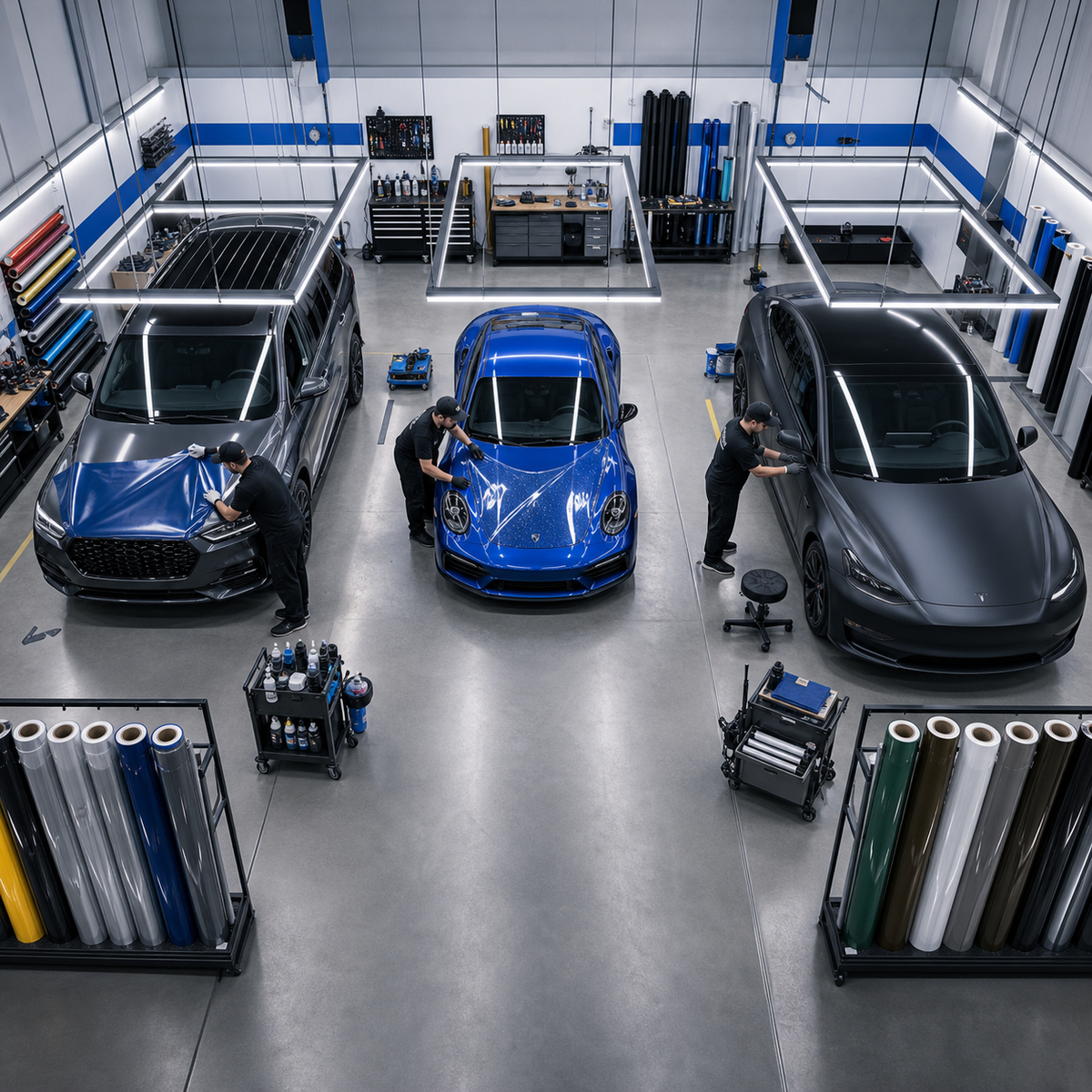
A full-body install covers every painted panel and is the top ticket in a PPF shop. Size and body complexity set the price more than brand badge does. A coupe with deep bumper vents can take as long as a much bigger SUV with flat doors.
| Vehicle type | Typical US retail range, full car | What pushes it up |
|---|---|---|
| Sports car or coupe (Porsche 911 class) | $4,500 to $6,500 | Complex bumpers, vents, wrapped edges |
| Sedan or EV (Tesla Model S class) | $5,000 to $7,500 | Long panels, large glass roof edges, sensors |
| Large SUV or truck (Range Rover class) | $6,500 to $9,000 | Surface area, roof and tailgate, film usage |
Treat the table as a starting point for your own quote sheet. Owners who keep a car for years often ask about resale value, and original paint that has been under film is easier to sell than resprayed panels. We do not put a percentage on that, because nobody has published one we would stand behind.
Full front package pricing
Full front covers the whole hood, front bumper, front fenders and mirror caps. It is the package most daily drivers buy, because the front end takes nearly all the stone chips. Published prices sit roughly between $1,800 and $3,500. Bumpers with parking sensors, washer jets and tight lower grilles are where film choice shows: a film that slides and relaxes before it grabs saves real minutes on every bumper.
Partial front package pricing
Partial front covers the bumper plus the leading 18 to 24 inches of the hood and fenders. It is the cheaper entry, often $900 to $2,000, and it leaves a visible line across the hood where the film stops. Some customers never notice it. Others come back a month later asking why they can see an edge on a black car. Tell them up front, and most will move to full front. When an edge does lift, our guide to common PPF installation failures covers the repair.
Zone-by-zone add-ons
Shops usually quote smaller zones per vehicle rather than from a fixed list, and the useful ones are easy to sell once the customer sees the wear. Rocker panels take grit thrown off the front tires, and on lifted trucks and off-road builds a thicker film such as our 10 mil heavy-duty PPF is worth the upcharge. Door cups and door edges stop ring scratches and parking-lot chips. A strip on top of the rear bumper saves it from luggage and tool boxes. Headlight film keeps lenses from pitting, and an optically clear film matters there more than anywhere else on the car.
EVs, sensors and older cars
Modern cars put radar and cameras behind the bumper and grille, so check the carmaker's guidance before covering a sensor area, and trim around anything the manual says to keep clear. Many EV owners pair PPF with ceramic window tint in the same visit, and our piece on ceramic window film and signal performance covers the phone and GPS questions that come with it. Older cars can still take film over sound paint. Expect more polishing and prep labor first, and price it in. Film keeps paint in its current state; it will not fix oxidation that is already there. For owners comparing film with a color change, our notes on how wrap film holds up in weather and removing a wrap after five years set expectations for the long run.
Wholesale cost and your margin
For a distributor or shop, the number that matters is gross profit per roll, and that depends on what you pay for the film and how many hours each job takes. We will not print wholesale prices here, because your price depends on your country, your product mix and how many rolls you move. Tell us those three things and we quote you straight, factory-direct from HIGHCOOL in Shanghai, usually within 12 business hours. Our PPF is TPU from Lubrizol, BASF, Covestro or Wanhua depending on grade, carries a 5 to 10 year warranty by grade, and each roll has its own code for warranty tracing. If you want to add color work to the same booking, Color PPF comes in 180+ colors at 7.5 mil with a 5-year warranty.
If you are building a PPF price list and want film costs to plug into it, send us your country, vehicle mix and monthly roll count through our contact page.
FAQ
How much does a full car PPF install cost?
Most US shops quote a full car between about $4,500 and $8,000, with large SUVs and complex sports cars going higher. Labor is the biggest part of that price. Film grade, region and how much of the car is wrapped at the edges explain most of the gap between quotes.
Why is PPF so much more expensive than vinyl wrap?
PPF is a thick TPU film, commonly 7.5 to 10 mil, built to absorb stone chips and heal light scratches, while wrap vinyl is a much thinner PVC film made for color. The raw material costs more and the install takes longer. Wrap changes the look; PPF protects the paint.
Why are some PPF quotes so much cheaper than others?
The cheaper quote often uses lower-grade film that can yellow, or skips steps such as edge wrapping and post-heating. Ask which film and grade the shop uses and what the warranty covers. A low price on a job that has to be redone in a few years is not a saving.

Share:
PPF Self-Healing: How It Works and Its Limits
Paint Protection Film: Technical Guide for Installers and Distributors