
Most PPF installation failures come from three things: too little slip solution, an uneven squeegee stroke, and dirt in the bay. Pros fix them by catching the problem while the film is still wet, and by knowing which defects will dry out on their own and which mean the panel has to be redone.
Paint Protection Film is a sheet of TPU with a pressure-sensitive adhesive on one side and a topcoat on the other. Once that adhesive grabs the paint, you get a few minutes to correct mistakes, not a few hours. Everything below is about using those minutes well.
Where PPF installation failures start
Not enough slip solution
Slip solution is the thin layer of water and soap that lets the film move on the paint. If there is too little of it, or it dries before the panel is positioned, the adhesive touches down early. That leaves tack marks and a silvery haze that will not come out once the film sets. Ask any installer about their worst hood, and this is usually the story.
A stop-start squeegee stroke
Every time the squeegee pauses, it can leave a line in the adhesive. A hesitant stroke also traps small pockets of water that show up later as blisters or a hazy patch. The fix is a steady, overlapping pass, worked in one direction so the water always has a way out.
Dust and fibers in the bay
Dark, high-gloss paint shows every speck. When you peel the liner, static pulls loose fibers and dust straight onto the adhesive. A bay that is swept, damp-mopped and kept free of fans blowing across the car gives you far fewer specks to pick out with a needle.
How to prevent PPF installation failures
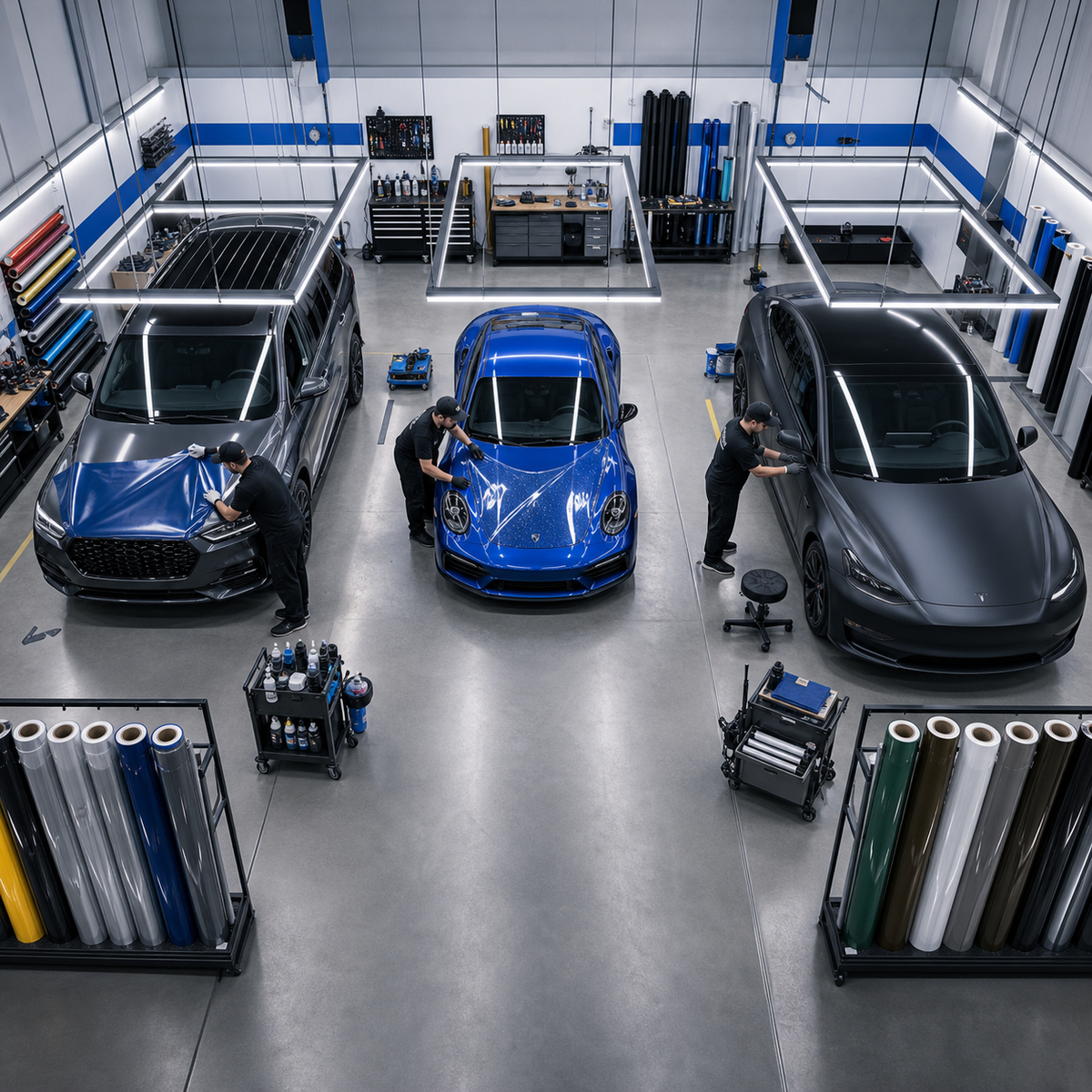
Start with the film floating. Before you press anything down, the panel should slide across the hood without dragging. If it sticks, it needs more solution. A floating panel lets you line up the edges without stretching the TPU out of shape.
Overlap your squeegee passes. Each stroke should cover a good part of the one before it, pushing water toward the nearest edge. Leaving gaps between strokes is how you end up with the small pockets of trapped water that turn into bubbles a day later.
Use tension on curves. Tacking the film at a few anchor points and stretching it across a compound curve pulls out most of the wrinkles before the squeegee gets there. Then the squeegee only has to lock the film down instead of chasing folds. Too much stretch thins the film and can cause lifting later, so stretch only as far as the curve needs.
Seven steps to a cleaner install
- Decontaminate the paint. Wash, use an iron remover, clay the panel, and finish with an isopropyl alcohol wipe. Any wax or sealant left on the paint weakens the adhesive bond.
- Control the room temperature. A bay around 70 to 75°F (21 to 24°C) is a common target. Hot air dries the slip solution too fast, and in a cold bay the film gets stiff and hard to stretch.
- Wet the top of the film as well. A light mist on the topcoat lets the squeegee glide and helps prevent scuffs on the surface.
- Work from the center out. Use firm, even pressure. Light, skimming passes leave water behind.
- Switch to a tack solution at the edges. A mix with more alcohol makes the adhesive grab faster, which helps edges and wrapped corners stay down.
- Inspect with a strong light. Look through the film at a low angle with a bright LED inspection light. If you find a bubble while the film is still wet, lift and re-squeegee it right away.
- Keep the car overnight if you can. Checking the panels again the next day lets the installer catch small edge lifts and fingers before the customer drives off.
When to save it and when to redo it
Small, clear water blisters often go away as the remaining moisture works its way out through the film over the following days and weeks. The usual advice is to leave them alone and check again later.
Air bubbles are different. Air will not dry out. If you catch them early, a fine needle can release the air, and the spot can be pressed down with a little heat.
Creases and folded adhesive usually mean the panel has to be replaced. Heating a deep crease rarely makes it disappear, and the distortion it leaves can look worse than the crease did. One remade hood costs less than a customer who keeps coming back about it.
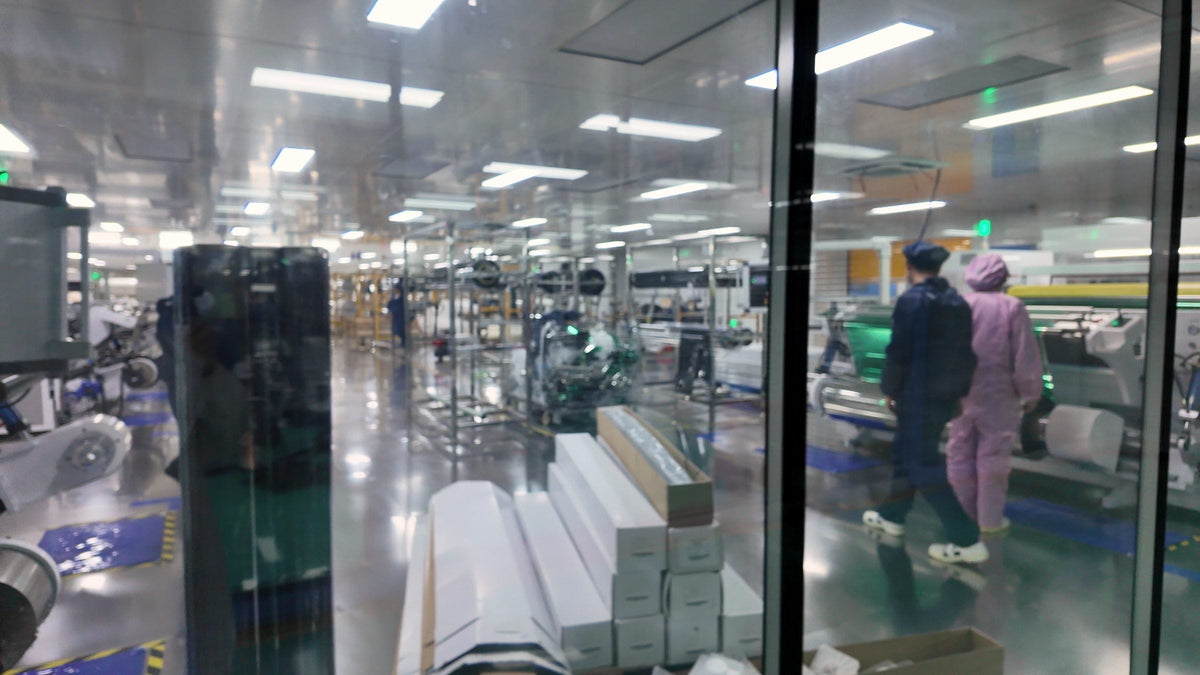
A film that floats and stretches predictably makes all of this easier. HIGHCOOL makes PPF in its own factory in Shanghai, on TPU from Lubrizol, BASF, Covestro or Wanhua depending on the grade, and every roll carries its own code for warranty tracing. If you want to try it on your next difficult panel, see our Paint Protection Film (PPF) range or ask for an A4 sample (the sample is free, you cover shipping). More about the factory is on the HIGHCOOL home page.
FAQ
Will small bubbles under new PPF go away?
Small water bubbles often fade on their own as the moisture escapes through the film, so most installers leave them alone for a while. Air bubbles do not fade, and need to be released with a fine needle and pressed down.
What causes most PPF installation failures?
Most failures come from too little slip solution, uneven squeegee pressure, and dust or wax on the paint. All three can be controlled with good prep and a clean, temperature-controlled bay.
Can a creased PPF panel be fixed with heat?
Usually not. A deep crease damages the adhesive layer, and heating it tends to leave a visible distortion, so the panel is normally replaced.

Share:
The 2026 PPF Market: What Shops and Distributors Should Expect
Ceramic Window Film and 5G Signals: Why Shops Should Avoid Metallic Film