
70% window tint is a film that lets 70% of visible light through the glass, so it looks almost clear, and a good ceramic version still cuts a real share of the heat. Whether it is worth it depends on the film inside it, and whether it is legal depends on which window it goes on and which state the car is registered in.

What 70% tint looks like
From outside, the glass looks like factory glass with a little less glare. From the driver's seat, the change is mostly in the eyes: less squinting on a bright afternoon, and no loss of view at night. A 50% film reads as a light smoke and gives some privacy. A 35% film is clearly dark. At 70%, nobody walking past will notice the car is tinted, which is exactly why owners of new cars and EVs often ask for it on the windshield and front doors.
The number describes light, and only light. A higher VLT means a lighter film. It says nothing about heat.
Does 70% tint block heat?
It can. Darkness and heat rejection are separate properties. Most of the heat you feel through glass is infrared, and a film blocks it with what is built into it, such as ceramic particles, rather than with dye. A dyed 70% film cuts glare and very little else. A good ceramic 70% film can keep the cabin noticeably cooler while looking almost clear, and quality films of any shade block nearly all UV, which protects skin and slows fading on the dash and seats.
So when a driver asks for "the lightest tint that still does something," the honest answer is a light ceramic film. Ask your supplier for the IR rejection and total solar energy rejection figures on the spec sheet for the exact shade, because they change from 70% to 50% to 35% even in the same line.
| VLT | Appearance | Heat rejection |
|---|---|---|
| 70% | Almost clear | Low with dyed film, good with ceramic film |
| 50% | Light smoke | Depends on the film type more than the shade |
| 35% | Dark | Depends on the film type, and restricted on front windows in many states |
Dyed, carbon and ceramic 70% film
Dyed 70% film is the cheapest and does little beyond glare control. Carbon holds its color better and blocks somewhat more heat. Ceramic, often sold as nano-ceramic, gives the most IR rejection at a light shade and has no metal layer, so it does not interfere with phone, GPS or toll-tag signals. At 70%, the film type is the whole product. If a shop stocks only one light shade, it should be ceramic.
70% windshield tint laws in California, Texas and Florida
Laws limit the glass and film together, and they treat the windshield differently from the side windows. These are the basic rules for passenger cars in three of the largest tint markets:
| State | Windshield | Front side windows |
|---|---|---|
| California | Non-reflective tint on the top 4 inches only | At least 70% light through, glass and film combined |
| Texas | Tint with at least 25% light through, above the AS-1 line or the top 5 inches | At least 25% light through |
| Florida | Non-reflective tint above the AS-1 line (top 5 inches if there is no mark) | At least 28% light through |
Two things trip installers up. First, factory glass is never fully clear, so a 70% film on a front door in California can meter below 70% once the glass is counted. Meter the glass before you promise the customer anything. Second, a 70% film is not automatically legal on a full windshield. In California, for example, it is limited to the top strip, and many other states have similar rules. Check the current law in the state where the car is registered, and keep exemption paperwork in mind for drivers with a medical need.
Who should choose 70% tint
It suits drivers who want heat and UV control but do not want the car to look tinted, drivers in states with strict front-window limits, and people who spend long hours on the road in strong sun. For shops, a light ceramic shade is a steady seller because it opens up the windows that darker film cannot legally go on. Pair it with 50% or 35% from the same film line for the rear glass, so the color matches front to back.
Installing and caring for 70% film
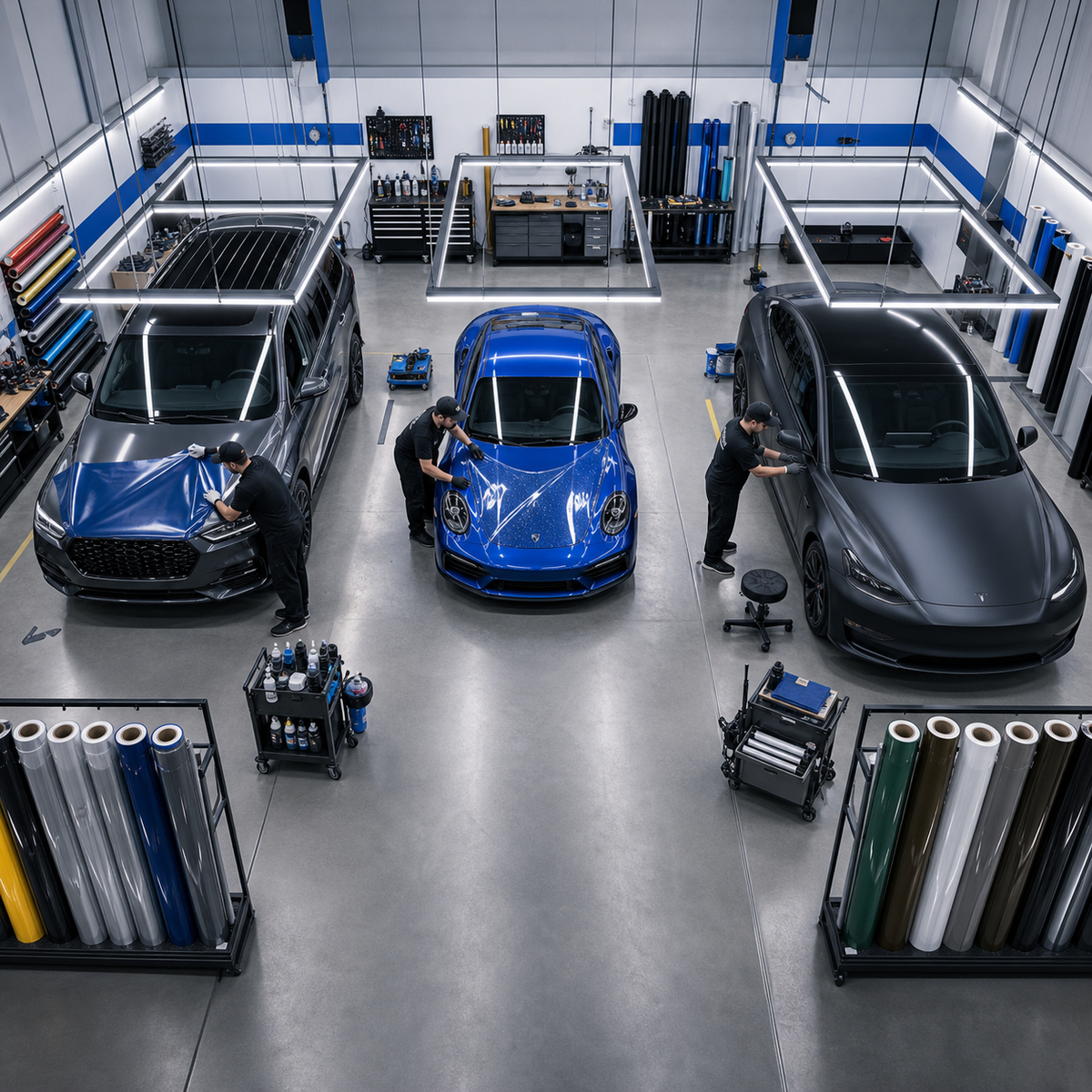
Light film shows every flaw. Dust, a fingerprint under the film, or a contamination line along the edge is easier to see through 70% than through 20%. Clean the glass thoroughly, work in a dust-controlled bay, use plenty of slip solution, and heat-shrink the curved glass before laying the film. Precut kits save time on high-volume models. Bulk rolls give more flexibility on odd sizes and cost less per window, but they need a skilled cutter.
After the install, tell the customer to leave the windows rolled up for a few days and to clean only with ammonia-free cleaner and a soft microfiber cloth. Small haze or water pockets while the film cures are normal and clear on their own.
Our own light shades show the spread inside one shade. WA70 is dyed, 1.5 mil, about 73% nominal VLT, with a 5-year warranty: fine for glare, weak on heat. WV70 is nano ceramic at 1.88 mil, with a nominal lab TSER of 43% and a 7-year warranty. WU70 adds UV400 in the same 1.88 mil. For windshields there is KU70, a 4 mil windshield-grade nano ceramic UV400 film at a nominal 70%, also with 7 years. Pair WV70 on the front with WV30 or WV20 on the rear glass and the color matches front to back. All of them ship from China in 60 in x 98 ft (1.52 m x 30 m) rolls.
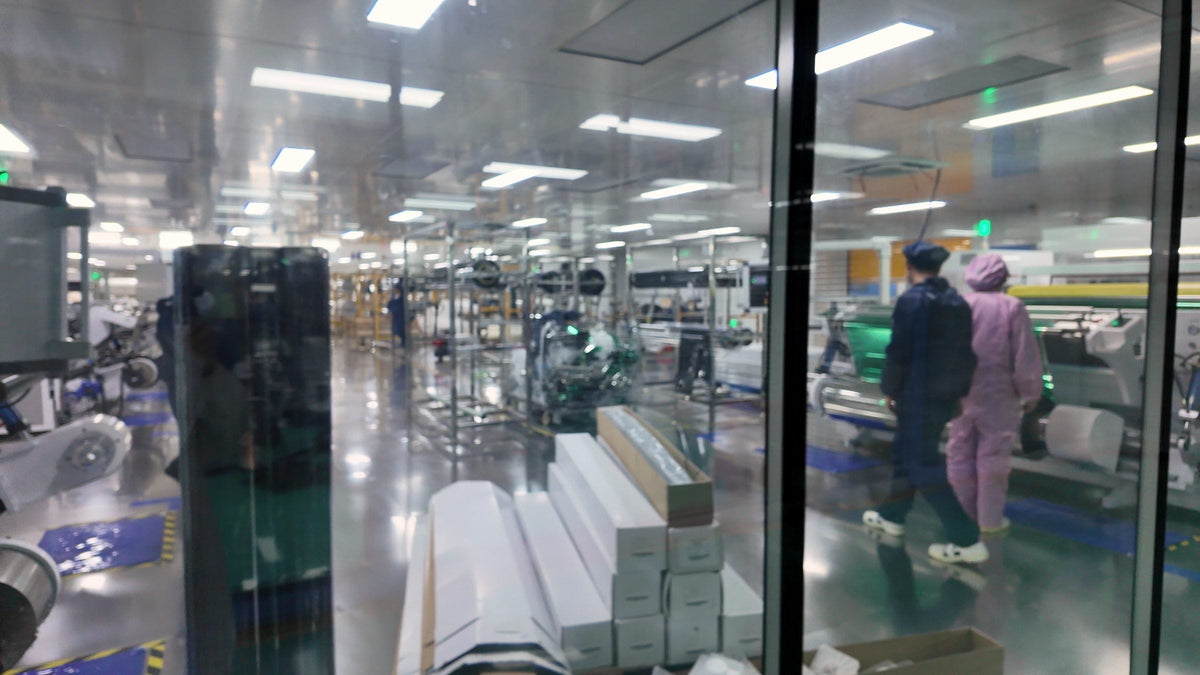
HIGHCOOL makes Window Film by the roll in our own Shanghai factory, and free A4 samples ship from our US sample stock with the buyer paying shipping. If you want a light ceramic shade on the shelf next to your darker film, look through the window tint film collection and send us the shades and roll volume you need.
FAQ
Is 70% window tint dark?
No, 70% tint looks almost clear because it lets 70% of visible light through. Most people will not notice it from outside the car. The driver mainly notices less glare.
Does 70% tint really reduce heat?
Yes, if it is a ceramic film. Heat rejection comes from infrared-blocking materials in the film, not from how dark it is. A dyed 70% film reduces glare but blocks little heat.
Is 70% tint legal on a windshield?
Not in every state. California allows non-reflective tint only on the top 4 inches of the windshield, and Texas and Florida limit windshield tint to the area above the AS-1 line. Check the law in the state where the car is registered before installing.

Share:
Heat-Blocking Window Film vs. Low-E Glass for Buildings
15% Window Tint: Benefits, Legal Restrictions & Comparison