
Car window tint goes on the inside of the glass. Dyed, carbon and ceramic films are all built to sit on the interior surface, where the glass shields them from weather, car washes and road grit. Film stuck to the outside of a car window would be scratched, lifted and worn through long before its rated life.
The question makes sense. The sun hits the outside first, so why not stop it there? The answer comes down to how the film is made and what it has to survive.
Does window tint go on the inside or outside of a car?
Inside. That holds for dyed, carbon, ceramic and nano-ceramic automotive films. If you watch a tinter at work you may see the film on the outside of the glass for a while. That is only for shaping: the installer lays the film on the outside, trims it and heat-shrinks it to the curve of the window, then moves it to the inside for the actual install.
A few films do go on the outside. Windshield protection film, which is clear and guards against rock chips, is one. Some architectural window films for buildings are made for exterior use with a harder surface. Standard automotive tint is neither of those.
Why window tint is applied on the inside of the car
Tint filters UV, cuts infrared heat, controls glare and sets how much visible light gets through. None of that requires the film to face the weather. Sunlight passes through the glass first, and the film still absorbs and reflects energy from the inside surface.
What the film cannot handle is abrasion. Automotive tint has a scratch-resistant coat on the side that faces the cabin, which is enough for fingers, seat belts and a soft cloth. It is not made for wiper blades, brushes at the car wash, road salt and sand blowing at highway speed.
Benefits of interior window tint installation
Inside the glass, the film is protected from rain, debris, wash brushes and wind. That is the main reason good tint lasts for years. The glass carries the wear and the film stays smooth.
The edges also stay put. On the outside, every rain and every pressure washer works at the edge of the film. On the inside, the edge sits against the glass with the door seal and the cabin air around it, so it has far less to lift it.
Clarity holds up too. A film that gets fine scratches turns hazy, which is worst at night with headlights coming the other way. Inside the glass, that wear mostly does not happen.
What happens if window tint is applied on the outside?
It fails, usually fast. The common pattern is lifting at the edges, then water under the film, then clouding and scratches across the surface. Road salt and grit make it worse. In most cases the film would need to come off within months.
There is also a legal side. Tint laws set limits on visible light transmission and reflectivity, and some states restrict films that create a mirror-like look. A film that is peeling or scratched can also draw attention at an inspection or a traffic stop.
Interior tint vs exterior tint: side-by-side comparison
| Factor | Interior tint | Exterior tint |
|---|---|---|
| Durability | Lasts for years when installed well | Wears out quickly |
| UV protection | Stable over the film's life | Drops as the surface degrades |
| Heat rejection | Consistent | Inconsistent as the film wears |
| Scratch resistance | Protected by the glass | Exposed to wipers, washes and grit |
| Maintenance | Gentle cleaning only | Constant damage from normal washing |
| Professional use | Industry standard | Not used for automotive tint |
Professional vs DIY window tint installation
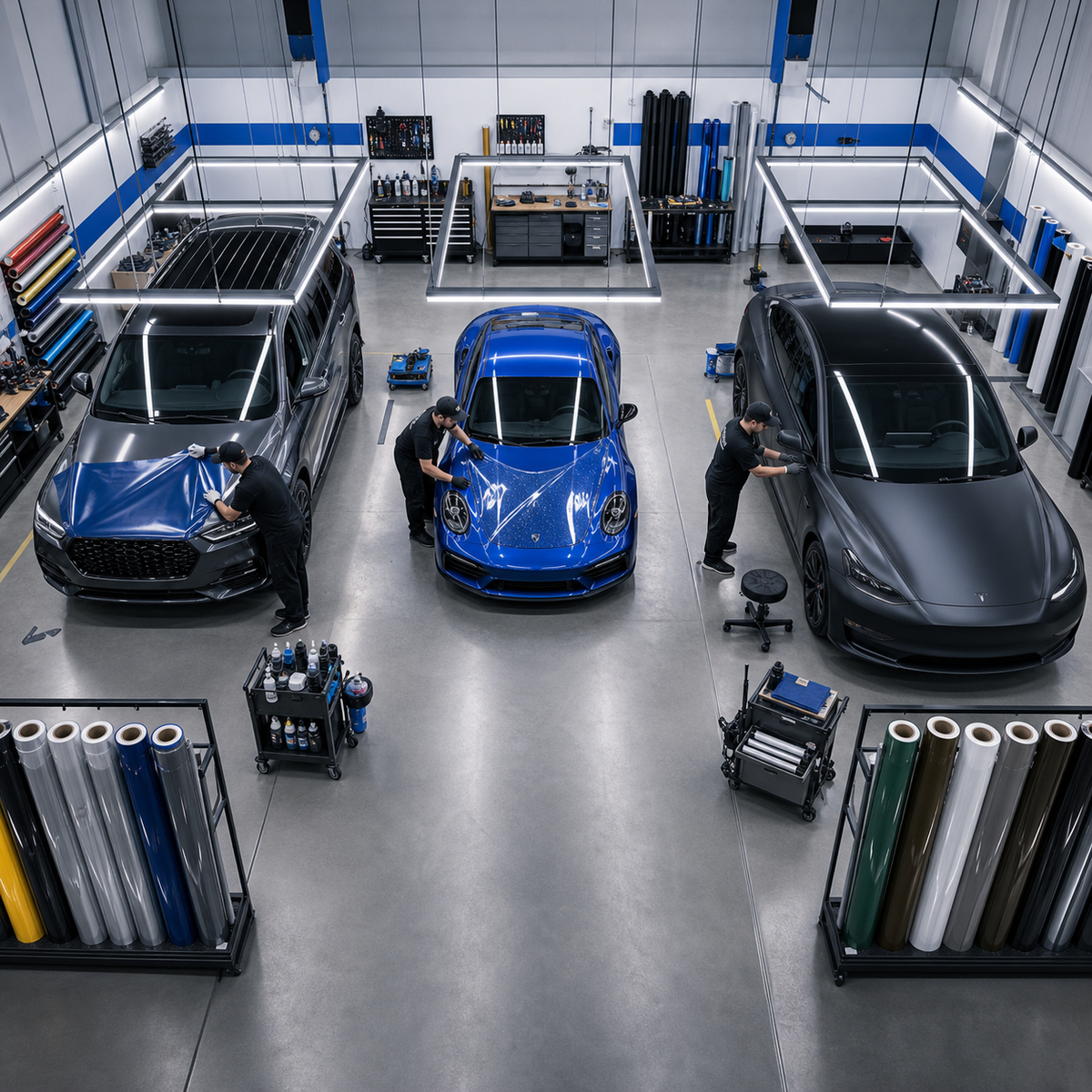
Even on the inside, installation decides how the job looks. A professional heat-shrinks the film to curved glass, cleans the glass so no dust is trapped, keeps the edges straight and gaps even, and knows how long the film needs to cure before the windows go down. DIY jobs tend to show bubbles, contamination specks, uneven edges and creases on the back glass.
Installers also know the local VLT rules, which matter as much as the film. A clean install in a shade that is illegal on the front side windows still has to come off.
When to consider professional film replacement
Fading, purple discoloration, bubbles, peeling and a noticeable drop in heat rejection are all signs the film needs to be replaced. These show up most on low-grade dyed films, poor installs and any film that was put where it was not designed to go. Replacement means removing the old film and adhesive fully before the new film goes on.
Do you really need window tinting on your car?
No law requires it. Most drivers in hot or sunny places get tint for a cooler cabin, less glare, privacy and protection for the dashboard and seats. Most quality films on the market are rated to block around 99% of UV, which is a big part of why people choose tint for comfort as much as for looks.
How film technology supports interior tint application
Ceramic and nano-ceramic films use non-metal particles to block infrared heat. They keep good visibility in lighter shades, and because they contain no metal they do not interfere with phone, GPS or radio signals. They are built and tested for the interior surface, and that is where they perform as rated.
HIGHCOOL makes automotive window film for tint shops and distributors, including nano-ceramic solar film, all designed for interior installation.
If you run a tint shop and want to test our film on your own bench, browse the Window Film range and ask for free A4 samples; you only pay shipping.
FAQ
Does window tint go on the inside or outside of a car?
Window tint goes on the inside of the car window. Installers sometimes shape the film on the outside of the glass first, but the finished install is always on the interior surface.
Why is car window tint installed on the inside?
The inside surface protects the film from wipers, car washes, rain and road grit. The film still blocks UV and heat from there, and it lasts far longer than it would on the outside.
Can window tint be applied to the outside of a car window?
It can be stuck there, but automotive tint is not built for it and usually lifts, scratches and clouds within months. Exterior films do exist for buildings and as clear windshield protection, but those are different products.

Share:
When Can I Roll Down My Windows After Tint? Drying Times by Weather and Film Type
Do Tinted Windows Block UV Rays?