
You tell premium TPU PPF from cheap film by looking past the word "TPU" to the resin grade, the topcoat, the adhesive, and how consistent the rolls are from one batch to the next. Almost every brand now says TPU. That word names a family of materials, and two films built on it can behave very differently after three summers on a hood.
TPU can be made soft or hard, tuned for clarity or for abrasion, for cold flexibility or for heat stability. The resin supplier, the stabilizers and the process control decide which one you get. A film that feels fine on install day can haze, stain, yellow at the edges or fight you on removal in year five. The spec sheet rarely tells you which way it will go, so you have to ask better questions.
The three layers that decide PPF material quality
Every paint protection film is a stack of three working layers, and a weak one drags the other two down.
| Layer | What it does | What goes wrong when it is cheap |
|---|---|---|
| Topcoat | Self-healing, stain resistance, gloss over time | Wash marring, water spots that etch in, haze |
| TPU core | Impact absorption, stretch, long-term clarity | Yellowing, loss of elasticity, cracking at edges |
| Adhesive | Bond now, clean removal later | Dirt lines, lifting, or a bond so hard it pulls paint |
A film can have a great self-healing topcoat and poor adhesive aging. Another can be thick and still go yellow because the UV package is thin. When you compare films, compare all three.
TPU formulation PPF: what to look for
A resin grade the supplier will name
Ask which TPU the film is built on. A factory that buys a known aliphatic grade from a major chemical company will tell you who it is, and one that buys whatever is cheapest that month usually will not. At HIGHCOOL we build our PPF grades on TPU from four sources: Lubrizol, BASF, Covestro and Wanhua. The Lubrizol, BASF and Covestro grades use Ashland adhesive. The Wanhua grade uses a domestic Chinese adhesive.
Balance between soft and hard
Installers often read soft as self-healing and hard as durable. Too soft and the film marks easily. Too hard and it cracks, loses conformability, and fights you on a mirror cap or a deep bumper recess. A good formulation keeps its stretch and its impact absorption after hundreds of heat cycles, which you only learn from aged samples or from a supplier willing to show test records.
Clarity and texture on dark paint
Good film is hard to see on paint. Some products chase a high gloss number and ignore orange peel and distortion, which shows up fast on black and dark blue cars. You know the complaint: the customer walks around the car in the sun and asks why the hood looks wavy. Lay a sample on a black panel under a single bright light before you commit to a roll.
Yellowing treated as chemistry
Yellowing comes from the resin, the UV stabilizers, the antioxidants and the topcoat working together. A supplier who only says "anti-yellow" and cannot explain the UV package is selling a slogan. No honest maker promises a film that never yellows. Ask what the warranty covers and for how long. Ours runs 5 to 10 years depending on the grade.
A topcoat built for washing
Owners judge PPF by how it looks after months of washing. The topcoat carries the self-healing, the stain resistance and the resistance to micro-scratches from mitts and brushes. Haze, permanent water spots and bug-gut etching show up on the topcoat first. A TPU film with a cheap topcoat is half a product.
Paint protection film thickness and batch consistency
A thickness number is easy to print. Holding it across a roll and across batches is harder. Poor thickness control shows up as uneven stretch, tack that changes from one roll to the next, and edges that will not stay down. Ask for the tolerance, not just the nominal figure, and ask how the factory tracks each roll. Every HIGHCOOL roll carries its own serial code that ties it to its warranty record, so when a shop reports a problem we can trace the roll.
Adhesive aging and removal
The adhesive decides whether a refresh in year five takes an afternoon or turns into a paint claim. Poor adhesive aging causes dirt lines at the edges, lifting on curves, or a bond that grows so aggressive it pulls clear coat on removal, especially on repainted panels. Ask for a removal test on an aged sample. If the supplier has never done one, that tells you something too.
Install behavior
Installers feel quality before they can measure it. A good film has controlled stretch, manageable tack, enough slip to reposition, and it responds well to post-heating and edge finishing. A film that saves real time per car and comes back with fewer lifted edges earns its price in labor alone. Run a test install on a hood and a front bumper before you order in volume.
Questions to ask a PPF supplier
- Which TPU grade is this film built on, and which adhesive?
- What is the thickness tolerance across a roll and across batches?
- How is each roll tracked back to its production record?
- What does the warranty cover, for how many years, and who pays for redo labor?
- Can you send aged samples or removal test results?
- What care instructions do you give owners, and what will the film not resist?
A supplier who answers these plainly is usually selling engineering. One who repeats "premium TPU" is usually selling a label. For more on how warranty terms and failure claims work in practice, read our posts on PPF warranty terms, who is responsible when PPF fails, removing PPF at end of life, reading PPF comparisons and "military grade" PPF claims.
Where HIGHCOOL fits
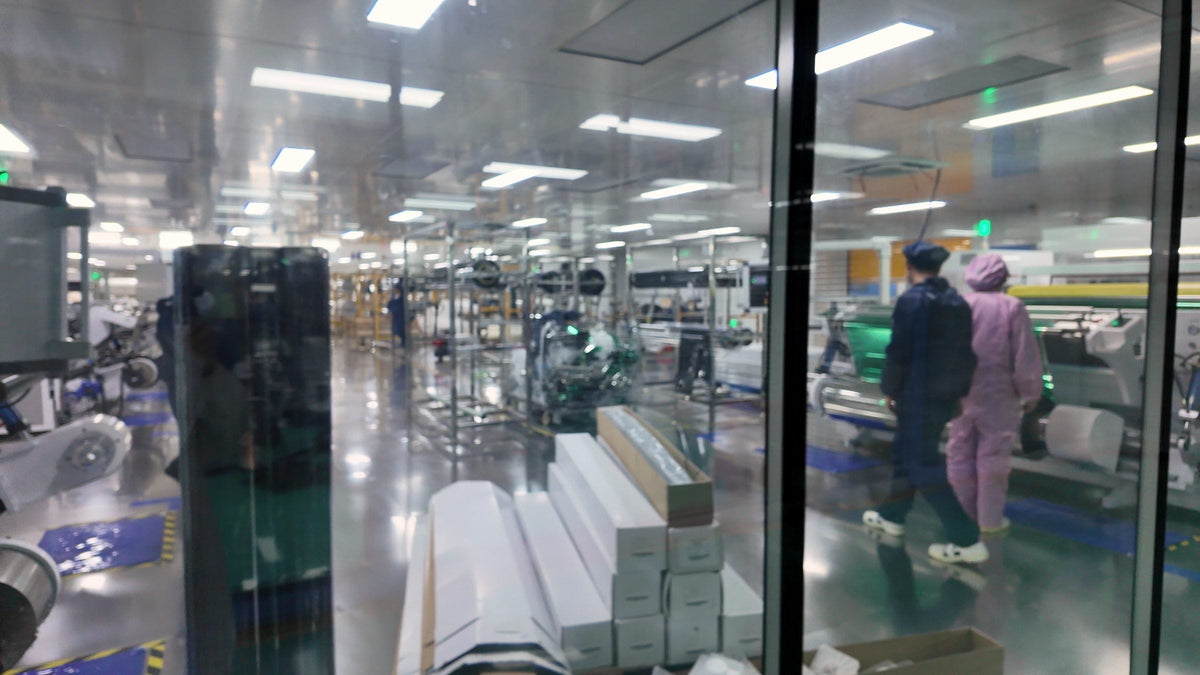
HIGHCOOL makes PPF, Color PPF, Window Film and Vinyl Wrap in our own 20,000 m² factory in Shanghai under ISO 9001, and sells by the roll to shops and distributors with no middlemen. Free A4 PPF samples ship from our US sample stock, and you pay only the shipping. Put a sample next to the film you use now and run it through the questions above.
If you want to compare our grades side by side, start with the Paint Protection Film (PPF) collection, or tell us which grade and monthly volume you are looking at through the contact page.
FAQ
Is all TPU PPF the same quality?
No. TPU is a family of materials, and films built on it differ in resin grade, UV stabilizers, topcoat and adhesive. Those differences show up as yellowing, haze or hard removal after a few years.
What should I ask a PPF supplier before buying rolls?
Ask which TPU grade and adhesive the film uses, what the thickness tolerance is, and how each roll is tracked. Then ask what the warranty covers and for how many years, and request aged samples or removal test results.
Does thicker PPF mean better protection?
Not by itself. A thicker film can absorb more impact, but if the thickness varies across the roll it installs unevenly and lifts at the edges. Consistency from batch to batch matters as much as the nominal number.

Share:
PPF on White Cars: Why Flaws Show Faster
Military Grade PPF: What the Label Actually Means